This book was created during an activity for our eTwinning project "Healthy Generations"

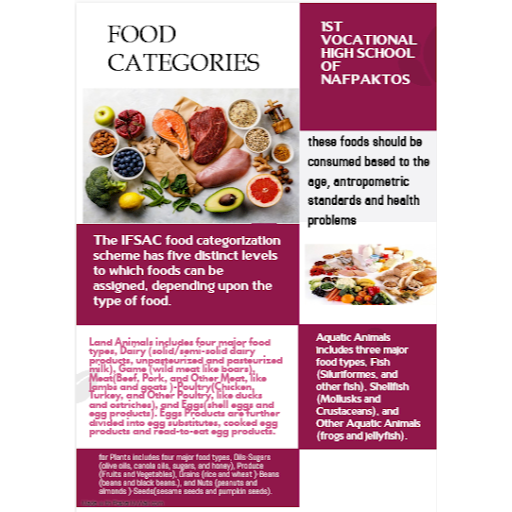
The IFSAC food categorization scheme has five distinct levels to which foods can be assigned, depending upon the type of food.
First, foods are assigned to one of four food groups (aquatic animals, land animals, plants, and other) and their sub-categories. Finally, foods are differentiated by differences in food processing (pasteurized, sterilized, dried, condensated,etc).
On the other hand, the food you eat can be broken into six main food groups upon the different ratios of carbohydrates, protein, and fat. These six food groups are grains, fruits, vegetables, meats and meat substitutes, dairy products, and fats/ oils.
In this e-book we'll try to explore the main of these categories.
AQUATIC & LAND ANIMAL, PLANT AND OTHERS: INTERNATIONAL MIXED TEAM 4
PASTEURIZED: INTERNATIONAL MIXED TEAM 9
FROZEN & REFRIGERATED: INTERNATIONAL MIXED TEAM 10
DEHYDRATED: INTERNATIONAL MIXED TEAM 5
FERMENTED, PICKLED: INTERNATIONAL MIXED TEAM 2
STERILIZED: INTERNATIONAL MIXED TEAM 1
IRRADIATED:INTERNATIONAL MIXED TEAM 3
GRAINS, FRUITS & VEGETABLES:
INTERNATIONAL MIXED TEAM 6
MEATS & DAIRY: INTERNATIONAL MIXED TEAM 8
FATS & OILS:INTERNATIONAL MIXED TEAM 7
AQUATIC & LAND ANIMAL, PLANT AND OTHERS
Edited by the students: Valentina F, Annalena L, Vanja C, Ema S, Giorgos V, Konstantinos A, Xenofontas M, Asrar Q, Ahmet Faruk U, Nijed H

Aquatic animals!
by Asrar Qawasmeh from Jordan
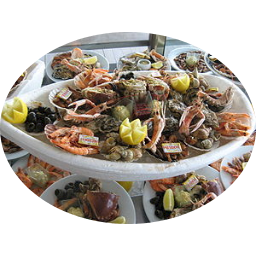
Seafood, in the art of eating, is an edible marine invertebrate animal. This definition usually includes crustaceans (shrimp, crabs, lobsters, etc.), molluscs (mussels, clams, snails or shellfish, squid, etc.) fish (sharks, tuna, salmon, sardines, herring, catfish, trout) and other marine animals such as sea urchins.....
Heart Health
Effectiveness of the brain
Various other benefits
The benefits of eating seafood
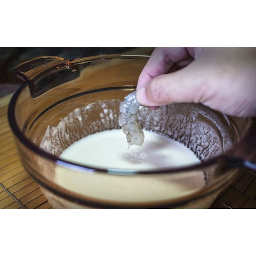
Put shrimp in flour and water
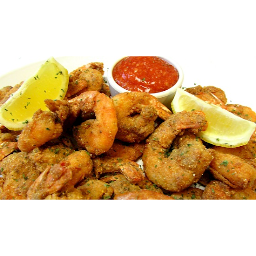
Fried shrimp
Prepare food with spices
How work fried shrimp :
Ingredients:
Peeled shrimp large or medium size,
Garlic mashed, chopped parsley.
How work fried shrimp:
1- Prepare the shrimp seasoning, put the garlic with lemon juice, cumin and parsley in a bowl, then add the shrimp and salt.
2. Make sure to cover the shrimp with the marinade well and then put in the refrigerator for an hour and a half.
3 - Bring a "bowl" for frying and heat well.
4 - Take out the shrimp from the refrigerator and put it in flour, salt and a little water, until the flour becomes a coherent dough a bit.
Cut the shrimp with lemon
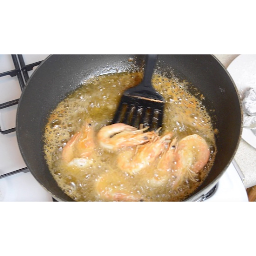
5 - Put the shrimp in the oil and do not leave too much, and wait until the color changes only and get the golden color "reddish".

Land animals !
by Konstantinos Athanasopoulos and Xenofontas Michos from Greece
Animal product
An animal product is any material derived from the body of an animal. Examples are fat, flesh, blood, milk, eggs, and lesser known products, such as isinglass and rennet. Animal by-products, as defined by the USDA, are products harvested or manufactured from livestock other than muscle meat. In the EU, animal by-products (ABPs) are defined somewhat more broadly, as materials from animals that people do not consume.
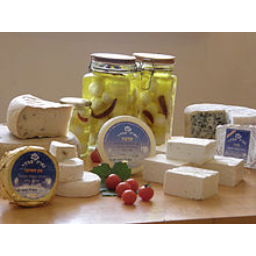
How we get food from animals?
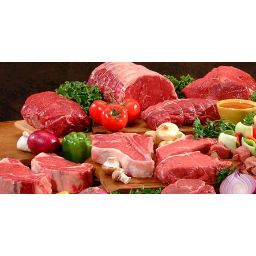
Some foods are produced from the flesh or internal organs of animals, such as:
- beef, lamb, kangaroo, pork and mutton (red meats)
- chicken and fish (white meats)
- heart, liver, kidneys and brains (organ meats).
Most of these foods come from farmed animals. They are raised until they reach a target weight, then are slaughtered (killed) and butchered (cut up) for us to buy, cook and eat. Some animals, like kangaroos and most fish, are killed or caught in their natural environments.
Other animal foods, such as eggs, milk and honey, are produced by animals over their lifetimes.Cheese is made from milk, so it is also an animal food. Other foods made from milk are butter, cream and yogurt.
Foods from animal source are high in protein, they usually are also high in fat. Vitamin B12 and vitamin D are also present in many animal foods, these vitamins are not found in plant foods.
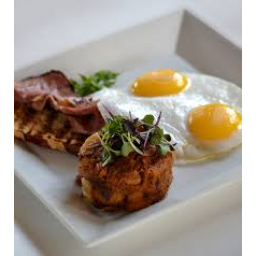
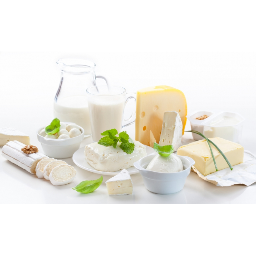
Food types - land animals
Land Animals includes four major food types:
1. Dairy (solid/semi-solid dairy products, unpasteurized and pasteurized milk),
2.Game (wild meat like boars),
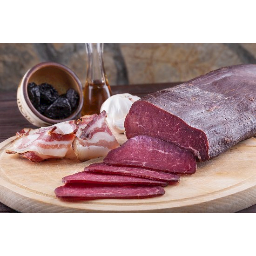
3. Meat(Beef, Pork, and Other Meat, like lambs and goats )
4. Poultry(Chicken, Turkey, and Other Poultry, like ducks and ostriches), and
5.Eggs(shell eggs and egg products). Eggs Products are further divided into egg substitutes, cooked egg products and read-to-eat egg products.
Plants !
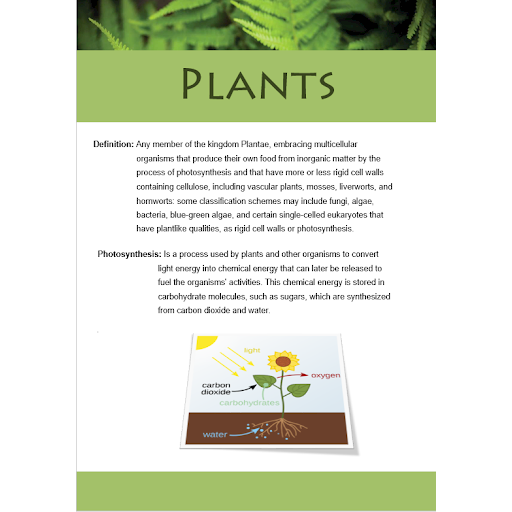
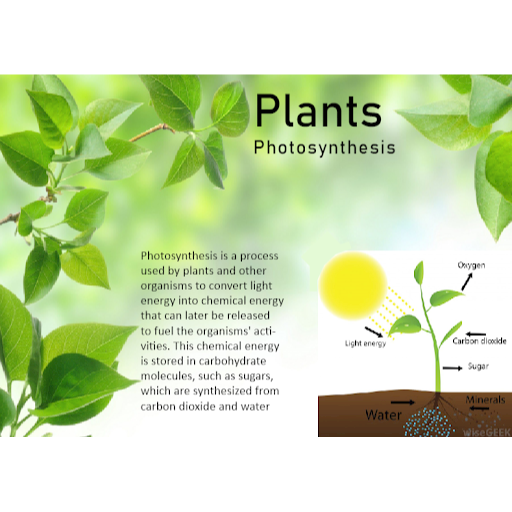
by Valentina Feichtinger and Annalena Lettner from Austria
Dietary Supplement !
by Ahmet Faruk Uzun from Turkey
What Is a Dietary Supplement?
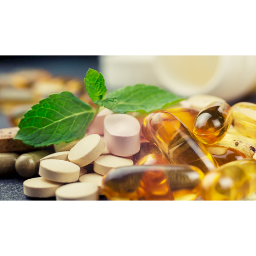
Dietary supplements are substances you might use to add nutrients to your diet or to lower your risk of health problems, like osteoporosis or arthritis. Dietary supplements come in the form of pills, capsules, powders, gel tabs, extracts, or liquids. They might contain vitamins, minerals, fiber, amino acids, herbs or other plants, or enzymes. Sometimes, the ingredients in dietary supplements are added to foods, including drinks. A doctor’s prescription is not needed to buy dietary supplements.
Should I Take a Dietary Supplement?
Eating a variety of healthy foods is the best way to get the nutrients you need. However, some people don’t get enough vitamins and minerals from their daily diet, and their doctors may recommend a supplement. Dietary supplements may provide nutrients that might be missing from your daily diet.
Talk with your doctor before taking any supplements. Some supplements can change how medicines you may already be taking will work. If your doctor recommends a dietary supplement for you, make sure you’re getting the brand recommended by the doctor and that you take it as directed.
Do you wonder if you need a dietary supplement?
Maybe you do, but usually not. Ask yourself why you think you might want to take a dietary supplement. Are you concerned about getting enough nutrients? Is a friend, a neighbor, or someone on a commercial suggesting you take one? Some ads for dietary supplements in magazines, online, or on TV seem to promise that these supplements will make you feel better, keep you from getting sick, or even help you live longer. Often, there is little, if any, good scientific research supporting these claims. Supplements may cost a lot, could be harmful, or simply might not be helpful. Talk to your doctor or a registered dietitian for advice.
Examples of population groups requiring specific advice about supplements
1.People over age 50 - Vitamin D, Vitamin B12, folate. Frail elderly may benefit from a low-dose multivitamin supplement.
2.Women of childbearing age - Folic acid and vitamin D, possibly iron
3.Children under age 5 - Vitamin A, vitamin C, vitamin D, although children with a good appetite who eat a wide variety of food may not need them.
4.Breastfeeding women - Vitamin D
5.People who cover their skin, are dark-skinned, or are housebound -Vitamin D
6.Vegans - Vitamin B12, vitamin D2
Food categories - poster
by Giorgos Vasilopoulos from Greece
Food categories - poster
by Giorgos Vasilopoulos from Greece

What is hidden in foods?
chemical experiments
by Vanja Cice and Ema Stojisavljević
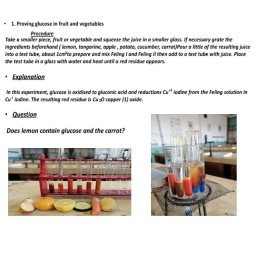
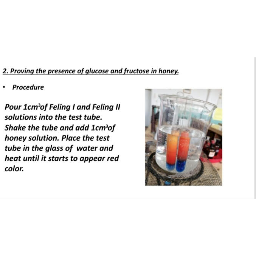
Who's sweeter? Fruits or vegetables?
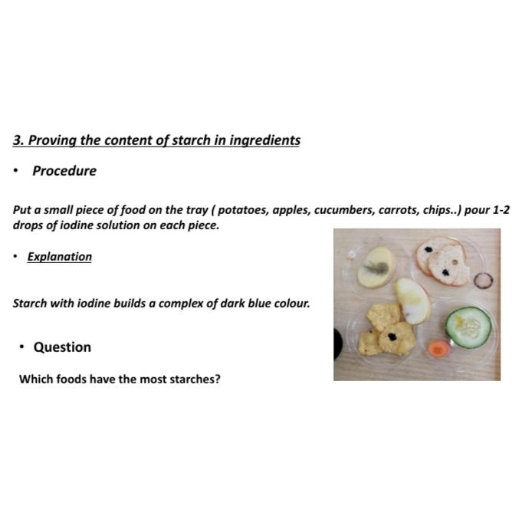
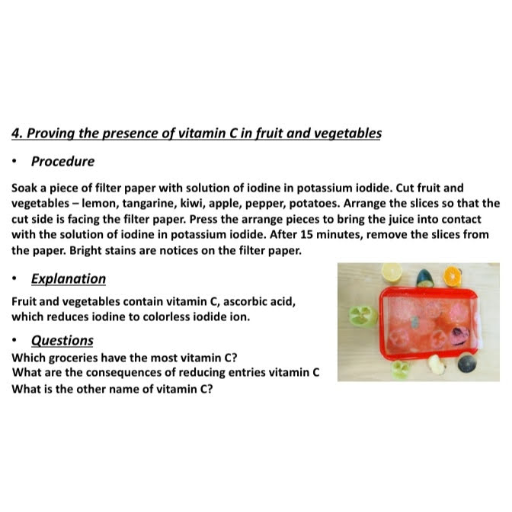
Starch
Vitamin C
https://www.cdc.gov/foodsafety/ifsac/projects/food-categorization-scheme.html
https://en.wikipedia.org/wiki/Plant
https://www.britannica.com/plant/plant
https://en.wikipedia.org/wiki/Dietary_supplement
https://www.britannica.com/science/dietary-supplement
https://en.wikipedia.org/wiki/Seafood
References
PASTEURIZED PRODUCTS
Edited by the students: Zisimos N, George F, Konstantina A, Dijana P, Rahma A, Rama B, Buthynah A, Eva S
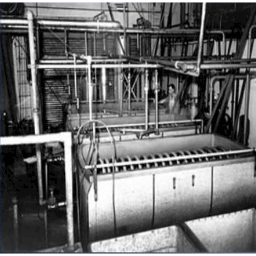
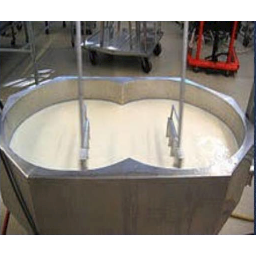
Pasteurization
The concept of pasteurization
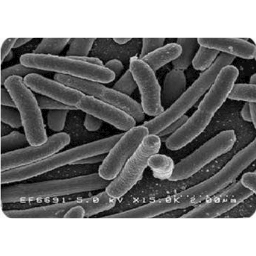
It is the process of heating and raising the temperature of foods and beverages to eliminate the bacteria or germs contained in them. This process is performed for foods and beverages
Louis Pasteur
Louis Pasteur was the first to come up with the method to destroy the most bacteria, while preserving the most vitamins at the same time. Pasteurization is summarized in heating, then direct and continuous cooling

Pasteurization utility
Pasteurization works to kill germs and pollutants, and one of its damages is that it kills the living ingredients present in the milk. We find that the milk in the market is more prevalent and that is the result of its consumption consuming a lot of unwanted fat. The whole milk contains a layer of cream found on its surface that can be separated and drinking milk Without it, the process of homogenizing milk may not collect on its surface this cream, it is a purification process for very small particles, and the fine particles of fat resulting from that process allow dead enzymes called xanthenes to enter our bodies,
Types of pasteurization
Slow continuous pasteurization:
Heat the liquid to 63 ° C. for 30 minutes in a helix tube, and cool indirectly. Hot water is used for heating as it passes through the tubes
:Rapid pasteurization
Raising the fluid temperature to 72 ° C for 15 seconds, then sudden cooling. Sudden cooling here leads to the expansion and shrinking of the tissues of cells of living rupture and die
Commonly pasteurized products:
milk products
Eggs
the milk
Juices
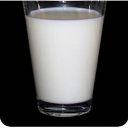
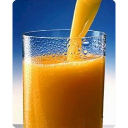
Concentrated
Beverages
Nuts
Commonly pasteurized products:
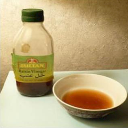
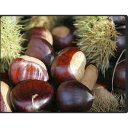
done by : Banan Qawasmeh
supervised by : Aisheh al bashatwah
references:
https://www.annahar.
https://www.layalina.
STERILIZED PRODUCTS
Edited by the students:Anika E, Stefanie S, Isidora M, Dilara U, Konstantinos K, Katerina D, Nagham M, Ayoub M, Mohammed A, Mariam M

Sterilization is a controlled heating process used to completely eliminate all living micro-organisms, including thermoresistant spores in milk or other food. It can be achieved by moist heat, dry heat, filtration, irradiation, or by chemical methods. Compared to pasteurization, a heat treatment of over 100°C is applied for a period long enough to lead to a stable product shelf-life.
Methods
The food sterilization methods are divided into two categories: sterilization by heating (thermal processing) and sterilization without heating (non thermal processing). Actually it can be divided into low temperature sterilization method, high temperature short time sterilization method and ultra high temperature instant sterilization method.
Thermal processing is widely practiced these days, in spite of some problems such as that the process of heating might reduce nutrition or deteriorate the quality of foods, and that it is ineffective against certain types of bacteria. Non thermal processing is considered an effective method that does not cause any deterioration of quality, in contrast with thermal processing.
Thermal processing is divided further into two categories: in-container sterilization (processing) and prior to filling in the final container sterilization (aseptic processing).
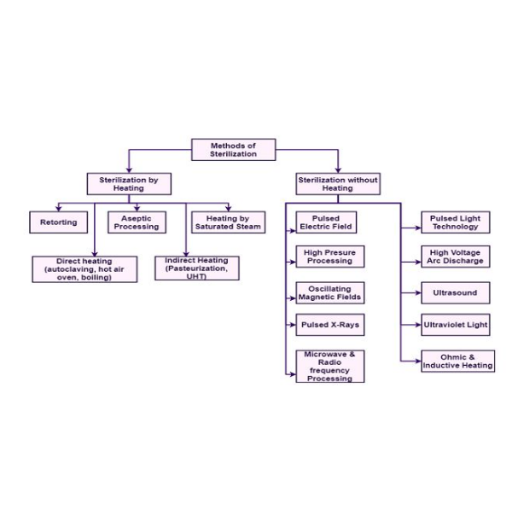
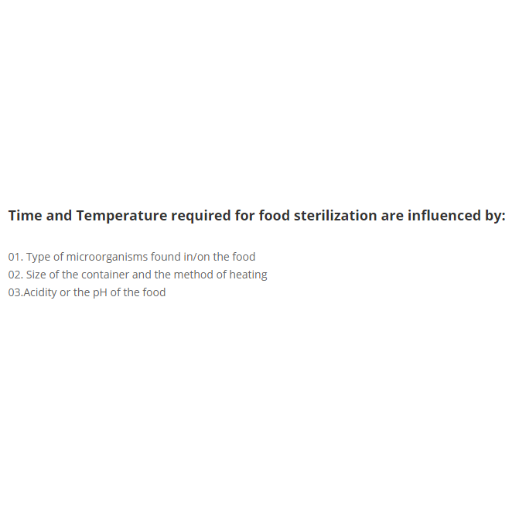
Sterilization procedures for products in containers usually require longer times, since the heat transfer to the product is relatively slow. Sterilization prior to filling in the container, as accomplished in aseptic processing, requires relatively short heating periods. This sterilization process is usually accomplished by heating the product rapidly to 130–145 °C, holding for an appropriate time, then rapidly cooling the product. The specific product will determine the actual combination of temperature and time required for sterilization.
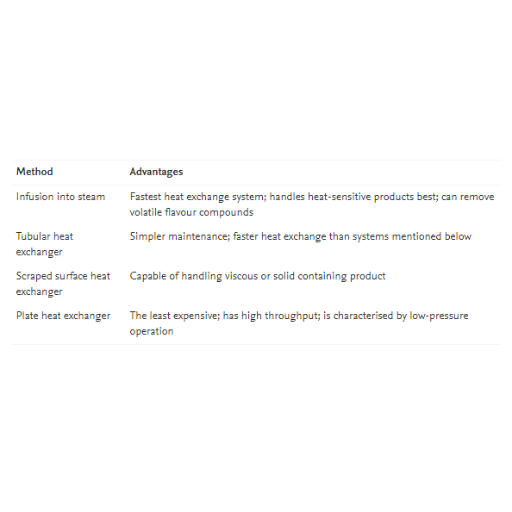
Product heating is accomplished by either indirect or direct heat exchange. In liquid homogeneous products, indirect heating occurs when the product to be heated and the heating medium are separated by the heating surface. This type of heating is accomplished using a scraped surface, tubular, or plate heat exchanger. Direct heat exchange is achieved by placing the heating medium directly into the product or vice versa. In either case, the added water from the steam must be either removed or accounted for in the formulation. The specific type of heating used is usually dictated by the nature of the product and the economics of operation.
Flow charts of each method
- Conventional method:
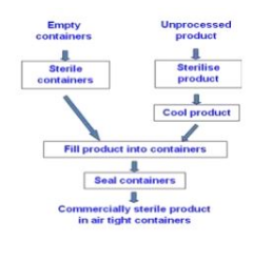
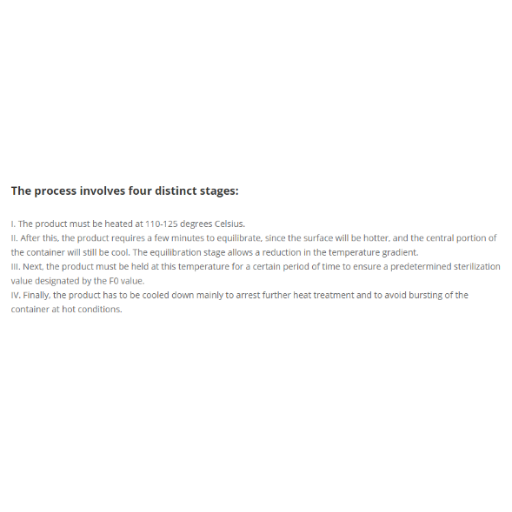
Packaging is done before heat treatment. The processing is usually carried out at 105-110°C for 30-45 min.It is also known as In-bottle sterilization. The basic flow chart to explain the in-bottle sterilization is given in the following picture:
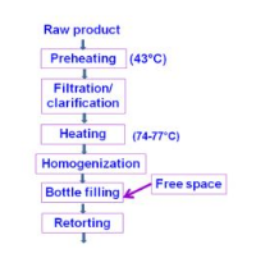
It can be further categorized as batch or continuous types. The bottles are loaded onto crates and then the crates are travelled into sterilizer with the help of a trolley/truck. After the commodity is packed, the door is closed, the vessel is supplied with steam at required pressure. The processing time and pressure are properly maintained by controls. After desired processing time, steam is vented to atmosphere. After this the crates (bottles/cans) are immediately cooled by air (fans) to avoid further cooking of the product.
UHT or aseptic method:
Packaging is done after heat treatment. The ultra high temperature short time (UHTST) and very high temperature short time (VHTST) processes come under this category. The processing is at 135-150°C for 1-20 seconds. Then the commodity is packed aseptically.
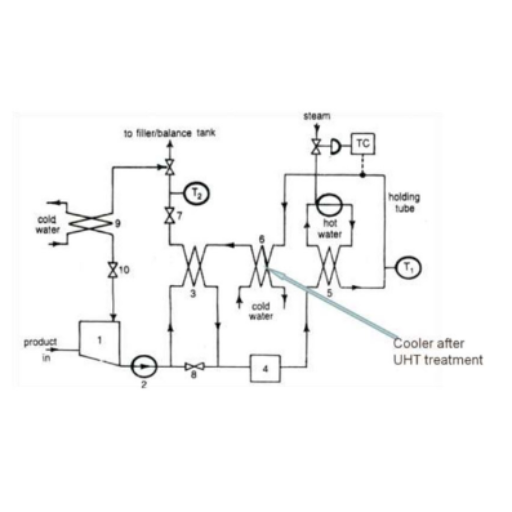
(1) level-controlled balance tank (2) centrifugal pump (3) plate heat exchanger (4) homogenizer (5) heat exchanger (6) cooling section (7) restriction (8) by-pass valve (9) cooler (10) back-pressure valve
The flow chart of a UHT indirect sterilization process is shown better in this scheme:

The flow chart of a UHT direct sterilization process is shown better in this scheme:
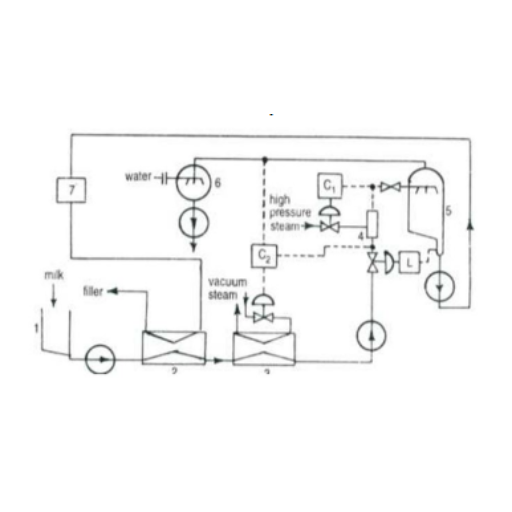
(1) level-controlled balance tank (2) pre-heater (regenerator) (3) heat exchanger (4) steam injector (5) expansion cooling vessel (6) water jet/ surface condenser (7) homogeniser (L) controller (C) temperature controller



ACCESSORIES USED AND THEIR FUNCTIONS
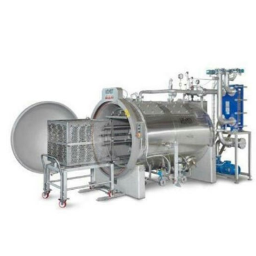
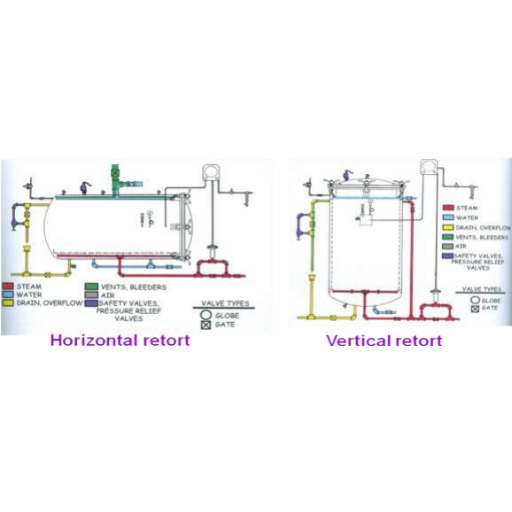
The equipment which is used for the sterilization process is called a retort and the processing is often called retorting. The batch retorts can be either horizontal type or vertical type. The retort has a lid or door with good fastening. It has necessary controls for temperature, pressure and safety devices. They can also be of circular or rectangular cross section.
The following are the important accessories in a retort:
Air vent Temperature recorder/ thermometer Pressure gauge
They should perform accurately so that damage to the product and to the people and machines are avoided.

The batch retorting process can be explained as follows.
The bottles are loaded onto crates and then the crates are travelled into sterilizer with the help of a trolley/truck. After the commodity is packed, the door is closed, the vessel is supplied with required pressure. The processing time and pressure are properly maintained by controls.
After desired processing time, steam is vented to atmosphere. After this the crates (bottles/cans) are immediately cooled by air (fans) to avoid further cooking of the product.

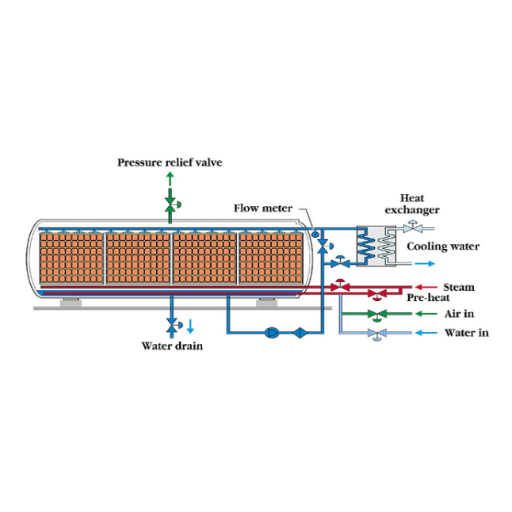
Water spray or cascading water retort
The characteristics of water spray or cascading water retort are as follows.
It uses a low volume of water.
Water does not completely cover the containers during processing, but instead sprays or cascades (showers) on the containers.
The system collects (draws) water from the bottom and reintroduces through sprays from the top and mid-section of the vessel to heat or cool.
Heating of water is done internally by steam spreaders.
Air is the source of over pressure.
Rotary batch sterilizer
This sterilizer agitates milk during heating by rotating the load of bottles about a horizontal axis.
Hydrostatic retort
It operates with steam as the processing medium. The processing chamber (also known as steam dome) is maintained at constant temperature. It has a continuous conveyor chain that transports containers at a constant rate. There is minimal container agitation during processing. Two, four, six or eight pass hydrostatic retorts are common.
Pressure within the chamber is maintained and counterbalanced by the weight of water in
the feed and discharge gates. To increase the temperature, the pressure must increase and thus height of water column must increase.
For the processing chamber temperature as 121°C, we require 103.4 kPa pressure in the
chamber, i.e. The height of water column in the feed and discharge legs must be 11.3m
above the steam-water interface.
High pressure processing can be used for sterilization of food products if applied at elevated temperatures and using the temperature increase due to adiabatic compression. By choosing the appropriate process conditions, it is possible to completely inactivate both vegetative cells and microbial spores resulting in food products that are shelf stable.
The quality of high pressure sterilized products is usually superior to conventionally heat sterilized products. This applies particularly to texture, flavor and retention of nutrients.
The effect of high-pressure sterilization on color is product dependent.
ADVANTAGES

- Nutritional and sensory attributes of the foods are maintained at optimal levels because the sterilization conditions are optimized specifically for the food
- Foods have extended shelf lives due to product quality, sterility, and superior packaging materials
- Food packages are in consumer-friendly shapes and sizes and with enhanced aesthetic appeal
- Costs are minimized due to the reduced energy requirements for sterilization, processing, packaging, transportation and room-temperature storage.
A significant loss of nutrients, especially heat-labile vitamins, may occur during the canning process. In general, canning has no major effect on the carbohydrate, protein, or fat content of foods. Vitamins A and D and beta-carotene are resistant to the effects of heat. However, vitamin B1 is sensitive to thermal treatment and the pH of the food. Although the anaerobic conditions of canned foods have a protective effect on the stability of vitamin C, it is destroyed during long heat treatments.

DISADVANTAGES
§It is relatively slow (can take a couple hours)
§Many objects cannot withstand the very high temperatures required for dry heat sterilization
§Drenching and wetting or articles may occur.
§trapped air may reduce the efficacy.
§Overheating products may spoil it.
EXAMPLES OF STERILIZED PRODUCTS
Sterilisation is used to treat all types of food products. These include milk, juices, beer and many others.
UHT sterilization is used for low viscosity liquid products (milk, juices, cream, wine, salad dressings), foods with discrete particles and larger particles (stews)
Baby foods, tomato products, fruits and vegetables juices, soups.
What do you mean foods with discrete particles?


EVALUATION QUIZ
https://quizizz.com/admin/quiz/5df916774830bd001ce4473f

https://quizizz.com/admin/quiz/5df91dbc7083f3001ba12e2f/startV4
food irridation
by Ayoub , Roua , Hiba , Rawen and chahd from Tunisia
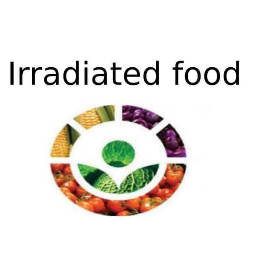
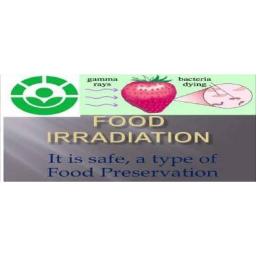
Food irradiation is the process of exposing food and food packaging to ionizing radiation. Ionizing radiation, such as from gamma rays, x-rays, or electron beams ...
IRRADIATED PRODUCTS
Edited by the students:Elisabeth L, Valentina S, Luka J, Aleksandra Z, Anta K, Chrysoula K, Ayah R, Mücahit Ç, Nour A
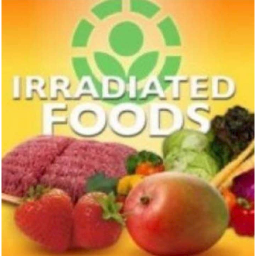
Agricultural and food products a subjected to high-energy, non-impact ionizing, high-energy ionizing radiation in the form of a licensed metered dose for a certain period of time within a sealed irradiation unit
To eliminate various insect phases in stored grains, dates, legumes, spices and others
Reducing microbial load and
eliminating pathogens in food
What is its purpose?
Radiation dose: The amount of radiation energy absorbed by the exposed body. The most important factor in the irradiation of food, the unit for the absorbed dose is called Gray and symbolized Gy. It is defined as the average energy absorbed by the mass of matter from radiation, and one is equal to one Joule per kilogram of matter.
Irradiation mechanism and methods
Irradiation Mechanism:
The source of energy must be known and the spatial relationship between the source and the target and the duration of exposure should be calculated. The radiation dose used in the manufacture of food ranges from 50 to 10 kg.
Machines of Irradiation process:
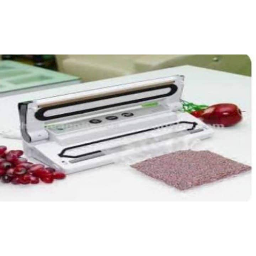
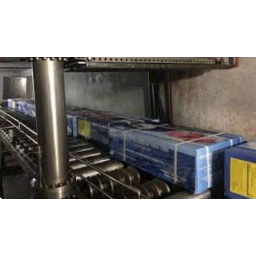
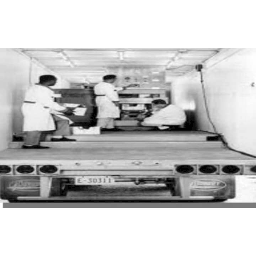
The design and organization of irradiation facilities vary according to the purpose of their use and there are two basic models, the batch system and the continuous system. Energy sources are installed in a shielded room designed to protect workers from radiation
Benefits:
Food irradiation ensures the same benefits as heating, cooling, freezing or chemical processing, but without changing its temperature or leaving residues. This technique works to combat food damage
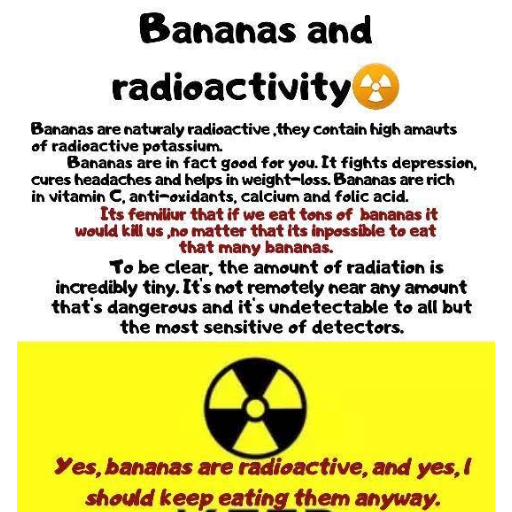
done by: Luka Jevremović from Serbia
teacher: Gordana Pešić
FROZEN & REFRIGARATED
Edited by the students: Georgia S, Bill M, Seema Abo O, Milica M, Rama S, Leen E, Reem Q, Katrin S, Samira P
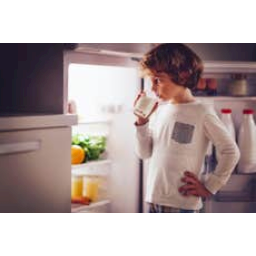
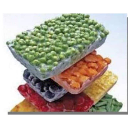
Refrigeration and freezing are probably the most popular forms of food preservation in use today. In the case of refrigeration, the idea is to slow bacterial action to a crawl so that it takes food much longer (perhaps a week or two, rather than half a day) to spoil. In the case of freezing, the idea is to stop bacterial action altogether. Frozen bacteria are completely inactive.

Refrigeration and freezing are used on almost all foods: meats, fruits, vegetables, beverages, etc. In general, refrigeration has no effect on a food's taste or texture. Freezing has no effect on the taste or texture of most meats, has minimal effects on vegetables, but often completely changes fruits (which become mushy). Refrigeration's minimal effects account for its wide popularity.

Freeze-drying is a special form of drying that removes all moisture and tends to have less of an effect on a food's taste than normal dehydration does.
In freeze-drying, food is frozen and placed in a strong vacuum. The water in the food then sublimates -- that is, it turns straight from ice into vapor. Freeze-drying is most commonly used to make instant coffee, but also works extremely well on fruits such as apples.
Freeze-drying
WHAT YOU CAN AND CAN'T PUT IN THE FREEZER
Foods you can freeze:Cooked pastaCooked riceNuts (many people don’t realise nuts can go rancid due to the high levels of fat they contain)Flour - you can use it directly from the freezerButterGrated cheeseBananas, peeledBread, in slices, as loaves or breadcrumbsHerbs Stock Wine Eggs, cracked into small containersMeat, both raw and cooked
Foods you shouldn’t freeze:Milk - it becomes lumpy once thawed (but this can be OK for cooking)Deep-fried food - after defrosting, the crispy coating will turn to mushSour cream - again, it can be alright for cooking but will separate after freezing Dishes with crumb toppings - you’ll lose the crispness and it’ll go soggy.

Freezing tips:Let all food reach room temperature before freezing.Make the most of your ice cube tray - Dr McMillan suggests blending herbs with water or olive oil and freezing in a tray, wine can also be frozen as ice cubes which you can use to keep your drink cool without diluting it or pop it into your cooking, and stock can also be frozen in a tray.
Make sure everything is frozen in a sealable container or bag.Meat in particular needs to be properly wrapped.
How long can you keep food in the freezer?
As a general rule, nothing should be kept in the freezer for longer than nine months to a year, but there is variation amongst different food items.Here’s the maximum of time you can keep certain foods frozen before thawing:
Poultry, Steak,Blanched vegetables,Fruit in syrup: a year
White fish, Open packs of frozen fruit, Unsalted butter: 8 months
Fruit juice,Lamb,pork,beef,chicken,turkey,duck,rabbit: 6 months
Bread, Cakes, Stocks: six months
Oily fish,Pastries,Salted butter and Ice cream: four months
Sliced bacon, Soups and sauces, Bread dough: three months

ICE CREAME AND OTHER FROZEN DESSERTS
Division : Cold treats include : frozen custard, ice milk, frozen yogurt, sherbet and water ice.
Ingridients : The main ingridients of ice cream are milk, sour cream, sugar, flavorings and stabilizer. Cheaper products are made from whey, corn syrup and artificial flavor.
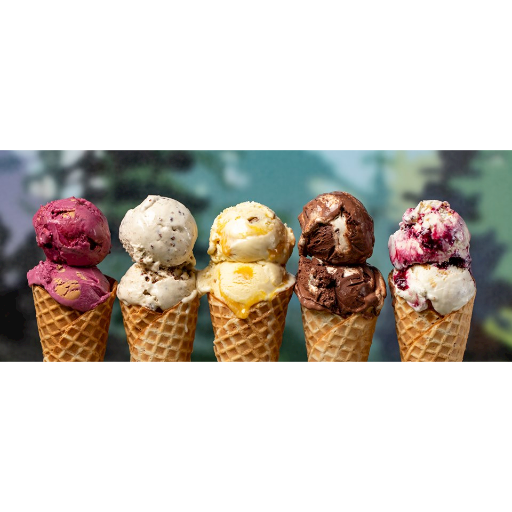
Of all the frozen treats ice cream contains the highest percentage of fat, 20%.
Frozen custard or French ice cream contains the same ingridients as ice cream with the addition of eggs.
Frozen yogurt contains live cultures of bacterias.
Sherbet contains a little milk fat and a lot of sugar, which is why it has more calories per meal.
A special kind of frozen treat is mellorine, an imitation of ice cream, cheaper vegetable fats are used instead of butter.
Stages in ice cream production:
Ice cream mixture foration, pasteurization, homogenization, rapid cooling, aging process and freezing of ice cream mixture.
Ingridients : 18 oreo cookies, divided
1 can (14oz/400g) sweetened condesed milk
2 cups (480ml) heavy cream, cold
Directions :1) crush 14 oreo cookies
2) place cold heavy cream in a large bowl, wheipp to stiff peaks.
3) add sweetened condesed milk and beat on low speeed until incorporated, add crushed cookies and fold.
4) transfer into a container/dish, top with extra 3-4 crashed cookies and freeze for at least 6 hours.
done by Andrea Milunović from Serbia, teacher Gordana Pešić
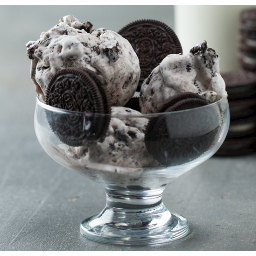
OREO COOKIES ICE CREAM RECIPE
DEHYDRATED
Edited by the students: Eleonora E, Andrea M, Barbara F, Lamprini P, Katerina Z, Effie K, Banan Q, Gizem Mandıralı
DRIED FRUITS
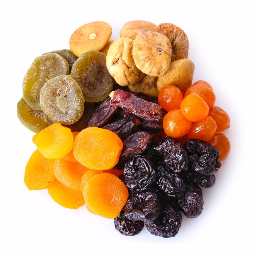
Dried fruits are fruits that lose a large amount of their water reserves through the drying process, causing them to shrink. Raisins, followed by dates, prunes, figs and apricots, are among the most common types of dried fruit. There are some types of fruit that are covered with sugar after drying, such as mango, pineapple, banana and apples. Dried fruits can be kept longer than fresh fruits, and are among the practical crackers
1-dried fruits It is advised to eat dried fruits before carrying out physical activity, or in the event of a decrease in the level of sugar in the body, because they contain a high concentration of sugar that enables them to provide immediate energy .
2-Dried fruits are rich in minerals, such as: phosphate, potassium, calcium, magnesium, vitamin A and B, iron, and fatty acids. Dried fruits can be an alternative (and much better) energy for chocolate and sweets for those who are underweight .
benefits of dried fruits:
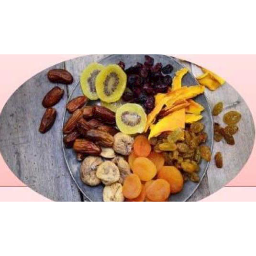
3-Dried fruits and nuts, when eaten thoughtfully, can be a snack.
4- Dried fruits and nuts, when eaten thoughtfully.
5-Many studies indicate that some dried fruits can help to combat a range of health problems, such as cancer, high cholesterol, and insomnia .
6-It contains a high concentration of vitamins that have an antioxidant effect compared to fresh fruits, as a result of the drying processes that this fruit is exposed to.
DESTRUCTION OF DRIED FRUITS:
1-During the process of producing dried fruits, sulfur dioxide may be added to enhance its color, which may cause people with chronic breathing problems with asthma attacks or inflammation in the airways .
2-During the drying process, the fruits lose the vitamin C contained in them, as they decompose and transform .
3-Dried fruits are rich in calories relative to their weight, and the amount of calories in them reaches between 5-7 times the amount found in fresh fruits, for example: In dried apricots there are 238 calories per 100 grams. In fresh apricots there are only 48 calories per 100 grams
This experiment needs at least 3 days of sunshine, so check the weather forecast before you do !
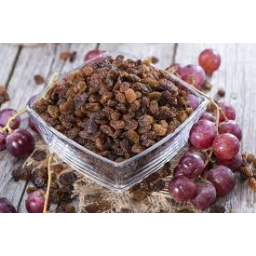
RECIPE TO DO A DRIED GRAPES:
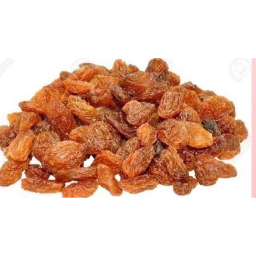
1- Wash grapes and gently dry.
2-spread the grapes on the baking tray.
3-make sure the grapes aren't touching each other
4-cover the grapes up with kitchen towel or a pillow case.
5-Make sure whatever you're covering the grapes with won't blow away. You might need to weigh it down.
6-Make sure whatever you're covering the grapes with won't blow away. You might need to weigh it down.
7-Take the grapes outside and leave them for at least three days. The cover should prevent bugs getting to the grapes
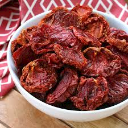
HOW TO DRY TOMATOES:
1-Select as many ripe tomatoes as you'd like to dry.2-Remove the skins (optional).3-Cut the tomatoes in half.4-Remove bruising and tough spots.5-Arrange the tomatoes on the surface on which you plan to dehydrate them.6-Season the tomatoes.7-Use a food dehydrator.8-Use the oven.9-Take advantage of hot days and use your car.10-Remove the tomatoes from the heat before they get dry.11-Store them in oil.12-Keep them in ziplock.13-Freeze them.d prevent bugs getting to the grapes
DONE BY :
RAHMA AL AIDEH.
REEM QAWASMEH.
LEEN ESSAM.
SUPERVISED BY:
AISHEH AL BASHATWAH.
FERMENTED, PICKLED
Edited by the students: Lorena H, Eva M, Nataša J, Anastasia B, Antonis Z, Poly K, Roa'a J, Selin E, Hiba A, Aysel Ganbarova

Concept of fermentation:
Fermentation is the process in which a substance breaks down into a simpler substance. Microorganisms like yeast and bacteria usually play a role in the fermentation process, creating beer, wine, bread, kimchi and yogurt .Fermentation comes from the Latin word fermentare, meaning “to leaven.” To make bread rise, you use a leavening agent to “wake up” dry yeast by mixing it with water. The yeast then starts “eating” the sugar in the dough and off-gassing alcohol: that’s fermentation. Grape juice becomes wine as the fermentation process is complete. by Hiba Ayadi and Lorena Humer

EXAMPLES OF FEREMENTATION:
Fermentation is the process of transforming carbohydrates into alcohols, carboxylic acids, aldehydes, ketones and gases.
Food fermentation is one of the oldest and most important technological processes of food preservation. It is a complex transformation of organic molecules in foods with the catalytic activity of enzymes of microorganisms during which new molecules are formed in foods (alcohol, lactic acid, vinegar, vitamins, flavors). Foods serve as a good base for the development of fermenting microorganisms, and the fruit of their development and action is a fermented product of high biological value.
Acetic fermentation
is a biochemical process of the oxidation of ethanol to acetic acid.
Chemical reaction
2CH3CH2OH + O2 2CH3CHO + 2H2O
2CH3CHO + O2 2CH3COOH
Use
For the industrial production of acetic acid.
Microorganisms
Acetic fermentation is performed by a specific group of asporogenic bacteria, very widespread in nature. These bacteria can be found in weak alcoholic drinks, fruit juices in fermentation, fruit pulps, pickles, silage.
The names of these bacteria are not yet uniform, the following names can be found in the literature, e.g. BACTERIUM ACETI, ACETOBACTER ACETI, MYCODERMA ACETI. There are proposals to classify all types of acetic acid bacteria into two genera;
ACETOMONAS (syn. Of Gluconobacter)
ACETOBACTERIUM (syn. Acetobacter)
The division
According to the fermentation conditions, the types of bacteria and the products that are formed are divided into:
1) Homofermentation process - where lactic acid is formed almost exclusively,
2) Heterofermentation process - where about 50% of carbohydrates are transformed into lactic acid and the rest into other fermentation products: acetic acid or ethanol, carbon (IV)
AND THE EXAMPLES ARE:
Examples of fermentations are;
1. Acetic fermentation
2. Alcoholic fermentation
3. Lactic fermentation
by: Nataša Jovanović
Two recipes for the preparation of food by fermentation:
1) Cheese
A very common fermented food, there are many types of cheese that you can make at home.
1 gallon pasteurized goat milk, at room temperature for 1 hour
- 1 packet C20G direct-set mesophilic starter culture
- 1 teaspoon unrefined fine sea salt
- 1) In a nonreactive stockpot, gently heat the milk over low heat to 86°F. This should take 25 to 30 minutes. Turn off the heat.
- 2)Sprinkle the starter over the milk and let it rehydrate for 5 minutes. Whisk the starter into the milk, using an up-and-down motion to distribute thoroughly.
- 3)Cover and maintain a temperature of no lower than 72°F, allowing the milk to ripen for 12 hours. Wrap with a terry towel to keep warm. (Either ripen during the day to drain at night or ripen overnight to drain the next morning.)
- 4)The curds are ready when they have formed one large, solid mass in the pot with the consistency of thick yogurt, surrounded by clear whey.
- 5)Place a strainer over a bowl or plastic bucket large enough to capture the whey. Line the strainer with a single layer of dampened butter muslin or cheesecloth, leaving excess cloth hanging over the sides of the strainer. Gently ladle the curds into it. After draining for 5 minutes, gently toss the curds with the salt. Tie the corners of the cloth together to create a draining sack, slip a wooden spoon handle through the knot, and hang over a deep cooking pot or bucket to drain at room temperature (68°F to 72°F) for 6 to 12 hours (see Option). The longer the curds drain, the drier the finished cheese will be.
- 6)Remove the cheese from the cheesecloth or molds and store refrigerated in a covered container for up to 1 week.
Fermented ketchup:
You may never have put those two words together before, but once you start making your own fermented ketchup you may never go back to the regular stuff.
Ingredients
- 3 cups canned or homemade tomato paste
- 2 teaspoons unrefined fine sea salt
- 1/4 cup Vinegar
- 1/2 cup raw, unfiltered apple cider vinegar
- 6 tablespoons robust flavored raw, unfiltered honey such as clover, or organic amber maple syrup
- 1/4 cup basic whey (from yogurt), water kefir, or vegetable brine (such as from sauerkraut), as fermenting agent
Directions
- 1.
- Combine all the ingredients in a bowl, making sure the salt and the honey are dissolved. Transfer to a wide-mouth 1-quart jar. Secure a piece of cheesecloth to the opening and allow to sit at room temperature for 8 hours or overnight. Remove the cheesecloth and secure an airtight lid. Refrigerate for 2 days before using. Use within 2 months.
by: Aysel Ganbarova,Tafakkur lyceum
- Trahanas
- It’s a tiny, pebble-shaped grain product that varies widely all over Greece.
- Trahana is made with either semolina, wheat flour, bulgur or cracked wheat. Milk, buttermilk, or yogurt are mixed into the flour or wheat to form a thick mass.
- Dairy-based trahana comes in two types: sweet and sour. Sweet is made with whole milk, typically goat’s milk, and sour trahana is made with yogurt or buttermilk.
- It belongs to the traditional fermented milk/cereal foods and is a very nutritive food due to the nutritional properties of wheat and milk/yogurt.
Get the yeast out of the fridge in the morning. In the evening we put the yeast and a glass of warm milk or yogurt in room temperature, in a basin and blend them very well. We pour in it yellow flour so that after shaking it to make a thick porridge, which we cover with a clean towel and put in a warm place to inflate until next day.
Then we put the rest of milk in a saucepan and on the fire to boil. While it boils we add a teaspoon of soda and stir very often. Then we add coarse salt and stir briefly for the salt to melt. After it is boiled we put it out and left it until its temperature is low (warm). Then we throw it in a large basin and add the mix of yeast, milk and flour that we made the last evening. We mix it well so that the yeast to be dissolved in the milk and then we start to pour flour and knead until making a very tight dough. This dough is covered with a towel and a warm blanket, and we let it until the evening to be swelled. The next morning we start rubbing the trahana as best we can until it is very thin. Then we fill a basin and pour it into the sieve and we start sifting and scrubbing until only the big pieces that don't go through the holes to be left in the sieve. We put them separately and after a while we scrub and re-sift them. We set up the trahana to make it easier to dry and look after it daily by turning it. When it's dry (it takes at least 15 days) we store it in glass jars. Antonis Zoitakis,EPAL Nafpaktou
YOGURT:
- YOGURT
My last recipe couldn’t be anything else but yogurt.
Yogurt is definitely healthier than the other dairy because its milk is fermented and that makes it more digestible
1.Heat milk to 80 °C until to be inflated.
2.Cool milk to 40 °C
3.Add the starter (local fresh yogurt), and stir thoroughly, so the starter gets mixed in properly. This starter is the fungus that will make the fermentation.
4.Cover the recipient and let it at room temperature for 4 hours.
5. Put the yogurt to the refrigerator.
Antonis Zoitakis,EPAL Nafpaktou
Pickling is the process of preserving or extending the lifespan of food by either anaerobic fermentation in brine or immersion in vinegar. ... The pickling produces typically affects the food's texture, taste and flavor. The resulting food is called a pickle, or, to prevent ambiguity, prefaced with pickled.
Concept of pickling:
- Full access to our public library
- Save favorite books
- Interact with authors
- < BEGINNING
- END >
-
DOWNLOAD
-
LIKE
-
COMMENT()
-
SHARE
-
SAVE
-
BUY THIS BOOK
(from $37.39+) -
BUY THIS BOOK
(from $37.39+) - DOWNLOAD
- LIKE
- COMMENT ()
- SHARE
- SAVE
- Report
-
BUY
-
LIKE
-
COMMENT()
-
SHARE
- Excessive Violence
- Harassment
- Offensive Pictures
- Spelling & Grammar Errors
- Unfinished
- Other Problem





COMMENTS
Click 'X' to report any negative comments. Thanks!