This Book is for my Environmental Science Class 9D where I am explaining how Dingoes population has changed and how this change altered the ecosystem.


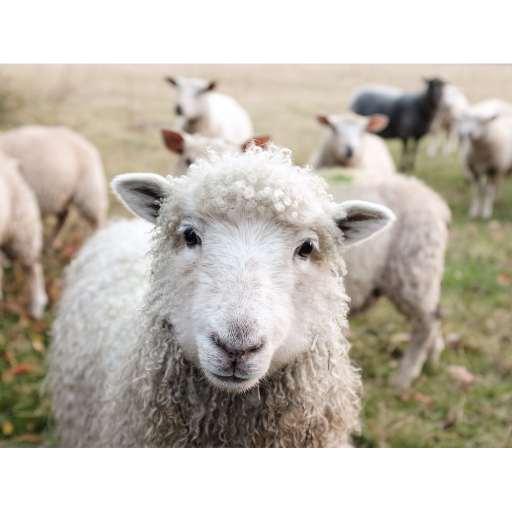
Hi I am the Sheep I live in Australia I have a very happy life since 1885 because before it was a disaster,because Dingoes were living with me
You may ask ,what are dingoes?Well dingoes are Australia's wild dog. They arrived in Australia about 5,000 years ago - brought to Australian shores by Indonesian Seafarers. Dingoes don't bark, but howl like wolves. The dingo is a medium sized canine, weighing between 13-24kg, with males usually heavier than the females
These have special techniques to adapt to the environment like Pointed ears the shape of an erect triangle assist the dingo to hear well for hunting, any approaching enemies and the loss of body heat.Also,the color of the Dingoes fur helps camouflaging in its surroundings.Not only that but the fur of the Dingo is very short and this is helpful for when the temperature in the dessert or any other environment becomes very hot. But these also have a behavior I don't like because I get scared as dingoes use howling to defend their territory and to send warning signals to their pack. These howls are also used to call back lost puppies.
Dingoes live in small groups consisting of about three to twelve family members but tend to join forces with other small groups to make one big group in breeding season to take care of the puppies together and hunt for larger animals such as wombats,kangaroos and ME.These scary animals that i don't like have a very interesting diet as these eat me and thats why they are blamed for losses of stock on farms In reality, these instances are relatively rare but dingos can become a problem when other food sources are scarce and packs learn that such animals are an easy prey.
By far the majority of dingo food comprises small mammals such as rabbits, rats and mice plus some birds and reptiles. Consequently, they also serve a useful purpose in assisting to control rodent and rabbit numbers. Dingos are usually shy retiring creatures. It is only where they have learnt that humans can be a useful supplier of food or where they have hybridized with the domestic dog that they can become a problem and attacks on humans are extremely rare.Dingoes in the trophic level are the largest land predator in Australia and are considered apex predators ("top of the food chain").In Australia, emerging evidence points increasingly towards the dingo as a strongly interactive species that has profound effects on ecosystem function.
Through predatory and competitive effects, dingoes can alter the abundance and function of mesopredators including the introduced red fox and feral cat, and herbivores including the European rabbit.Dingoes tent to live in places from harsh deserts to lush rainforests, the highly adaptable dingo is found in every habitat and state of Australia except Tasmania. Dingoes favour edges of forests next to grasslands. In deserts, access to drinking water determines where the animal can live.Although these can bring some vulnerabilities of living there as over the last two centuries, large mammalian carnivores have experienced dramatic declines in population and geographic range globally, leading to a variety of negative ripple-down effects for ecosystems – the extent of which are not yet fully understood.
A loss of top predators would have “wide-ranging influences on virtually all other species” in an ecosystem and could cause increased desertification, greater susceptibility to invasive species and wild fires, altered disease dynamics, and a diminished ability to naturally capture and store carbon emissions. The authors also say there will be many unforeseen consequences because scientists have “only just begun to understand the influences of these animals in the fabric of nature”.The abiotic factors on my ecosystem which also belonged to them is dirt- The ground that I use to keep cool,water- what keeps me hydrated,air- what I breath,Sun- it keeps me warm, but sometimes too warm and sand- to me it is just hot dirt.
There are also the biotic factor for dingoes which are Bilby: Hides during the day and hunt at night to avoid dehydration and heat. Digs burrows about two meters below the ground because it is moist and cool. They conserve so much water that they don't need to drink. They get enough moisture from what they eat: seeds, bulbs, fungi, spiders and insects. Red Kangaroo: Hopping fast and very energy efficient. It evolved because Red Kangaroos need to cover huge distances to find enough food in the Australian desert. While their ecosystem is great,their food web is long as they are in the top of the chain as they as their prey is Rabbits, Feral Pigs, Kangaroos, Wallabies, Birds, Wombats, Bilbies, Koalas and more (They eat almost everything) and their competition is Other Dingoes, Domestic Dogs, Jackals, and Humans.
Here there are labeled as producer and consumers
Producers in the Australian outback are listed below. These trees get their food from light from the sun.
- The Eucalyptus Tree
- The Acacia Tree
- The King Protea Plant
Decomposers in the Outback are listed below. These decomposers eat non-living organisms.
- Dung Beetle
- Australian Vulture
- Full access to our public library
- Save favorite books
- Interact with authors
- < BEGINNING
- END >
-
DOWNLOAD
-
LIKE(1)
-
COMMENT()
-
SHARE
-
SAVE
-
BUY THIS BOOK
(from $4.99+) -
BUY THIS BOOK
(from $4.99+) - DOWNLOAD
- LIKE (1)
- COMMENT ()
- SHARE
- SAVE
- Report
-
BUY
-
LIKE(1)
-
COMMENT()
-
SHARE
- Excessive Violence
- Harassment
- Offensive Pictures
- Spelling & Grammar Errors
- Unfinished
- Other Problem






COMMENTS
Click 'X' to report any negative comments. Thanks!