
Table Of Contents
-Introduction-
-Introduction to cubing...........................................pg. 4
-Chapter 1-
-History of the Rubik's cube...................................pg. 5
-Chapter 2-
-Cubers and their World Records..........................pg. 9
-Chapter 3-
-Other types of Rubik's cubes..............................pg. 13
-Introduction-
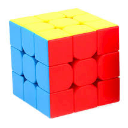
You’ve probably heard of the Rubik’s cube. Most people think of it as a mental exercise or a fidget toy, and the people that solve them are geniuses that go through all the 53 quintillion different scrambles in their heads. That’s not it. This complex puzzle has more to it than you would think. Over the years, this puzzle has become a competitive sport and an obsessive hobby for over 150 million people. This cubing community isn’t about competitivity. It’s about cheering on the success of your rivals. A lot of people work as businessmen or retail sales workers, but some people are cubers. And that’s their job.
-Chapter 1-
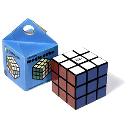
The Rubik’s cube was invented by Erno Rubik, a Hungarian inventor, architect, and professor. He is known for inventing many twisty puzzles including The Rubik’s cube and Rubik's snake. He wanted a model to represent 3-dimensional geometry, So he created the Rubik’s cube. He didn’t mean for the cube to become a toy, but then he realized that this could be fun for everyone. Adults and children. After many different prototypes, he finally came out with a functioning prototype. He called it the ‘magic cube’. The cube was very large and weighed twice as much as modern Rubik’s cubes. A year later, he obtained a patent for his ‘magic cube’, which after five years was renamed after its inventor.
In the late 1977’s, the first Rubik’s cubes were sent out into toy stores around Budapest as a test. The cube was very hard to take apart and had no small parts, which was perfect for children. In 1979, the cube was distributed around the world. The cube made its appearance in toy fairs all around the world, spreading from Los Angeles to Tokyo. It was at this point the cube was started to be mass-produced. This is also the time when David Singmaster, a professor of Mathematics in England mastered the layer by layer method that many beginners still use today. In 1980 and 1981, the cube received the Toy of the Year Award, and during the first three years of its release, over 100 million cubes had been sold throughout the world.
In 1982, the world’s first Rubik’s cube competition was held in Budapest, Hungary. The winner was Minh Thai, an American teenager that solved the cube in 22.95 seconds. He later wrote a book teaching other people how to solve the cube. After a couple of years, the hype that had formed in the previous years had died down. The cubes still sold incredibly well, but they weren’t as exciting as they had been before. At this time, Diamond Cutters Int. created a Rubik’s cube worth 1.5 million dollars. In 2003, the World Cubing Association, or the WCA, was founded by Tyson Mao and Ron Van Bruchem. Nowadays, professional speed cubes have different mechanisms and hardware that are huge improvements than the originals.
Competitions have grown to new heights in terms of technology and efficiency. So has the cubing community. It started with only about 1000 people knowing how to solve it. Now it has grown to over 120 million people. Over 120,000 people have participated in competition. The WCA overlooks any competitions around the world. These competitions can be held absolutely anywhere. The only things you need are a couple of people that can solve the cube, timers, and people that overlook the competition. This is how they work: people can come and register for different events. Then they do their solves and get their results at the end.
-Chapter 2
Cubers or speedcubers are the actual people that sit behind the timers and do their incredible magic. That magic is solving cubes. The world record at the moment is 3.47 seconds. Pretty impressive, right? The cuber, Yusheng Du, who is a Chinese speedcuber sponsored by the speedcubing company Moyu. He beat the previous world record by about three quarters of a second. The previous world record, held by Feliks Zemdegs, an Australian speedcuber that has over 100 world records and 400 gold medals, was 4.22 seconds. That’s a difference of exactly 0.75 seconds.
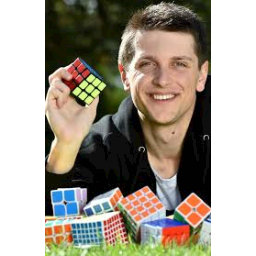
Now let’s talk about Feliks Zemdegs, shall we? So, Feliks Zemdegs is the most successful cuber in history. Feliks Aleksanders Zemdegs was born in Melbourne, Australia in 1995. He is currently 23 years old. He is the only cuber in history to win the World Championships twice.
Next up on my ‘list’ is Mats Valk, a Dutch speedcuber who is also 23 years old. He was born in the Netherlands in 1996. He held the fastest single solve world record before Feliks Zemdegs walked into the Guinness World Record book and took his record home to Australia. During Feliks’s world record solve, Mats Valk was sitting in the chair right next to him when he got the world record.
Going down the list, after Mats Valk we have, “drum roll, please”, Max Park. Max Park is considered one of the top speedcubers of the century. Max is an American speedcuber from California. He was born with autism and started cubing to develop his fine motor skills. When he began cubing, he couldn’t do things such as open a water bottle or doing anything delicate or precise with his hands. His parents helped him by making him do simple tasks such as putting pennies in a jar. He now holds the one-handed single solve world record with a time of 6.82 seconds.

Next up we are going to take a little trip down memory lane to cubing back in 2008, where the best cuber was a guy called Erik Akkersdijk. Erik Akkersdijk is a Dutch speedcuber that is currently 30 years old. He dominated the scene back until 2010. He is still considered one of the best speedcubers of the century. Another really good cuber is Collin Burns. He isn’t as good as the others I’ve mentioned, but he comes pretty close. He is younger than all of the others so he has tons more time to do what he loves. So that is it for the best speedcubers of the past 10 years. Did you know that there is more than just one type of cube? Keep reading to find out!
-Chapter 3-
As you might already know, there is more than just one type of Rubik’s cube, the original 3 by 3 cube invented 45 years ago. There are smaller variants, such as the 2 by 2, and there are bigger variants such as the 4 by 4 or the 5 by 5. The current world record for the most layered cube is 33x33x33. The creator of that puzzle is Gregoire Pfennig. He is the same person that created the most layers on one axis of the cube. You’ve probably heard of the 2 by 2, but have you ever heard of the 2 by 2 by 50?! There are more than just ‘normal puzzles’ on Earth. There are people that create cubes that no one has ever seen before, such as the 33 by 33.
- Full access to our public library
- Save favorite books
- Interact with authors
In this book, you wil learn the basics of cubing. Cubing is a competitive event and a hobby for over 120 million people. This book will teach you everything you need to know.
- < BEGINNING
- END >
-
DOWNLOAD
-
LIKE(6)
-
COMMENT()
-
SHARE
-
SAVE
-
BUY THIS BOOK
(from $3.99+) -
BUY THIS BOOK
(from $3.99+) - DOWNLOAD
- LIKE (6)
- COMMENT ()
- SHARE
- SAVE
- Report
-
BUY
-
LIKE(6)
-
COMMENT()
-
SHARE
- Excessive Violence
- Harassment
- Offensive Pictures
- Spelling & Grammar Errors
- Unfinished
- Other Problem






COMMENTS
Click 'X' to report any negative comments. Thanks!