
This book was created and published on StoryJumper™
©2010 StoryJumper, Inc. All rights reserved.
Publish your own children's book:
www.storyjumper.com


 Table of ContentsPolitical Developments.........(5-14) Eli Whitney & the Cotton Gin.........(5)
The Embargo Act of 1807.........(6)
War of 1812 ....................... (7-8)
Louisiana Purchase.................(9)
John Marshall Supreme
Court Decisions................(10-11)
Adams-Onis Treaty.............(12)
Monroe Doctrine................(13-14)
Art.....(18-23)
Literature....(23-28)
Architecture....(28-30)
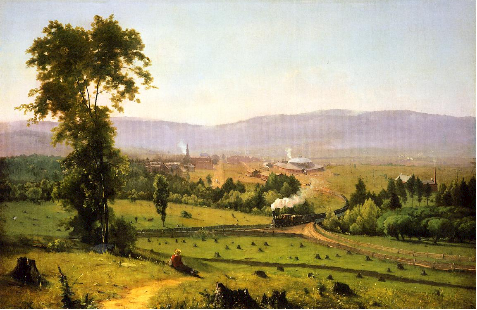 George Inness, "Lackawanna Valley", 1855
After the American Revolutionary War, an age of
nationalism came about our country which
allowed us to become truly independent and the
country we know today: America.


 Political Developments Eli Whitney & The Cotton Gin
In the early 1800's, Eli Whitney invented the first
cotton gin. The invention of the cotton gin is
considered one of the key inventions of the Industrial
Revolution and inevitably shaped the economy of the
South. The cotton gin caused cotton to become
America's leading crop and increased the argument for
slavery in the U.S.



 The Embargo Act of 1807
Embargo: an order of government prohibiting the movement merchant
ships into or out of ports
In 1807, Congress passed the Embargo Act of 1807, signed
by Thomas Jefferson, that stopped all trade between
America and other countries. The goal of this act was to get
Britain and France, who were fighting at the time, to stop
controlling and restricting American trade. Although the
act was unsuccessful, it was our young nation's first
attempt at a form of foreign policy.
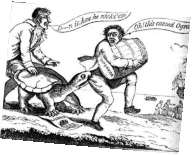


 War of 1812
In the War of 1812, or the "second war for independence",
America took on the most powerful naval power in the
world, Great Britain. The war of 1812 was caused mainly by
disagreements over shipping and trade on the seas.
Although, it ended in an American victory, the U.S.
suffered many defeats by the British. In the end,
Americans were able to drive back British invasions in New
York, Baltimore, and New Orleans while boosting national
confidence and a growing spirit of patriotism.
In the War of 1812, America took on the naval powers of the
greatest country in the world, Great Britain. The war was
mainly cause by British attempts to restrict trade and
America's desire to expand it's territory. Although, the U.S.
suffered many defeats by the British, American troops were
able to push back British invasions in New York, Baltimore,
and New Orleans. These successes boosted national
confidence and created a new spirit of patriotism in our young
nation.
The second war for independence was so important to
America's development as a country because it created
national borders between the U.S and Canada and decided
that a large standing army should be maintained.


The War of 1812 also inspired Francis Scott Key to write "The Star Spangled
Banner"; the song that would eventually become our national anthem.
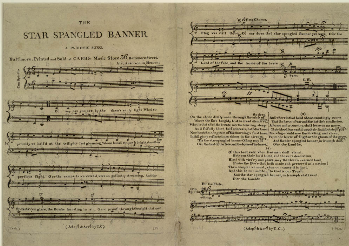
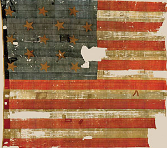 The original Star-Spangled Banner, the flag that
that inspired key in his works
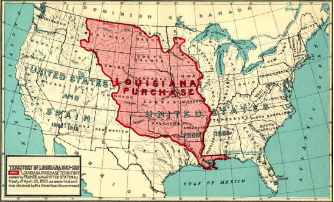
Louisiana PurchaseIn the Louisiana Purchase of 1803, the U.S. obtained
approximately 828,000,000 square miles of territory
from the French. This purchase doubled the size of our
young and growing country.

 John Marshall Supreme Court DecisionsMcCulloch v. Maryland
The state of Maryland imposed a heavy tax on a local branch of
the Bank of U.S., hoping for its failure. Marshall noted that if this
were allowed states would be overturning laws passed by
Congress. In the end, the Chief Justice denied Maryland the right
to tax the bank stating "the power to tax is the power to
destroy." The case between McCulloch v. Maryland was
important because it strengthened government economic control.


 Marbury v. Madison
On his last night in office, President John Adams
appointed about 40 new judges; William Marbury was
one of them.
Thomas Jefferson's Secretary of State, James Madison, was supposed to
officially present the new position to Marbury but failed to do so. So,
Marbury sued in attempt to get Madison to award him his
position.
In the end, the Supreme Court refuses to grant Marbury his
position. This court case is significant because Judicial Review
is established. Also, it acknowledged that a section of the
Judiciary Act of 1789 ,which originally set up the federal courts,
was unconstitutional and void. This case inevitably limited
power of the Legislative Branch.

 Gibbons v. Ogden
Ogden owned a steamboat company and was gifted a monopoly by the state
of New York, because of this he believed he was the only operator entitled to
run a company like this. When Gibbons began to run a similar company and
Ogden sued. Supremer Court then ruled that Ogden's "exclusive" right
granted by N.Y. was not legal because it crossed state lines. This case
clarified that Congress had authority over interstate commerce and insured
that the federal government had power to regulate everything interstate.
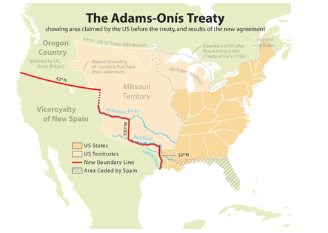
Adams-Onis TreatyIn the Adams-Onis treaty Spain gave up the Florida territory
to the U.S. and also gave up clims to Oregon Territory. This
treaty expanded the American frontier even farther allowing
our country to grow even more.

 Monroe Doctrine
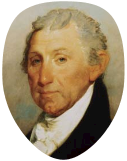
 In 1823, President James Monroe warned all outside powers
not to interfere with the affairs in the Western hemisphere.
The Monroe Doctrine warned them not to make new colonies
or try to overthrow newly independent republics. Monroe
said "such actions" could prove dangerous to our peace and
safety. The United States would not interfere in European
affairs or with existing colonies in that hemisphere.



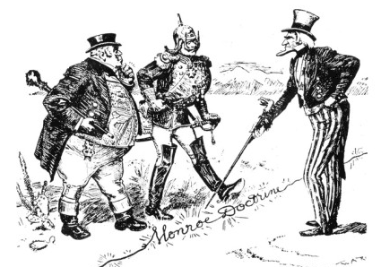

 Political cartoon representing the Monroe DoctrineEconomic DevelopmentsHenry Clay's American System
 President James Madison hoped to create a plan that
would unite different regions of the country and create a
strong, stable economy that would make America a self-
efficient country. The plan needed to fulfill 3 major points:
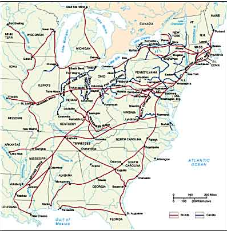
1. Developing transportation and internal improvement
2. Establishing a protective tariff
3. Resurrecting the National Bank


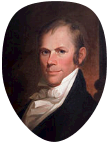
This is when Henry Clay proposed the "American System" His
system would unite the nations economic interests. The
increasingly industrial North produced manufactured goods
that farmers in the South would buy while the South produced
wheat, grain, meat and cotton need in the North.
Clay's system also included a nationally accepted currency.


With each part of the country sustaining each other, Americans were
finally economically independent of Britain and other European
nations. America was finally self sufficient.
A map of the roads created in Henry Clay's American System

 Cultural DevelopmentsArt
Hudson River School
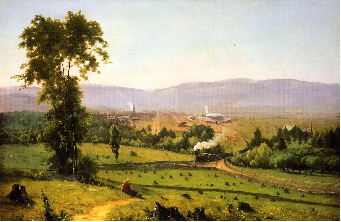

 George Inness, "Lackawanna Valley", 1855
You've previewed 19 of 30 pages.
To read more:
Click Sign Up (Free)- Full access to our public library
- Save favorite books
- Interact with authors


- < BEGINNING
- END >
-
DOWNLOAD
-
LIKE(1)
-
COMMENT()
-
SHARE
-
SAVE
-
BUY THIS BOOK
(from $5.99+) -
BUY THIS BOOK
(from $5.99+) - DOWNLOAD
- LIKE (1)
- COMMENT ()
- SHARE
- SAVE
- Report
-
BUY
-
LIKE(1)
-
COMMENT()
-
SHARE
- Excessive Violence
- Harassment
- Offensive Pictures
- Spelling & Grammar Errors
- Unfinished
- Other Problem





COMMENTS
Click 'X' to report any negative comments. Thanks!