









For all young scientists

is for Acceleration.
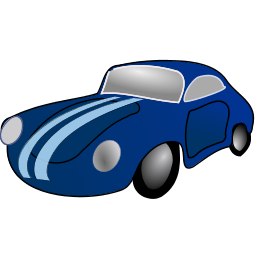
Acceleration is the rate of change in an object. It is a fancy word for speeding up. When a car is speeding up a car is accelerating.


is for Balanced forces
Balanced forces are two of the same forces acting in opposite directions. Balanced forces allow for you to stand still with no movement.


is for Conclusion

Conclusion is the final decision that is made through reasoning. A conclusion is usually an answer to the starting question. In an experiment, a conclusion is a summary of your findings.

is for Deceleration

Deceleration is when the velocity of an object decreases. It is a fancy word for slowing down. When a car is slowing down a car is decelerating.

is for Energy

Energy is how things move and change. It takes energy to walking a dog, cook food, and ride your bike.


is for Force

A force is a push or a pull on an object. Force can make objects speed up, slow down, or stand still. When you kick a soccer ball, it requires a force to move the ball.

is for Gravity

Gravity is the force of attraction that pulls together everything on earth. Gravity allows your family to stay on the ground and not float around.

is for Hypothesis

A hypothesis is an idea that you test through experiments. Hypotheses will change as you make new findings. Every experiment should start with a hypothesis.

is for Inertia

Inertia is the resistance of change in an object. A bouncy ball will is stay still until someone picks it up and throws it.

is for Joule

Joule is a standard unit of energy in science. Joule is equal to one newton. An apple weighs about one newton.

is for Kinetic energy

Kinetic energy is energy an object has in motion. A yo-yo has kinetic energy when it is in motion.

is for Law

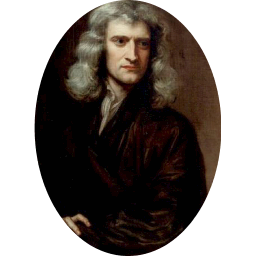
A science law is the relationship between two or more different things. A law does not change. Issac Newton wrote three laws of motion that is true about all objects.

is for Mass

Mass is the amount of stuff that makes up an object. Mass always stays the same. Astronauts have the same mass in space, but different weights.

is for Newton's 3 laws

Newtons 3 laws are:
- An object at rest stays at rest, and an object in motion stays in motion
- The greater the mass of an object, the more force it will take to accelerate the object
- For every action there is an equal and opposite reaction


is for Observation

Observation is gathering information of what is seen during an experiment. They are notes for what happens and when it happens.

is for Push/Pull

A push or pull is a force that makes an object move away or towards something. You can push or pull almost any object.

is for Quantitative data

Quantitative data is is data that is taken by counting or measuring. Quantitative data should have numbers involved.


- Full access to our public library
- Save favorite books
- Interact with authors

- < BEGINNING
- END >
-
DOWNLOAD
-
LIKE(2)
-
COMMENT()
-
SHARE
-
SAVE
-
BUY THIS BOOK
(from $5.59+) -
BUY THIS BOOK
(from $5.59+) - DOWNLOAD
- LIKE (2)
- COMMENT ()
- SHARE
- SAVE
- Report
-
BUY
-
LIKE(2)
-
COMMENT()
-
SHARE
- Excessive Violence
- Harassment
- Offensive Pictures
- Spelling & Grammar Errors
- Unfinished
- Other Problem

COMMENTS
Click 'X' to report any negative comments. Thanks!