To the kids all over the world..!!!!


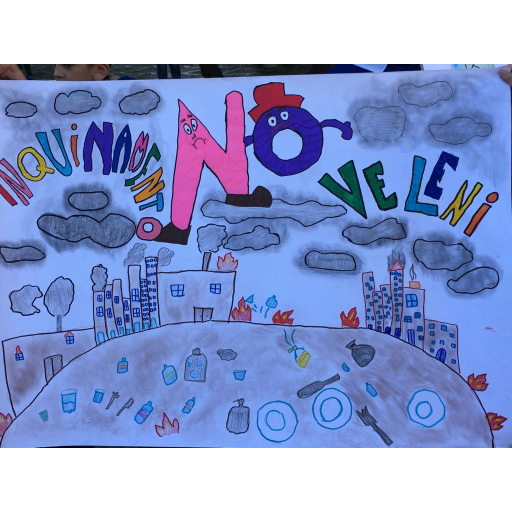
Greece
In the last decades the planet has been tested by its global phenomenon the climate change.
Global warming and the extreme local weather events, such as protracted droughts and the most frequent floods cause serious impact on the well-being of the whole community and the economy.
In a study conducted by WWF Hellas17 in collaboration with National Athens Observatory and the title "Tomorrow's Greece" is an attempt forecast for the climate in Greece in the period 2020-2050.
According to the results of the survey, the already existing discomfort city dwellers are going to intensify.
City dwellers such as Thessaloniki, Patra, Lamia and Larissa will be subject to up to 20
more heat days.
At the same time, in Lamia, Larissa, Volos, Thessaloniki and Athens, overall precipitation will decline, but are expected to increase by 10-20% extreme rainfall.
In other words, the risk appears to be increased for both flood events and and for spreading fires in the suburban forests.
Climate change is globally considered as one of the most important issues in recent decades. This term refers to the alterations of the climate balance which affects the meteorological conditions of the planet Earth causing catastrophic consequences. These changes extend over time and according to scientific researches are the result of natural and human processes.
In particular, scientific models studying climate change-related factors show that physical changes, such as intensity of solar fluctuations, volcanic eruptions, etc. cannot explain climate deterioration, focusing on human actions.
The main reasons are the reckless use of fossil fuels, extensive fires, deforestation, increased livestock, overfishing, air pollution, water pollution, etc. Nowadays, this environmental emergency requires urgent actions in order to sustain life on our planet. Specifically, the effects of climate change are evident in the Mediterranean region through the occurrence of extreme weather events. In Greece, the main causes of these climate changes are the increase in the frequency and intensity of forest fires in Attica, Peloponnese and Evia, which lead to long periods of heat, landslides, floods, drought, biodiversity threats and more.
As a result, the environmental education programs should focus on the development of environmental awareness which concentrates on providing information and develop attitudes in favor of environmental protection, leading the future citizens to become more responsible and act.
Italy
2018, chronicle of an announced emergency: the balance of the impacts of climate change in Italy in the research of Legambiente in collaboration with the Unipol Group.
The climate has already changed. 2018 was the hottest year for Italy since 1800 and there is a succession of records that cannot leave us indifferent. Cloudbursts, droughts, increasingly strong and prolonged heat waves, increasingly intense and extreme meteorological phenomena due primarily to climate change are causing damage to the territories, to the cities behind in climate adaptation policies, and to citizens' health.
Only in the year that only 32 victims are about to end in 148 extreme events that have occurred throughout the peninsula; 66 are the cases of flooding from heavy rains; 41 cases, instead, of damage from air horns, 23 of infrastructure damage and 20 river floods.
All this is placed in a scenario where the trend is that of a constant worsening of the climatic conditions which today makes it no longer postponable to intervene even on the front of adaptation to a changing climate, with the aim of saving people and reducing the economic, environmental and social impact of the damage caused.
The photograph of this change was taken in the 2018 research - Chronicle of an announced emergency carried out by Legambiente in collaboration with the Unipol Group which takes stock of what happened this year, outlining trends and statistics on the damage caused in Italy by the phenomena also highlighting good practices, both in our country and abroad, in terms of adapting public spaces, neighborhoods in urban areas, squares, rivers or plans and strategies to mitigate the effects of climate change. Information also reported online in the map created by the City Clima observatory of Legambiente.
Bulgaria
Bulgaria includes 31% lowlands (0–200 m), 41% hills (200–600 m), 25% highlands (600–1,600 m), and 3% mountains (>1,600 m).
The country is split into northern and southern Bulgaria by the Balkan Mountains. The climate is continental in the north and close to Mediterranean in the South. The annual amount of precipitation is between 500 and 650 mm, with precipitation ranging from 440 to 1020 mm. The highest monthly values are measured in June (at some places in May), with mean totals between 55 and 85 mm. February (or March) is the driest month, with mean totals between 30 and 45 mm .
The continental influence, stronger during the winter, produces abundant snowfall; the Mediterranean influence increases during the summer and produces hot, dry weather. The barrier effect of the Balkan Mountains is felt throughout the country: on the average, northern Bulgaria is about one degree cooler and receives about 192 more millimetres of rain than southern Bulgaria .
Bulgaria has five climatic zones - Moderate Continental, Intermediate, Continental-Mediterranean, Maritime and Mountainous.
The main factor distinguishing the first three zones is the latitude, the terrain for the mountainous and the Black Sea for the maritime. The coastal climate is moderated by the Black Sea, but strong winds and violent local storms are frequent during the winter.
Winters along the Danube River are bitterly cold, while sheltered valleys opening to the south along the Greek and Turkish borders may be as mild as areas along the Mediterranean or Aegean coasts .
The monthly mean temperature varies from -10.9 to 3.2 C in January and from 5.0 to 25.0 C in July. The highest readings are usually taken in the towns of Rousse and Silistra, sometimes reaching above 35°C .
Air temperature changes until now
Generally, there is no significant overall trend of mean annual air temperature in Bulgaria for the 20th century .
Warming is observed, however, from the middle of 1980s. In fact, since 1997 all annual temperature anomalies are positive. 2007 was the warmest year recorded during the period of measurements in Bulgaria: temperature was 1.6C above the average over the period 1961-1990.
The years 1994, 2000, 2002 and 2009 were among the warmest years on record in Bulgaria .
In the eastern Mediterranean, the intensity, length and number of heat waves have increased by a factor of six to eight since the 1960s .
- Full access to our public library
- Save favorite books
- Interact with authors
- < BEGINNING
- END >
-
DOWNLOAD
-
LIKE(2)
-
COMMENT()
-
SHARE
-
SAVE
-
BUY THIS BOOK
(from $3.39+) -
BUY THIS BOOK
(from $3.39+) - DOWNLOAD
- LIKE (2)
- COMMENT ()
- SHARE
- SAVE
- Report
-
BUY
-
LIKE(2)
-
COMMENT()
-
SHARE
- Excessive Violence
- Harassment
- Offensive Pictures
- Spelling & Grammar Errors
- Unfinished
- Other Problem





COMMENTS
Click 'X' to report any negative comments. Thanks!