 Colonization Era
This book was created and published on StoryJumper™
©2010 StoryJumper, Inc. All rights reserved.
Publish your own children's book:
www.storyjumper.com


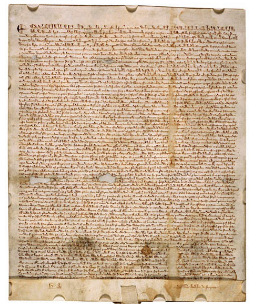
 Magna Carta
 1215
1215The Magna Carta
limited the king's
powers and gave
basic civil rights to
citizens.


 We're colonists!
 Jamestown
 1607
1607This was the the first
permanent colonial
settlement.
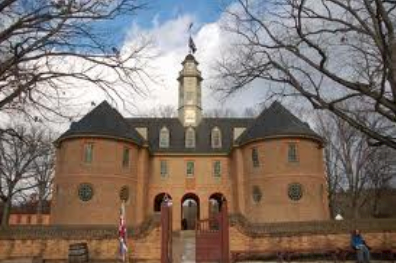
 House of Burgesses
 1619
1619This was the first
representative
assembly in the
American colonies.

 1620
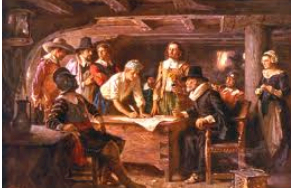
1620 Mayflower Compact
Signed by the men who
sailed to America on
the Mayflower, which
called for the good of
the colony and set the
idea of self
government.

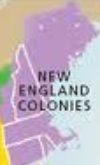
 New England Colonies
North-eastern part of the
colonies (New Hampshire,
Massachusetts, Rhode
Island, Connecticut) This
region forced education
and religion upon the
children.
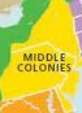 Middle Colonies
So called "Melting pot" of
the 3 colonial regions
(New York, New Jersey,
Delaware, Pennsylvania)
This region relied solely
on it's lumber exports
and crop growth.
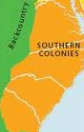 Southern colonies
(Virginia, Maryland,
North Carolina, South
Carolina, Georgia) In this
region, slavery WAS
their economy. There
was fertile soil where
slaves grew crops such
as cotton, wheat, and
corn.

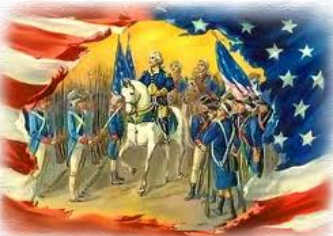
 American Revolution Era

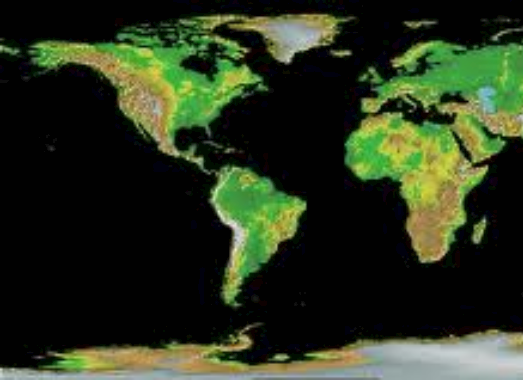
 French & Indian WarV.S.

 French & Indian War
 1754-1763
This was the war
fought between
Britain and France
over land disputes
of North America.
 Treaty of Paris 1763
 1763
1763This document ended
the French and Indian
War and handed over all
land France had claimed
as its own.

 Appalachian Mountains
Colonists can
go west now!!!
 Proclamation of 17631763
Prohibited American
colonists from settling
west of the Appalachian
Mountains.


 Sugar Act1764
Placed taxes on sugar,
molasses, and other
products. It also called
for harsh punishment of
smugglers.






 You have to let us in!
 Quartering Act1765
This law forced colonists
to house British soldiers
during the American
Revolution.

 Stamp Act
 1765
1765This law called for a
required stamp showing
proof of purchase on all
imported goods to the
colonies.




 Well we're not paying,lobster-backs!
 Tax time, so pay up or die!
 Townshend Acts
 1767
1767This was a series of
laws that suspended
New York assembly
and established taxes
on goods imported to
British colonies.


 Boston Massacre!1770
The Boston Massacre
was a clash between
soldiers and Boston
colonists in which 5
colonists (including
Crispus Attucks) were
killed.


 No taxes!!!Yeah!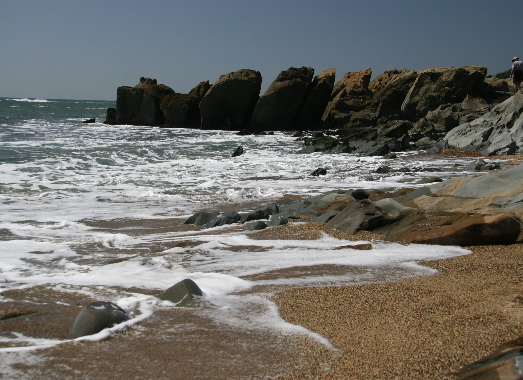
 Boston Tea Party


 1773
1773This was the
dumping of 342
chests of tea into
Boston harbor by
colonists in 1773 to
protest the Tea Act.
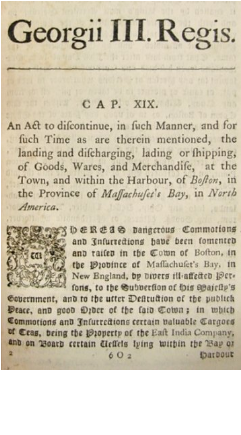
 Intolerable Acts1774
These laws were created
to punish Massachusetts
colonists for the Boston
Tea Party.

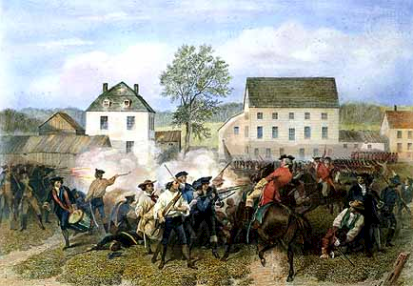
 Battle of Lexington & Concord
 Lexington & Concord
 1775
1775This was the first battle
fought of the American
Revolution.
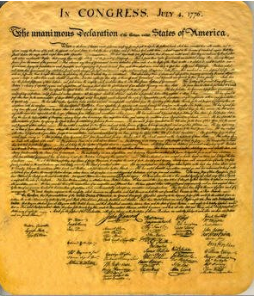
 Declaration of Independence
 1776
1776This was a document in
which the colonists
declared Independence
from Britain.
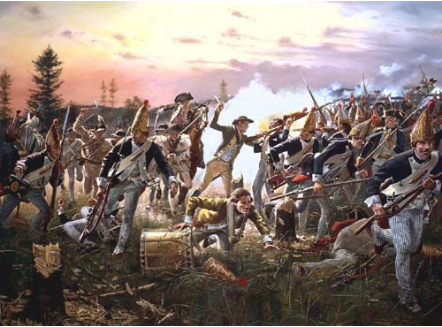
 Hessians
 Battle of Saratoga
 Saratoga1777
This battle was the turning point
of the American Revolution (first
battle the Americans won).
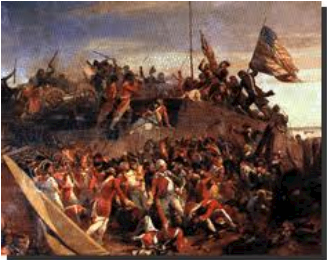
 Battle of Yorktown
 Yorktown1781
This battle was the last
fought of the American
Revolution.
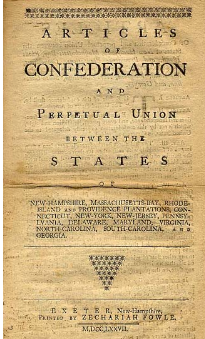
 Articles of Confederation1781
This was the Article
adopted by the
Continental Congress in
1777 and finally approved
by the states in 1781.
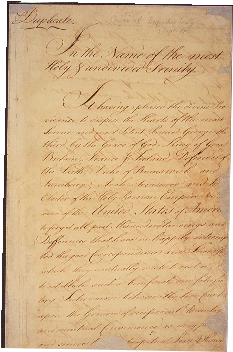
 Treaty of Paris 17831783
This was the treaty that
ended the Revolutionary
War, confirming
Independence of U.S.
and setting boundaries of
the new nation.

 Constitutional Era
It described how the Northwest territory
was to be governed and set conditions for
settlement and settler's rights.
 1787
1787 Northwest Ordinance
 Great Compromise
 1787
1787The Constitutional Convention's
agreement to establish a two-
house national legislature, with
all states having equal
representation in one house and
each state having
representation based on its
population in the other house.
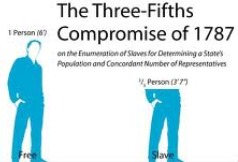
 3/5ths Compromise
Three-fifths of the slave
population would be counted
when setting direct taxes on
the states.
 1787
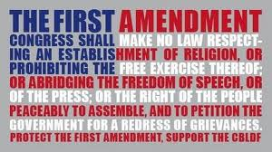
1787 1st Amendment
 Guarantees the right to
freedom of speech,
press, petition, and
religion and the right to
assemble.

 2nd Amendment
Gives all American
citizens the right to
bear arms.
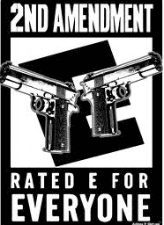
 Right to bear arms
 3rd Amendment
 Quartering troops
No soldier shall, in
time of peace, be
quartered in any house
without the consent of
the owner



 Let me in!
  No, I don't have to!
 4th Amendment
 Search and Seizure
The right of the
people to be secure
in their persons
houses,papers, and
effects, against
unreasonable
searches and
seizures.
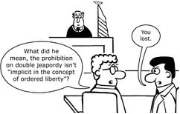
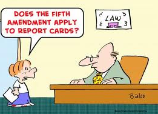
 5th Amendment
 Rights of the Accused
Right to remain
silent, every
person also can't
be accused of the
same crime twice
to be put in
double jeapardy
of life or limb.
 6th Amendment
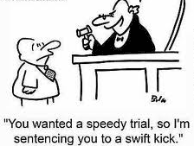
 Right to speedy public trial
In all criminal
prosecution the
accused shall enjoy
the right to a speedy
trial, by an impartial
jury of the state and
district.
You've previewed 63 of 96 pages.
To read more:
Click Sign Up (Free)- Full access to our public library
- Save favorite books
- Interact with authors


- < BEGINNING
- END >
-
DOWNLOAD
-
LIKE
-
COMMENT()
-
SHARE
-
SAVE
-
BUY THIS BOOK
(from $19.19+) -
BUY THIS BOOK
(from $19.19+) - DOWNLOAD
- LIKE
- COMMENT ()
- SHARE
- SAVE
- Report
-
BUY
-
LIKE
-
COMMENT()
-
SHARE
- Excessive Violence
- Harassment
- Offensive Pictures
- Spelling & Grammar Errors
- Unfinished
- Other Problem





COMMENTS
Click 'X' to report any negative comments. Thanks!