My brethren, count it all joy when you fall into various trials, knowing that the testing of your faith produces patience. But let patience have its perfect work, that you may be perfect and complete, lacking nothing. James 1:2-4 (NKJV)
Written by Paul Farnon
Illustrated by Brooke Coleman
credit of FreeBibleImages.org

This is the story of Joseph who was the youngest son of Jacob. Joseph’s older brothers’ names were Reuben, Simeon, Levi, Judah, Issachar, Zebulun, Dan, Naphtali, Gad and Asher. Because the Angel of the Lord changed Jacob’s name to Israel (Genesis 32:28), Joseph and his brothers were known as Israelites.
Being the youngest child of Jacob, Joseph spent a lot of time with his father. When Joseph was seventeen years old, he helped feed his father’s flocks along with his brothers Dan, Naphtali, Gad and Asher. However, these four brothers were doing something they should not have been doing and Joseph mentioned it to his father. It appears these four brothers found out that Joseph had told their father about their conduct, and this made them angry. In addition to being angry with Joseph, his brothers became jealous when their father made him a high quality garment of different colors to wear.
If things weren’t bad enough, Joseph then had a dream in which his brothers bowed down to him. The dream was as follows, "There we were, binding sheaves in the field. Then behold, my sheaf arose and also stood upright; and indeed your sheaves stood all around and bowed down to my sheaf. And his brothers said to him, “Shall you indeed reign over us?” So they hated him even more for his dreams and for his words."
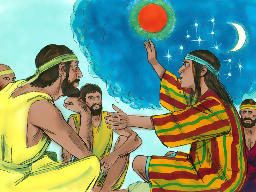
As we will see later in the story, this dream was a prophecy describing events that would occur in the future. The next dream that Joseph had was similar, but it included Joseph’s father and mother. "Then he dreamed still another dream and told it to his brothers, and said, “Look, I have dreamed another dream. And this time, the sun, the moon, and the eleven stars bowed down to me.” So he told it to his father and his brothers; and his father rebuked him and said to him, “What is this dream that you have dreamed? Shall your mother and I and your brothers indeed come to bow down to the earth before you?”
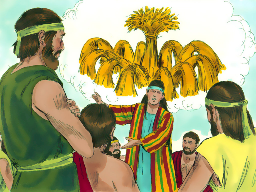
"My sheaf arose and also stood upright; and indeed your sheaves stood all around and bowed down to my sheaf."
“Look, I have dreamed another dream. And this time, the sun, the moon, and the eleven stars bowed down to me.”
It is interesting that Jacob did not correct Joseph about the eleven stars that represented his brothers. In other words, Jacob must have understood that Joseph’s dream was about future events because there were only ten sons alive when he had the dream. Therefore, it makes sense that Joseph would eventually have a younger brother. If this did happen, the eleven stars representing eleven brothers would be correct. As we will see later, Benjamin was born and he replaced Joseph as the youngest brother. Therefore, including Joseph, the number of Jacob’s sons would become twelve. Following these dreams, Joseph’s older brothers were supposed to go to the town of Shechem and look after the flock. To make sure everything was going well, Jacob sent Joseph to check up on them. However, when Joseph arrived in Shechem his brothers were not there. Instead, they were about 50 miles north in the town of Dothan. At this point, Joseph could have returned home to his father and said that his older brothers were not in Shechem. However, Joseph felt it necessary to do his best at fulfilling the instructions his father had given him.
Sadly, Joseph’s brothers were not pleased when they saw him coming,
"Now when they saw him afar off, even before he came near them, they conspired against him to kill him." Thankfully, Joseph’s oldest brother Reuben prevented the other brothers from killing him, "But Reuben heard it, and he delivered Joseph out of their hands, and said, “”Let us not kill him.” And Reuben said to them, “Shed no blood, but cast him into this pit which is in the wilderness, and do not lay a hand on him.”
Reuben’s plan was to take Joseph back to his father but, when Reuben was gone for awhile, the other brothers allowed Midianite traders to take Joseph out of the pit and sold him for twenty shekels of silver (Lev. 27:5). These traders then took Joseph to to Egypt. By the time Reuben returned to get Joseph it was too late:
"Then Reuben returned to the pit, and indeed Joseph was not there; and Reuben tore his clothes. And he returned to his brothers and said, “The lad is no more; and I, where shall I go?”
According to God’s law, Joseph’s brothers were all guilty of death for kidnapping him (Deuteronomy 24:7), but this would not be the last sin they committed in this story. Next, they broke two more of God’s commandments by dishonoring their father Jacob, and lying to him (Exodus 20:12, 16),
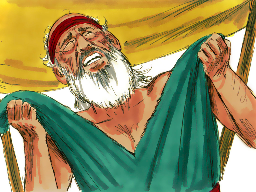
"So they took Joseph’s garment of different colors, killed a kid of the goats, and dipped the garment in the blood. Then they sent the garment of many colors, and brought it to their father and said, “We have found this. Do you know whether it is your son’s garment or not?” And he recognized it and said, “It is my son’s garment. A wild beast has devoured him. Without doubt Joseph is torn to pieces.” Then Jacob tore his clothes, put sackcloth on his waist, and cried for his son many days."
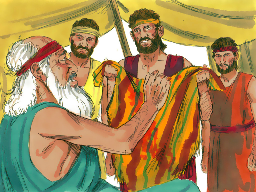
"We have found this. Do you know whether it is your son’s garment or not?"
"Then Jacob tore his clothes, put sackcloth on his waist, and cried for his son many days."
Meanwhile, the traders who had purchased Joseph for twenty shekels of silver decided to sell him for more money to Potiphar, who was the captain of Pharaoh’s guard. So Joseph became a servant in Potiphar’s house. As time went by, Potiphar became more and more impressed with the work that Joseph did. Therefore, Potiphar made Joseph the head servant of his household. With Joseph in this new position, God blessed the household of Potiphar as well as other possessions and properties that he owned. Unfortunately, Potiphar’s wife became attracted to Joseph and wanted Joseph to treat her as if he was her husband. Joseph knew this was against God’s law and when he explained it to her, she got angry and falsely accused Joseph of attacking her in order to get Joseph in trouble with Potiphar. "Joseph said to Potiphar’s wife, “Look, my master does not know what is with me in the house, and he has committed all that he has to my hand. There is no one greater in this house than I, nor has he kept back anything from me but you, because you are his wife. How then can I do this great wickedness, and sin against God?”
"And it happened, when he heard me cry out that he left his garment, and fled outside"
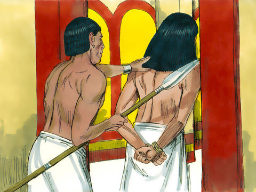
"So she called to the men of her house and spoke to them, saying, “See, Potiphar has brought in to us a Hebrew to laugh at us. He came in to attack me, and I cried out with a loud voice. And it happened, when he heard me cry out that he left his garment, and fled outside.” So she kept Joseph’s garment until Potiphar came home.
So it was, when Potiphar heard the words which his wife spoke saying, “Your servant did to me after this manner,” that his anger was aroused. Then Joseph’s master took him and put him into prison."
While Joseph was a prisoner, God helped him find favor in the sight of the prison supervisor. In time, this supervisor gave more and more responsibility to Joseph,
"The keeper of the prison did not look into anything that was under Joseph’s hand, because the Lord was with him; and whatever he did, the Lord made it prosper."
Even though Joseph was respected by those in the prison, it did not lead to his release. In fact, Psalm 105:18 describes Joseph suffering for awhile with iron chains around his feet and neck. Therefore, God started a series of events that would eventually allow Joseph to get out of prison. The first in this series of events involved Pharaoh’s butler and baker who offended Pharaoh and ended up in prison with Joseph. Both these men had a dream during the same night and were sad the next day because they did not know what their dreams meant. Thankfully, God gave Joseph the ability to understand what these dreams meant.
"The chief butler said, “Behold, in my dream a vine was before me, and in the vine were three branches; it was as though it budded, its blossoms shot forth, and its clusters brought forth ripe grapes. Then Pharaoh’s cup was in my hand; and I took the grapes and pressed them into Pharaoh’s cup, and placed the cup in Pharaoh’s hand.”
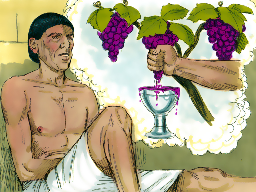
"And Joseph said to him, “This is the meaning of it; The three branches are three days. Now within three days Pharaoh will lift up your head and restore you to your position, and you will put Pharaoh’s cup into his hand according to the former manner, when you were his butler.”
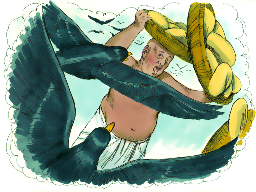
"Then the chief baker said, “I also was in my dream, and there I had three baskets of white bread on my head. In the uppermost basket there were all kinds of baked goods for Pharaoh, and the birds ate them out of the basket on my head.” So Joseph answered and said, “This is the meaning of it: The three baskets are three days. Within three days Pharaoh will lift off your head from you and hang you on a tree; and the birds will eat your flesh from you.”
And just as Joseph said, the chief butler was given his job back, but the baker was hanged.
Even though Joseph had asked the butler to try and get him out of prison, the butler quickly forgot about Joseph until two years later when Pharaoh had a dream and wanted to know what it meant,
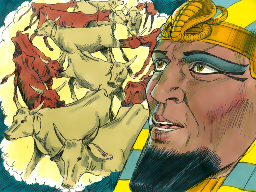
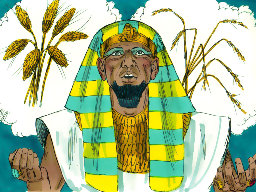
"Pharaoh had a dream, and behold, he stood by the river while seven cows came out of it. They were fine looking and fat. Then behold, seven other cows came out of the river but they were ugly and skinny. Then the ugly and skinny cows ate the seven fine looking and fat cows. At this point, Pharaoh woke up. Then he went back to sleep and had another dream. In this next dream, he saw seven heads of grain coming up on one stalk and they were plump and good. Then, he saw seven thin heads which were damaged by the hot east wind and they devoured the seven plump and good ones."
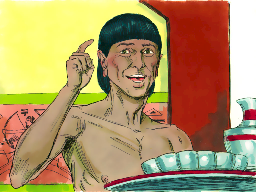
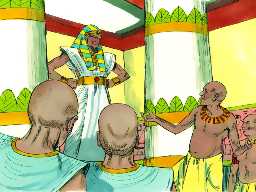
In the morning, Pharaoh wanted someone to explain what his two dreams meant, but no one in his kingdom was able to. At this point, the butler remembered Joseph’s ability to explain the meaning of dreams. So the butler told Pharaoh about Joseph, and Pharaoh ordered his servants to bring Joseph out of prison so he could explain the meaning of these two dreams. Just before Joseph explained the two dreams, he told Pharaoh that only God knows the meaning of dreams
"Joseph said to Pharaoh, “It is not in me; God will give Pharaoh an answer. Both dreams are saying the same thing and through these dreams God is showing Pharaoh what will soon happen. The seven good cows and seven good heads of grain are seven years of great abundance that will come to all the land of Egypt, while the seven skinny cows and seven damaged heads of grain are seven years of very little food in the land."
After explaining what these two dreams meant, Joseph suggested that Pharaoh take action to make sure no one in the land starved to death after the seven years of abundance ends. This is what Joseph said: "Let Pharaoh choose a wise man who can appoint officers to collect one-fifth of the food that grows in the land of Egypt during the seven years of abundance. This food can be stored up and used to feed the people during the seven years when little will be able to grow in the land." At this point, Pharaoh knew that God was helping Joseph. Therefore, Pharaoh put Joseph in charge of gathering food during the seven good years and then distributing this food to the people during the seven years when food would be hard to find. This is what Pharaoh commanded, "Joseph shall be in charge of my country, and all my people shall be ruled according to his word. However, Joseph will not be equal to me because I am king of Egypt. Even so, no one else may do anything without Joseph’s permission."
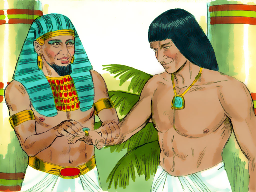
Pharaoh then gave Joseph a royal ring for his finger and a gold chain to go around his neck. Also, Joseph was given a special garment to wear so the people would know he represented Pharaoh. God wanted this special garment to replace the garment that was removed by Joseph’s brothers when he was seventeen years old. Because Joseph was separated from his real father Jacob, Pharaoh acted like a father by giving Joseph a wife. Parents deciding who their children would marry was a common practice many years ago.
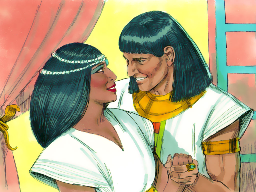
"Joseph called his first son, Manasseh, which means “For God has made me forget all my toil and all my father’s house.” And the name of Joseph’s second son was Ephraim, which means “For God has caused me to be fruitful in the land of my hardship.”
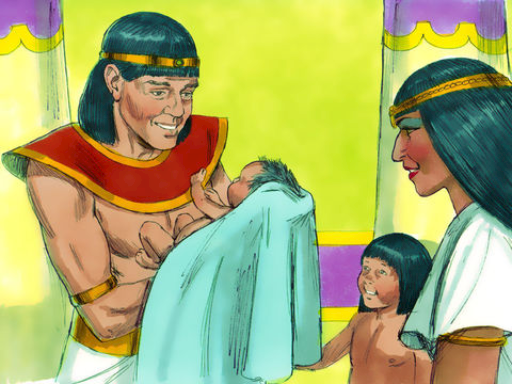
After the seven years of abundance ended, the people in Egypt noticed that the fields stopped producing food for them. Not only were the people of Egypt noticing this problem, other countries outside Egypt were also beginning to suffer. For example, the country of Canaan where Jacob lived stopped producing grain. Therefore, Jacob told ten of his sons to travel to Egypt and buy grain. However, before Jacob’s sons could buy grain in Egypt, they would have to get permission from the ruler who was responsible for selling it, and that ruler was Joseph! By this time, Joseph was about 20 years older than he was when his brothers last saw him. As a result, they would not recognize that this Egyptian ruler was the brother they had sold as a slave twenty years ago. Also, Joseph would be wearing Egyptian clothing and the style of his hair would have been different from his brothers.
Joseph’s brothers came and bowed down before him with their faces to the earth and, although Joseph recognized them, they did not recognize him. This was an opportunity for Joseph to teach his brothers an important lesson about their sinful conduct many years ago. In order to do this, Joseph needed them to feel how he felt when they mistreated him. This way they would realize how serious their sin really was, and the consequences that sin has on other people.
"Joseph spoke harshly to them and said, “You are spies! You have come here to see how you can take advantage of this land and its food!”
At this point, Joseph’s brothers were very scared because spies could be put to death. So they explained their situation and revealed personal information that Joseph could later use against them. "So they said, “Your servants are twelve brothers, the sons of one man in the land of Canaan; and in fact, the youngest is with our father today, but the other is dead.”
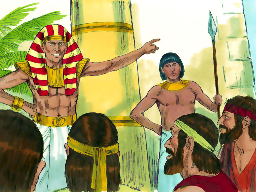
After this statement from his brothers, Joseph continued to insist that they were spies and, to prove their claims were true, they would have to bring their youngest brother Benjamin to Egypt. Joseph then put them in prison for three days to think about the command he just gave them. This would allow them to experience, for a short time, the same suffering that Joseph went through over the many years he was in prison. Then Joseph released them under certain conditions, including the continued imprisonment of Simeon.
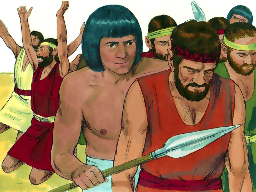
Joseph’s brothers were not aware that he understood their language, which was Hebrew. They thought he only understood the Egyptian language. So while they were speaking to each other in Hebrew, Joseph understood everything they said. And from their discussion it became clear to Joseph that they were beginning to understand how serious their crime of kidnapping was. "Then they said to one another, “We are guilty concerning our brother Joseph, for we saw the anguish of his heart when he pleaded with us, and we refused to listen to him; therefore this distress has come upon us.”
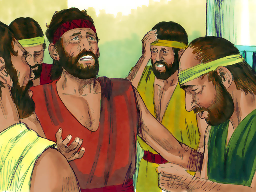
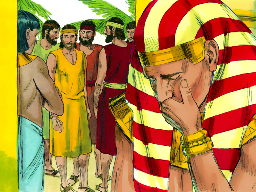
So they now started to feel how hard it must have felt for Joseph when they sold him as a slave. Even more importantly, Joseph wanted his brothers to understand that they sinned against God. So he had his servants put the money his brothers had just paid for the grain, back into their sacks. And they were not aware this happened until they made their first stop on the way home to Canaan.
"But as one of them opened his sack to give his donkey feed, he saw his money. So he said to his brothers, “My money has been restored!” Then their hearts sank and they were afraid, saying to one another, “What is this that God has done to us?”
- Full access to our public library
- Save favorite books
- Interact with authors
- < BEGINNING
- END >
-
DOWNLOAD
-
LIKE
-
COMMENT()
-
SHARE
-
SAVE
-
BUY THIS BOOK
(from $10.79+) -
BUY THIS BOOK
(from $10.79+) - DOWNLOAD
- LIKE
- COMMENT ()
- SHARE
- SAVE
- Report
-
BUY
-
LIKE
-
COMMENT()
-
SHARE
- Excessive Violence
- Harassment
- Offensive Pictures
- Spelling & Grammar Errors
- Unfinished
- Other Problem






COMMENTS
Click 'X' to report any negative comments. Thanks!