
This book was created and published on StoryJumper™
©2010 StoryJumper, Inc. All rights reserved.
Publish your own children's book:
www.storyjumper.com

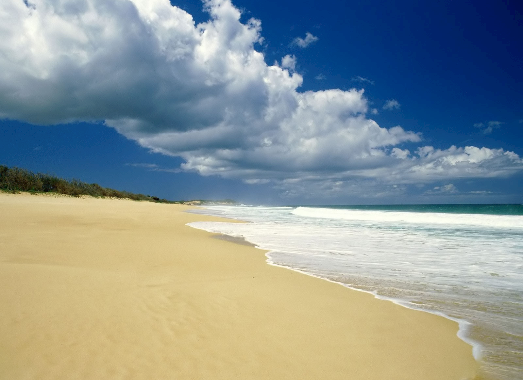 The Water Cycle


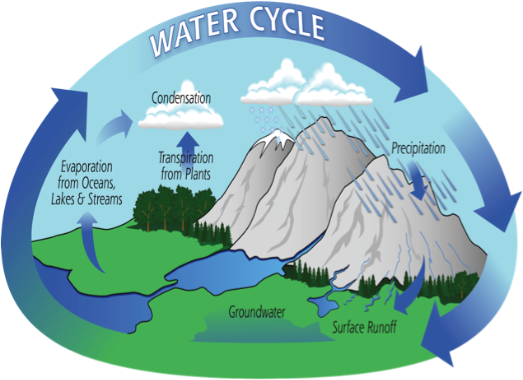
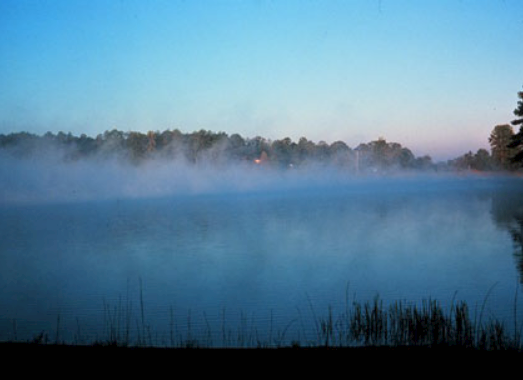 Step 1: Evaporation
 The first step of the water cycle is evaporation.
Evaporation is the change of liquid into vapor.
When the water in lakes, rivers and oceans heat
up, the water molecules heat up and start
moving more rapidly causing the water to rise up
into the atmosphere.

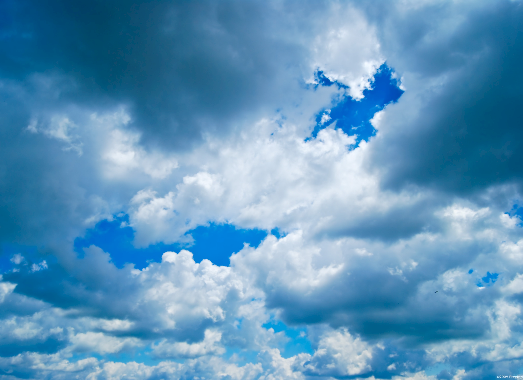 Step 2: Condensation


The second step of the water cycle is
Condensation. Condensation is the change of water
vapor into water. After the water has evaporated
high up into the air, the water cools back down
making the molecules slow down. This makes little
droplets of water, then they stick to dust particles
to form a cloud.
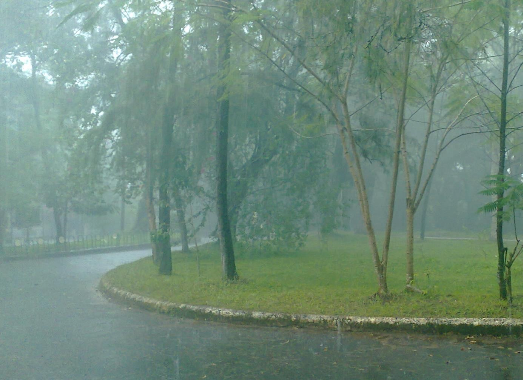 Step 3: Precipitation
The third step of the water cycle is
Precipitation. After the water turns into clouds
it then keeps collecting until the droplets get
heavier then air, then all the droplets fail to the
ground causing rain. Precipitation can also be in
the form of hail, sleet and snow.

 Fun facts about the water cycle
• There is the same amount of water on Earth as there was
when the Earth was formed.
• Water is composed of two elements, Hydrogen and
Oxygen. 2 Hydrogen + 1 Oxygen = H2O.
• Nearly 97% of the world’s water is salty or otherwise
undrinkable.
• 75% of the human brain is water and 75% of a living tree
is water.
• The average total home water use for each person in the
U.S. is about 50 gallons a day.
• Water expands by 9% when it freezes. Frozen water (ice)
is lighter than water, which is why ice floats in water.
At a Glance
 Here is a link to a video showing how the water cycle works
http://www.youtube.com/watch?v=0_c0ZzZfC8c
 Works Cited
 http://www.youtube.com/watch?v=0_c0ZzZfC8c
http://ga.water.usgs.gov/edu/watercycle.html
http://www.cotf.edu/ete/modules/msese/earthsysflr/water.html
http://water.epa.gov/learn/kids/drinkingwater/waterfactsoflife.cfm
http://climap.net/water-cycle
http://www.windows2universe.org/earth/Water/water_cycle.html
http://earthguide.ucsd.edu/earthguide/diagrams/watercycle/
http://peer.tamu.edu/curriculum_modules/Environ_Hazard/module_1/lesson3.ht
m
You've previewed 10 of 16 pages.
To read more:
Click Sign Up (Free)- Full access to our public library
- Save favorite books
- Interact with authors

- < BEGINNING
- END >
-
DOWNLOAD
-
LIKE(2)
-
COMMENT()
-
SHARE
-
SAVE
-
BUY THIS BOOK
(from $3.19+) -
BUY THIS BOOK
(from $3.19+) - DOWNLOAD
- LIKE (2)
- COMMENT ()
- SHARE
- SAVE
- Report
-
BUY
-
LIKE(2)
-
COMMENT()
-
SHARE
- Excessive Violence
- Harassment
- Offensive Pictures
- Spelling & Grammar Errors
- Unfinished
- Other Problem





COMMENTS
Click 'X' to report any negative comments. Thanks!