This e-book contains the proceedings of the national summits that students from France, Turkey, Italy have worked out over the eTwinning project "Let's Help the Earth".
Schools involved:
-Technical Institute "Cassandro-Fermi-Nervi", Barletta (Italy)
-Saint Guilhem High School, Clermont L'Hérault (France)
-HKAL College, Instanbul (Turkey)

Introduction
Our Earth is seriously endangered because of the irresponsible actions that humans have been carrying out over the last decades. We are going to propose here our vision and our solutions to the problem, also in the light of what Covid 19 has taught us about Nature. We hope you will enjoy this book. Help save the Earth together with us.
We must work to safeguard our planet as quickly as possible. We have no other possibility, the planet is one and we must understand that there is not a second one, we can decide whether to continue like this and then go against the destruction of the planet and of ourselves; or we can get to work all together to try to recover our single planet earth.
Bonacaro Giuseppe.
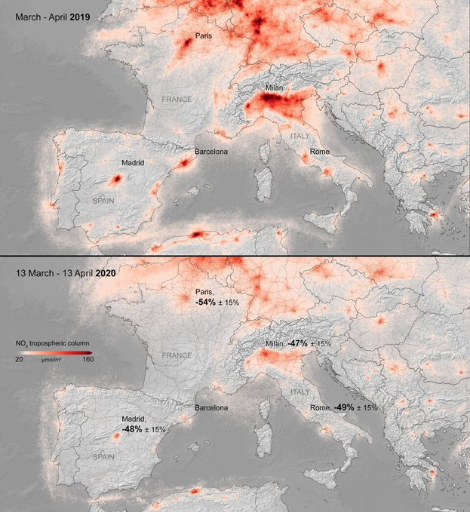
The closure of activities and the limitation of travel in Europe continue to lead to a huge decrease in pollution, as evidenced by the new data of the satellite Copernicus Sentinel-5P disseminated by ESA: from 13 March to 13 April in Milan, Rome and Madrid decrease of about 45%.
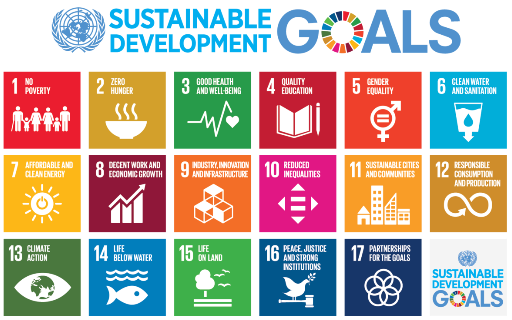
The Italian company Eni hasn't stopped even in this period: it has set goals, such as the commitment to progressive decarbonisation, energy transition, which is expected to achieve a significant reduction in carbon footprint; zero net GHG (Greenhouse Gases) emissions by 2040, all based on the 2030 Agenda. Some research conducted by Eni shows that fugitive methane emissions show a drop of 44% compared to 2018.
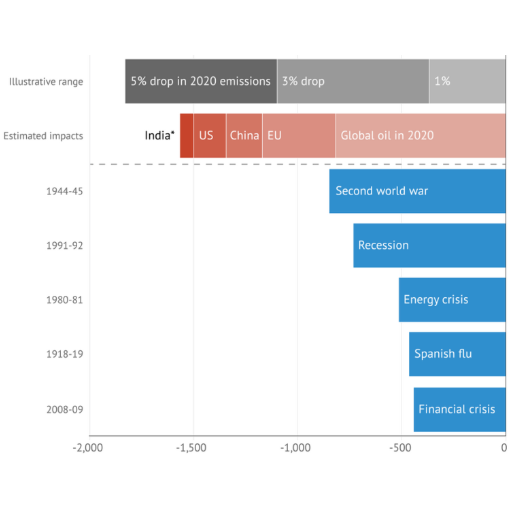
A reduction in emissions this year, as far as it can be clear and decided in comparison to 2019 "thanks" to the emergency Coronavirus, will not solve the problem of global warming. The economic recovery could lead to a further acceleration of emissions, but accompanied by more stringent climate measures, such as energy and environmental policies capable of driving fossil fuels out of business.
Amoroso Martina
THE GRASSLANDS
Grasslands are vast areas in which natural vegetation consists of lush-green grass running across several miles. Grasslands are characteristic of areas where there is a balance between the amount of rainfall: not too much as to support a forest and not so less to make the land barren. It is characteristic of semi-arid and semi-humid areas.
They are found between forest and deserts and are plane stretches of land covered with grass. They cover about 43% of the earth's surface, and are one of our planet's most productive landscapes.
Ecosystems and human health life intersect is one of the pillar of Grasslands. Long before COVID-19, man had already understood the interest of this biome: it is now shrinking to serve one of the main human needs: food production.
Grasslands are, in short, fragile ecosystems that can only survive thanks to maintain of the balance between its water supply and his endangered space.
Has the pandemic allowed Grassland to restore its balance ?

· Generals damages and...
Many problems emerged of this farming revolution: over-exploitation, destruction of megafauna and flora habitat, replacement of wild herds by domestic ones (96% of mammals on earth are now domesticated), loss of soil due to lack of natural fertilization etc... In the long-term, Humans took, but find harsh to give back.
...COVID-19 crisis impact
The meat consumption increased during lockdown, aS did the mass livestock areas:
tree falling, for the dedication of grasslands as pasturage to domestic herds, animals fate and the amount of domestic grasslands are getting worse.
Thus, the use of soil fertilization techniques as well as the use of fertilizers will also increase in order to meet the population's needs and reduce the risk of shortage and therefore disette, after lockdown removal.



Benefits thanks to COVID-19 and general lockdown
This pandemic has brought advantages to Grasslands. They mostly are those linked to the pollution decreasing. As a result of it, temperatures dropped and there are way less wild fires. Nature is healing from human activity, and slowly going back to its initial state !
The COVID-19 therefore brought good effects to this biome but had some bad consequences on humans minds: we all want to restart our productive cycle and the world's economy. But, for our planet to be relieved, we have to act responsibly and lower everything that damages its ecosystems, and we should keep living and evolving in a more sustainable way !


How could we help our biome ?
We could help saving it through a general food revolution, donations of time and money to organizations, symbolic adoption of an animal (through Defenders of Wildlife for example). And if you live near protected grassland, you can volunteer and educate your community about their importance as a habitat for plants, animals, and for our Planet.
LET'S HELP THE EARTH !!
Lisa Garcia, Yaëlle Cahours, Pasquale Pietroleonardo, Cafagna Geremia, Papeo Giovanni, Filannino Ruggi.
Noise pollution within the seas is a stress for fish but especially for whales. This type of pollution is produced both by the sounds of marine organisms and by natural ones, but it is also linked to human activity which has caused a considerable increase. This lockdown has helped the marine species because the ocean has returned to its quiet, favoring cetaceans, fish and many other species, and has also helped researchers who have been able to do new research, even if it does not represent a way to improve the conditions of these organisms. One question we can ask is: at the end of the pandemic will we return as before or will we try to improve the situation with a more attentive and
silent society?
Federica Martire
Antonio Dinoia

In this lockdown period we have been able to see how man is, in negative way, decisive for the life and health of animals in the ocean. In this period, with the decrease, in part of the pollution of the ocean with plastic and much more, it has given the possibility to underwater animals to regain possession of their environment and their soil.
Michele Disalvo
Giuseppe Delvecchio

This is not the first or the only time bioluminescence has been observed in water: it is a natural phenomenon that leaves an impressive maritime landscape in different areas of the planet. But in recent weeks, in full quarantine for the COVID-19 epidemic, images have circulated captured on the beaches of western Mexico and America (on the Pacific coast), in places where it is not so frequent to see waves that light up in the dark.
Bioluminescence is generated by small biochemical reactions of some organisms that live in nutrient-rich waters. The phenomenon occurs in some areas of the planet much more frequently than in others.
Frozen worlds
Before the propagation of COVID-19 the planet and particularly the glaciers were in danger. For a few years, global warming (which is caused by humans) had consequences on the earth, such as on the sea ice. There are melting glaciers that have others consequences on the life of polar animals as well as on the world.
This year started with a catastrophe: the COVID-19.
This virus continues to carry negative and positive factors in this biome and around the world.
Positive factors include reducing pollution.
Pollution changed with the change in our way of life.
Staying at home, for example, has made the emissions from cars end.
Animal's life is changing for the better. Habitats are recovering.
At the same time, however, melting ice and glaciers could release very old and dangerous viruses.
Glaciers are no longer melting because the emissions of gas is lower and all this is an advantages for animals
because they use ice to hunt.
No more microplastics because marine pollution has
been reduced.
Luciana Dipace
Lou-Ann Delbecq
Cécile Cougoureux
Sergio Dipilato
Nicolò Curci
Flavio Sequenza
Today, in addition to Covid-19, the news is spread that another and much more ancient threat may arrive from China: twenty mysterious viruses, trapped for thousands of years in a Tibetan glacier, which risk being freed by the melting of the ice caused from global warming. Launching the alert is an international research group led by the University of Ohio, which publishes analyzes of two ice cores on bioRxiv, the site that tracks scientific articles before publication in
official journals. This virus originates from a Tibetan glacier.
FRESHWATER
In these various months of quarantine, we are noticing a significant and positive change in freshwater, that is the decrease of pollution, mainly that caused by excess plastic. Moreover, there is also a decrease in noise pollution, the latter being a problem for the organisms present in freshwater. For example, in many cities in Italy, it is decreasing a lot, in fact, there are 65 decibels by day, and 55 by night. The reduction in vehicular traffic, about 70%, led to a 10 decibels drop on the roads.
Thanks to these changes, the organisms that populate freshwater can return to their habitats and subsequently improve their living conditions.
HABITAT RESTOCKING
With the absence of human activity, caused by Covid-19, the Fish of rivers and lakes have recovered their natural spaces. In fact, a record 10 kg trout was unexpectedly caught on Lake Garda.
Covid-19 has enabled biodiversity to develop
We freshwater experts invite you to leave nature in this state of well-being even when we return to our daily activities to have a more cared for and healthy landscape.
LANOTTE VINCENZO
RINELLA GIULIO
COROFORTE GRAZIA
LOUIS CAMPS
THOMAS PANIS
FORESTS
Every animal has a natural habitat but this days not only our life has changed but also animals'.
We are seeing it in these weeks with the lowering of the levels of pollution of the air because of the decrease of the emissions or with the wild fauna that goes up inside the cities.
With the virus there has been a lowering of the levels of air pollution due to the decrease of emissions or with the wildlife that goes into the deserted cities.
During the lock down the deforestation in France has been stopped , then the forest can have a little bit of rest during the lock down but unfortunately this isn't the same thing in all the countries in the world
According to experts, the virus’ leap from animals to man is caused by us, who modify their natural habitat and push them more and more in contact with the human species.
Giorgia Sguera
Armando Ujkaj
Pierre Garcon
Raphael Silbert
Because of the COVID-19, people stayed at their homes and nature has started renewing itself. In this way, we noticed about the damage that we caused even if just a bit.
If we have done this, only we can solve it. This pandemic is a key for us to be susceptible, but actually we don't need this to become self-aware. If we work together, if we induce people to work with us and of course if we don't give up, we can protect our world, create a more livable place for our future and for the next generations.
If we need to give an example for the nature's self-renewing:
These photos are from Bosphorus. During this pandemic, everyone just stayed at their homes and this caused the sea clean itself.
Even the dolphins came to visit us again!
Don't forget, we are in a war with nature and if we win, we'll lose.
HELP US SAVE THE WORLD!
Elif Güney Sezer, Ebru Çakan, Duygu Kalafat
- < BEGINNING
- END >
-
DOWNLOAD
-
LIKE(1)
-
COMMENT()
-
SHARE
-
BUY THIS BOOK
(from $5.99+) -
BUY THIS BOOK
(from $5.99+) - DOWNLOAD
- LIKE (1)
- COMMENT ()
- SHARE
- Report
-
BUY
-
LIKE(1)
-
COMMENT()
-
SHARE
- Excessive Violence
- Harassment
- Offensive Pictures
- Spelling & Grammar Errors
- Unfinished
- Other Problem





COMMENTS
Click 'X' to report any negative comments. Thanks!