
This book is dedicated to the rhinos.

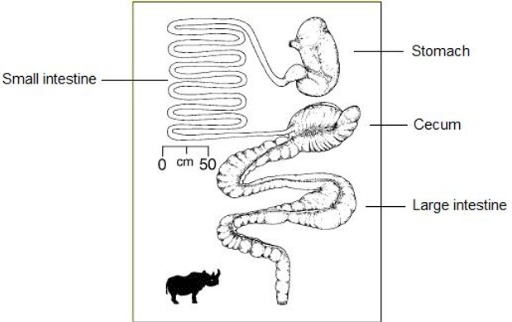
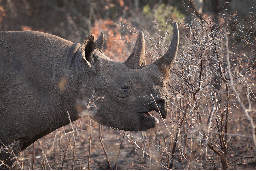
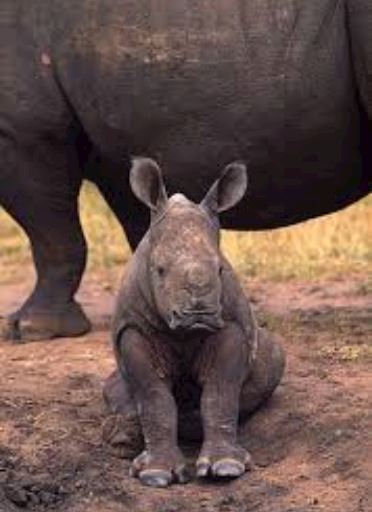
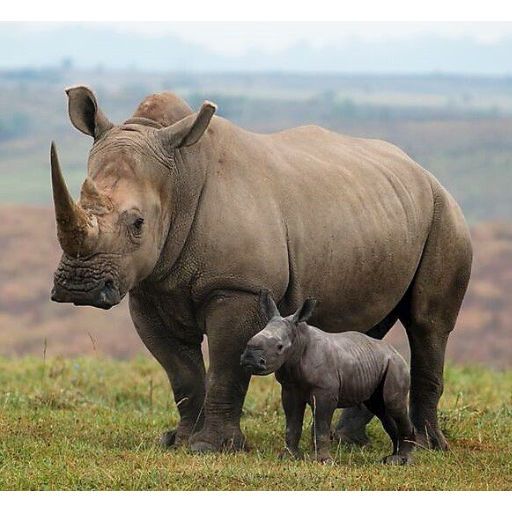
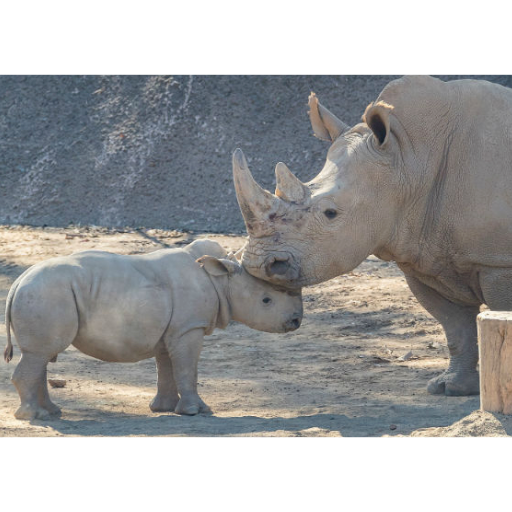
The Ceratotherium simum simum, or Southern White Rhinoceros, is a one of two white rhino subspecies. This subspecies uses its square-shaped lips to eat over 120 pounds of grass a day. Rhinos are monogastric which means that they only have one compartment in their stomach. Their digestive system begins in the mouth and food is sent to the stomach via esophagus. The stomach digests the food and sends it through the small intestine, then to the cecum. The cecum absorbs fluids after digestion, then sends them through the large intestine. The waste then gets excreted out of the anus.


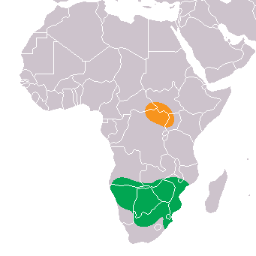
Southern White Rhinos live in the grassland and savannahs of the southern region of Africa in the grasslands and savannahs of southern Africa (Uganda, South Africa, Zimbabwe, Namibia, and Kenya). They constantly graze grass, which prevents overgrowth.
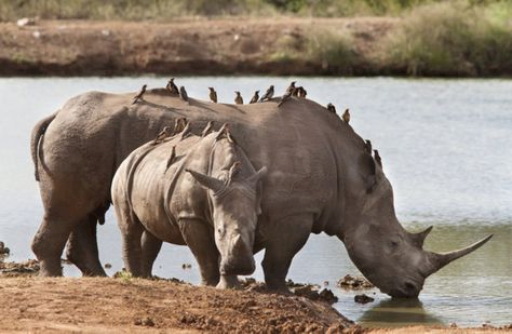
The also have symbiotic
relationships (beneficial
to both organisms) with
the oxpecker bird. The
birds eat bugs off of the
rhinos and the rhinos
provide protection for
the birds.


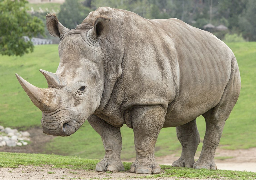
White rhinos are the largest species of rhino and have many adaptations to help them survive in their environment. Their square-shaped lip allows the animal to graze on the grasses of the flat plains. Rhinos have poor eyesight, but have great senses of hearing and smell. They use their large ears to rotate to hear potential danger and their large nostrils to smell for predators. They have thick, wrinkly skin that protects them from thorns and sharp grass, and also holds in cool mud when they roll in mud pits on hot days. Their two large, sharp horns are used for protection and display. Rhinos have sensitive feet, so they walk on their toenails. Their stumpy legs are incredibly fast, and the white rhino can reach speeds up to 31 mph.


Southern White Rhinos sexually reproduce. The male stays with the female for a day to
see if the female is ready to
mate. If the female is ready,
then the male usually follows
her for 3-5 more days, during
which the female responds
with snorts and roars. After
mating, the gestation period
is about 16-18 months. White
rhinos typically live for
40-50 years in the wild.


The rhinos' nervous system is comprised of a cerebrum, optic lobe, medulla oblongata, cerebellum, and olfactory lobe. Despite their brains being relatively small compared to their heads, rhinos are very intelligent creatures who feel every emotion and often show emotional intelligence socially.

- Full access to our public library
- Save favorite books
- Interact with authors

- < BEGINNING
- END >
-
DOWNLOAD
-
LIKE(2)
-
COMMENT()
-
SHARE
-
SAVE
-
BUY THIS BOOK
(from $3.19+) -
BUY THIS BOOK
(from $3.19+) - DOWNLOAD
- LIKE (2)
- COMMENT ()
- SHARE
- SAVE
- Report
-
BUY
-
LIKE(2)
-
COMMENT()
-
SHARE
- Excessive Violence
- Harassment
- Offensive Pictures
- Spelling & Grammar Errors
- Unfinished
- Other Problem

COMMENTS
Click 'X' to report any negative comments. Thanks!