
This book is for all people who want to know about animals in Australia.

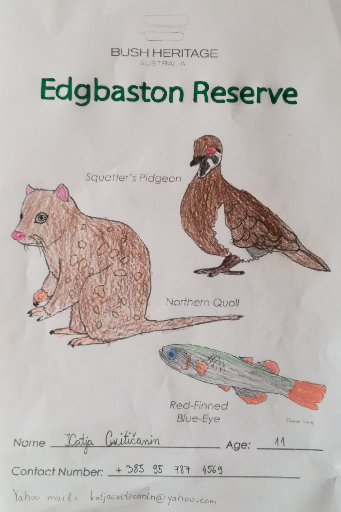
EDGBASTON
RESERVE

Squatter's Pidgeon
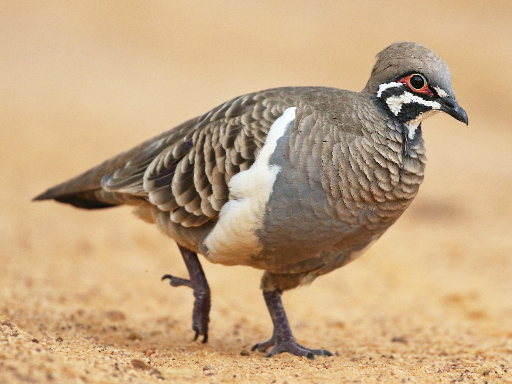
I AM BIBA.

The squatter pigeon (Geophaps scripta) is a species of bird in the family Columbidae. It is endemic to northeastern Australia. According to the Department of the Environment and Energy, the nominate subspecies, southern squatter pigeon (Geophapa scripta scripta) is listed as vulnerable. It lives in arid and semi-arid areas, including grasslands and dry sclerophyll forests.
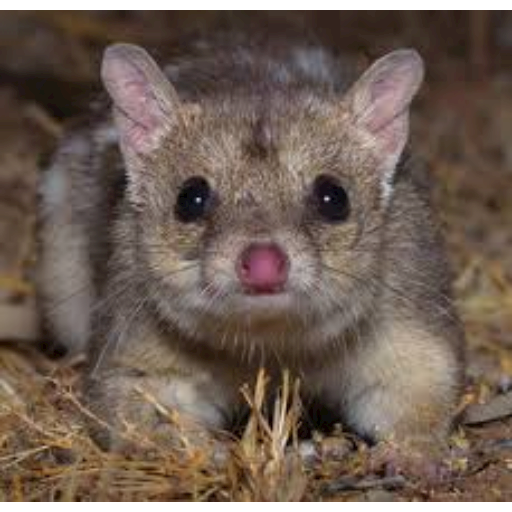
Northern Quol
I AM BUBY!
he northern quoll (Dasyurus hallucatus), also known as the northern native
cat, the North Australian
native cat, the satanellus or the njanmak (in the indigenous Mayali language, djabo'' in Kunwinjku in is a carnivorous marsupial native to Australia. Kunwinjku people of Western Arnhem Land regard djabo as "good
tucker". The hair is singed, the gut is removed (but not the heart or
liver) and the cavity packed with bush herbs. It is roasted on hot rocks in a
hole.
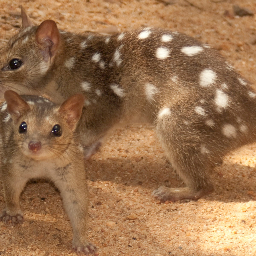
I AM RUDY!
I AM ROKO!
RED-FINNED BLUE-EYE
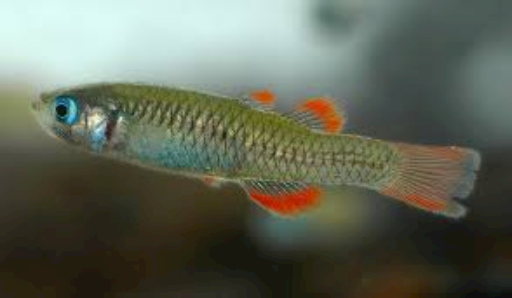
I AM PIKI!
The red-finned blue-eye (Scaturiginichthys vermeilipinnis) is a tiny, critically
endangered species of fish in the Pseudomugilidae family and the only species in its genus.The species was discovered
in 1990. It is endemic to Central Queensland in Australia, where restricted to springs in Bush Heritage's Edgbaston Reserve. Here they live in shallow, slightly salty water that can vary from near
freezing in the winter to 40 °C (104 °F) in the summer. It
reaches up to 2.5 cm (1 in) in length and only males have red fins

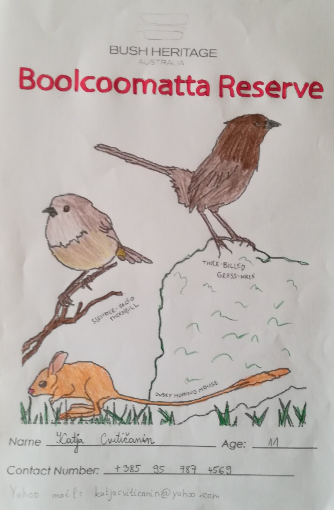
Boolcoomatta
reserve
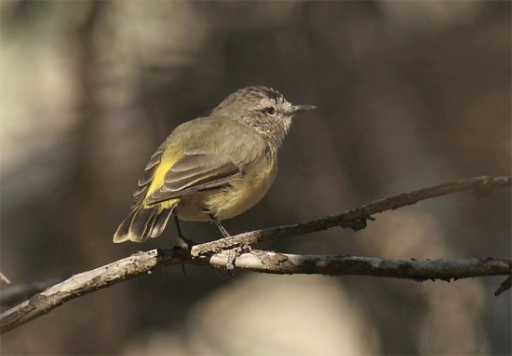
SLENDER-BILLED THORNBILL
I AM RINO.
This thornbill can be found in shrublands and salt marshes, typically those around salt lakes or low heath on sand plains. It eats mostly insects and spiders captured in the shrubs of its habitat. It rarely feeds on the ground, preferring instead the higher elevations of shrubs and trees.
The slender-billed thornbill is rarely observed alone. They are usually seen in flocks of approximately eight birds or in pairs. Thornbill nests are small and built in low shrubs. They are constructed of grass, bark, cobwebs, and other shrubland debris. Females lay up to three eggs during the breeding season, which runs from July until November.
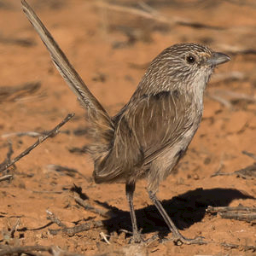
TICK-BILLED GRASS-HREN
HI! MY NAME IS TIKI!
The thick-billed grass Hren (Amytornis modestus) is a species of bird in the family Maluridae. It is endemic to Australia. Its natural habitat is Mediterranean-type shrubby vegetation.

DUSKY HOPPING MOUSE
MY NAME IS ĆIRO.
BON BON RESERVE
BULLOCK BUSH
A Bullock Bush seedling growing in a bilby’s foraging hole, or what we like to call a ‘bilby pot plant’. Earth-moving, native foragers like bilbies and bettongs have co-evolved with Australia’s native vegetation to become ‘ecosystem engineers’: their digging behavior aerates the soil, increases water infiltration, enhances the nutrient content, and catches seeds like this one. AWC’s 1,100 ha feral-free area at Yookamurra Wildlife Sanctuary in South Australia protects three species of threatened, burrowing mammals, including the Bilby, and both the Burrowing and Brush-tailed Bettong
MAJOR MITCHELL COCKATOO
I AM TINO-ČOKOLINO
Major Mitchell's cockatoo (Lophochroa leadbeateri), also known as Leadbeater's cockatoo or the pink cockatoo, is a medium-sized cockatoo restricted to arid and semi-arid inland areas of Australia. It is here placed in its own monotypic genus Lophochroa, though to include it in Cacatua as others do is not wrong as long as the corellas are also included there. They are also a type of cockatoo.
- Full access to our public library
- Save favorite books
- Interact with authors
- < BEGINNING
- END >
-
DOWNLOAD
-
LIKE(2)
-
COMMENT()
-
SHARE
-
SAVE
-
BUY THIS BOOK
(from $6.59+) -
BUY THIS BOOK
(from $6.59+) - DOWNLOAD
- LIKE (2)
- COMMENT ()
- SHARE
- SAVE
- Report
-
BUY
-
LIKE(2)
-
COMMENT()
-
SHARE
- Excessive Violence
- Harassment
- Offensive Pictures
- Spelling & Grammar Errors
- Unfinished
- Other Problem





COMMENTS
Click 'X' to report any negative comments. Thanks!