
Periods
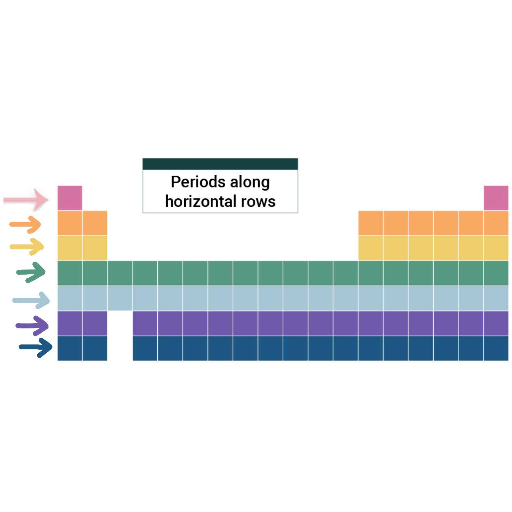
Periods are the horizontal rows located on the Periodic Table of Elements. They are the horizontal rows that make up the table. Elements that share the same period have the same number of energy shells. There are 7 periods in the periodic table. The element's atomic number increases when going from left to right.
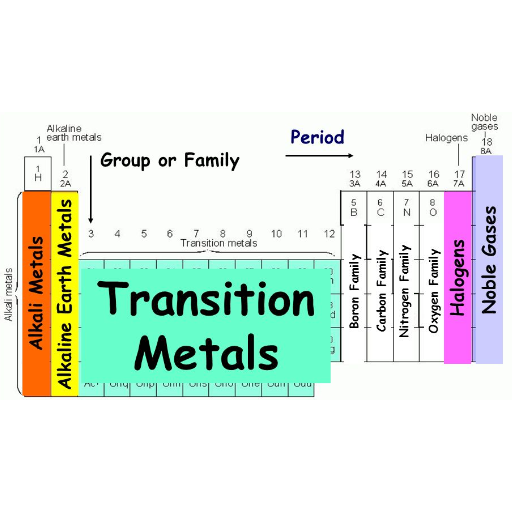
Groups or families are the vertical columns located on the Periodic Table of Elements. They are the vertical rows that make up the table. Elements that are located in the same group share similar chemical and fiscal properties. Each group is either identified with its group number or family name. There are 18 families or groups in total.
Groups and families
This image above shows the vertical groups and their numbers along with either name
Role of protons
Proton is vital in the organization of the periodic table. The number of protons is the main subatomic particle that makes up an element. So the protons probably define most of it's chemical and physical properties that we see in an element. As the periodic table is organized by the atomic number, chemical properties, and partly physical properties these subatomic particles are the ones that define and distinguish the element.

Role of Valance electrons
Valance electrons are the number of electrons that are located on the outermost shell of an element. Elements in the same group have the same number of valence electrons therefore elements in the same group have the same reactivity level. The reactivity level is based on how close the element is to get it's energy levels to full capacity. The only group that is not reactive is group 8 because the elements in that group already have their energy levels full. One way to remember how reactivity works is the OCTET Rule, it states that all element atoms bond to contain either 0 or 8 valance electrons. Metals try to get 0 valence electrons while nonmetals strive to get 8.
Metals, Nonmetals, and metalloids
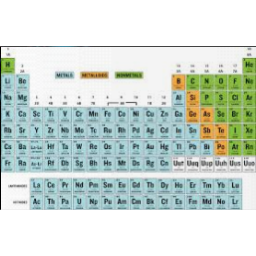
The periodic table can be divided into 3 different groups. there is a bold line on the periodic table looking like a step stool. Anything to the right of the step stool is a metal with the exception of Hydrogen, which is a nonmetal. Anything to the right of the stepstool is nonmental. Any element that is touching the step stool by two sides is a metalloid with the exception of Aluminum and Bismuth, which are metals, and the elements Arsenic and Tellurium are considered metalloids as well but do not touch the step stool.
the families in the periodic table of elements
Families in the periodic table
Alkali Metals
Alkali Earth Metals
Transition Metals
Boron group
Carbon Group
Pnictogen
Chalcogens
Halogens
Noble gasses
Alkali Metals
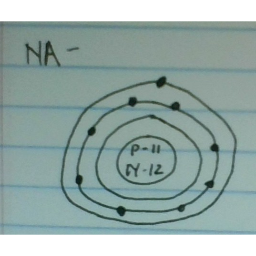
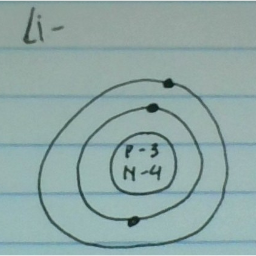
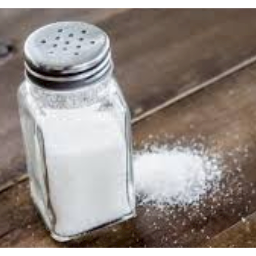
Alkali Metals are metals that are located in group 1. They are very reactive and so soft that some could be cut by a regular kitchen knife. Unlike most metals, they can not be found in nature since they are so reactive and would blow up within seconds. All of the elements in this family have one valence electron, so they are wanting to bond with any other element and lose their one electron to make a full orbit. Potassium is a well-known element because it is in a banana which is very crucial to our bodies, it is also used in fertilizers and matches. Sodium is another well-known element since it makes up table salt that we use every day, it also makes an appearance in household items like borax or baking soda. Many of these elements are used in fireworks since the are so reactive.
Alkali Metals
3 elements:
-Sodium
-Potassium
-Lithium
Alkali Earth Metals
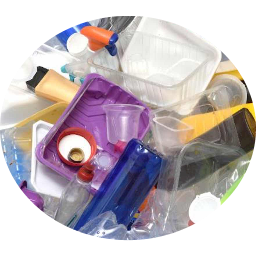
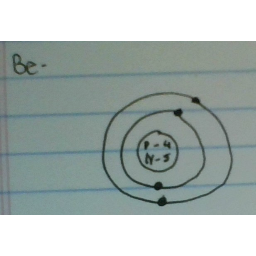
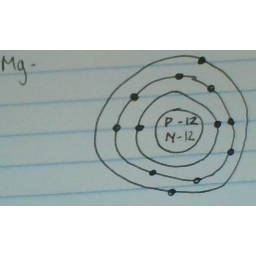
Alkali Earth Metals are found in group 2. All elements in that group have 2 valance electrons, they are reactive but less reactive than alkali metals. These elements have a greyish white luster when freshly cut and are malleable and ductile. Strontium is widely used in fireworks and magnets. Barium compounds can be used in paints, filler for rubber, plastic, and resins, and as a contrast medium for X-rays. Many of these elements are also used in plastic.
Alkali Earth Metals
3 elements-
-Beryllium
-Magnesium
-Calcium
Transition Metals
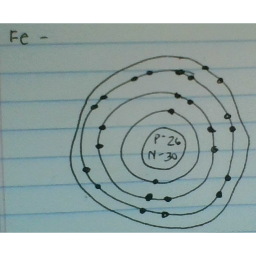
Transition Metals are found in groups 3 through 12. They are good conductors of heat and electricity. They also can be hammered or bent into shape easily. They have high melting points (but mercury is a liquid at room temperature) They are usually hard and tough. Unlike the last two groups, we looked at these metals a be found in nature. These elements are less reactive than the alkali metals and alkali earth metals. Copper is well known for its conductivity, it is used within our wires, for example, chargers. Gold is also a very well known metal it is used more as an ornament/decorative piece to either go on your body or be showcased.
Transition Metals
3 elements-
-Sliver
-Gold
-Zinc
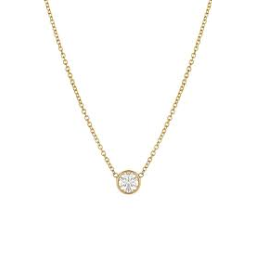
(Gold chain)
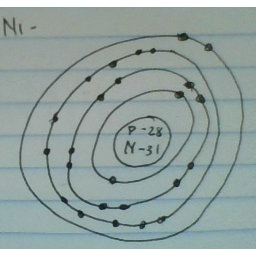
Boron group
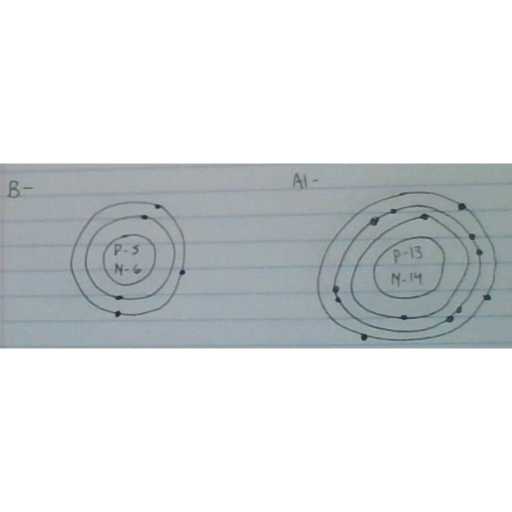
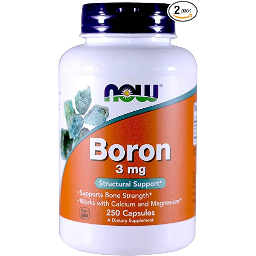
The boron group is located on group 13 on the periodic table of elements. Elements in that group have 3 valence electrons. It is named after the first element in that group. The elements in this group are reactive but fairly stable. All of the elements in this group are metal with the exception of Boron which is a metalloid. Aluminum is a common structural material and is lightweight. It is used for packaging, cooking, and building parts for many objects. Amorphous boron is used as a rocket fuel integer and in pyrotechnics. Indium is used to make mirrors which are reflective as traditional silver mirrors.
Boron group
3 elements-
-Boron
-Aluminum
-Thallium
Carbon Group
This family is also named after it's first element. It is located in group 14 so that means that the elements in this family have 4 valence electrons. Metallic properties increase as you go down the group. Carbon is a non- metal, silicon and germanium are metalloids, and tin and lead are metals. Silicon is the second most common element in the earth's crust it is also used to make ceramics and glass. Carbon is what gives many living things life it also helps plants go through photosynthesis, and helps many other things as well.
- Full access to our public library
- Save favorite books
- Interact with authors
- < BEGINNING
- END >
-
DOWNLOAD
-
LIKE(1)
-
COMMENT()
-
SHARE
-
SAVE
-
BUY THIS BOOK
(from $5.19+) -
BUY THIS BOOK
(from $5.19+) - DOWNLOAD
- LIKE (1)
- COMMENT ()
- SHARE
- SAVE
- Report
-
BUY
-
LIKE(1)
-
COMMENT()
-
SHARE
- Excessive Violence
- Harassment
- Offensive Pictures
- Spelling & Grammar Errors
- Unfinished
- Other Problem






COMMENTS
Click 'X' to report any negative comments. Thanks!