In honor of Rosa Parks and human rights

Created & published on StoryJumper™ ©2026 StoryJumper, Inc.
All rights reserved. Sources: storyjumper.com/attribution
Preview audio:
storyj.mp/a87vt7p45g9
especially for having refused to give up her seat to a white man and move to the back of the bus in Montgomery, Alabama. States, on December 1, 1955.
Registered at birth as Rosa Louise McCauley Parks, she was an important figure in the civil rights movement in the United States
2
Born Rosa Louise McCauley Parks on February 4, 1913 in Tuskegee, Alabama, United States, daughter of a marriage formed by the carpenter James McCauley and the teacher Leona Edwards. He was of African, Native American, Scottish, and Irish descent.
PRIVATE LIFE
3
INCIDENT ON THE BUS
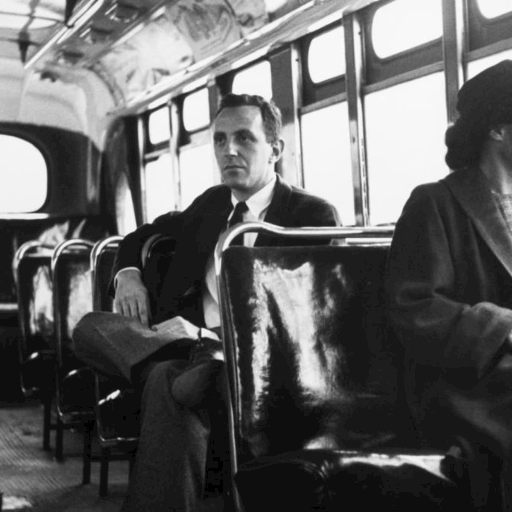
Rosa was 42 years old when on December 1, 1955, she took a public transport to return home, specifically a bus. At that time, the vehicles were marked with a line: the whites in front and the blacks behind. Thus, black people got on the bus, paid the driver, got out, and went back up through the back door.
4
Parks settled into the middle seats, which blacks could use if no white required. When that part was full, the driver ordered him, along with three other blacks, to give up their places to a young white man who had just gotten up. "He hadn't even asked for the seat," Parks later said in an interview with the BBC. The others got up, but she remained motionless.
5
The driver tried to dissuade her. He had to give up his seat, that is what the law required. "I'm going to have you arrested," the driver told him. "You can do it," she replied. When the police asked him why he didn't get up, he replied with another question: "Why are you all pushing us around?"
She was imprisoned for her conduct, accused of having disturbed order.
6

7
CIVIL RIGHTS AND POLITICAL ACTIVITY
In response to Rosa's incarceration, Martin Luther King, a relatively unknown Baptist pastor at the time, led the protest to Montgomery's public buses, also assisted by Rosa Parks activist and childhood friend Johnnie Carr, and that simply called on the Afro-American population to organize themselves to transport themselves and not take the buses.
8
As the buses ended up receiving few or no passengers, they began to give deficits, making it necessary for the public transport authority to end the practice of racial segregation on buses. This event started more protests against other segregation practices still in force.
Meanwhile, in 1956, the judicial fight against the Montgomery and Alabama segregation law finally reached the United States Supreme Court, which declared segregation in transportation unconstitutional.
9
Benefits:
- Full access to our public library
- Save favorite books
- Interact with authors
READ

storyjumper.com
- < BEGINNING
- END >
-
DOWNLOAD
-
LIKE(2)
-
COMMENT()
-
SHARE
-
SAVE
BUY THIS BOOK (from $2.99+)
-
BUY THIS BOOK
(from $2.99+) -
BUY THIS BOOK
(from $2.99+) - DOWNLOAD
- LIKE (2)
- COMMENT ()
- SHARE
- SAVE
- Report
Liked By
X
Encourage this author
-
BUY
-
LIKE(2)
-
COMMENT()
-
SHARE
Problem with this book
X
- Excessive Violence
- Harassment
- Offensive Pictures
- Spelling & Grammar Errors
- Unfinished
- Other Problem
Which pages have problems?
Please describe the problem:
left text
right text
"ROSA PARKS STORY"
The story of Rosa Parks, a civil rights activist who refused to give up her seat on a bus in Montgomery, Alabama, and sparked a movement.
(16 pages)
Privacy level:
PUBLIC
21 reads
2 fans
Report

COMMENTS
Click 'X' to report any negative comments. Thanks!