

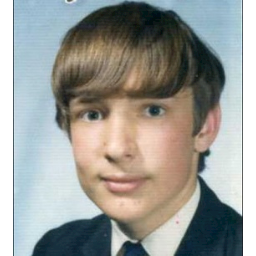



















In 1955, a man named Timothy Berners-Lee was born in London, England. This is where he lived with his parents and three siblings.
In his early childhood, he was always surrounded by science, especially computer science. Both of his parents were computer scientists who would work on the first commercially-built computer.

In 1973, he enrolled in 'The Queen's College,' better known as Oxford University. Tim eventually graduated in 1976 with a bachelor's degree in physics.

After graduating, he went on to work at a company called 'Plessey' where he learned and worked on distributed transaction systems, message relays, and bar code technology.

After he left 'Plessey' in 1978, he joined another company called 'D. G. Nash Ltd..' In this job, he was taught how to write typesetting software for printers and multitasking operating systems.

In the late 1970s, he started working at a company named 'CERN' where he was a consultant software engineer. While working there, he created a program called 'Enquire,' which started to give him ideas about other programs he wanted to create.

He left 'CERN' in 1980 and worked at a few other companies to learn new techniques and information on different software for a short time. After learning these techniques, he went back to 'CERN.' in 1984.

When Tim went back to working at 'CERN,' he shared all of the new information he had learned at the other companies with his colleagues to improve all of their programs.

Tim Berners-Lee had always had a work effort that allowed him always to want to learn new things about computer science. When he set his mind to learning a new technique, he always followed through and perfected the software.

On March 12, 1989, Tim Berner-Lee submitted a proposal to his colleagues at 'CERN' to build a new network of text that would manage a lot of information that could be reached from any computer. He wanted to name this network "The World Wide Web'.

Although Tim worked very hard and was convinced that this new network would work, he never got the proposal officially approved. He was even told to stop working on it by his boss.

Even though he was not approved of the idea, he continued to work on the concept of a network that could be reached by everyone. In 1990, he finished the first site that could be used by everyone who had a computer.

When he created this site with the company 'CERN,' he had officially birthed the invention of the World Wide Web.

When Tim Berners-Lee finally made the World Wide Web, many people were surprised and did not understand how to use it first. His boss was the most surprised because even though he never approved the program, Tim still made something great.

After three years, Tim continued to build many websites to add to the World Wide Web. He then created the World Wide Web Consortium (W3C) at the Massachusetts Institute of Technology's Laboratory for Computer Science.

The World Wide Web Consortium decided that the technologies would be "royalty-free," which means anyone could use them to create their own websites on the World Wide Web.

In 2004, he became a professor at the University of Southampton in the United Kingdom. This is where he taught computer science and how to make information more readable through computers.

In 2006, he became the co-director of a program called the "Web Science Trust," which analyzed the web and tried to make it easier to use and design for everyone.

He continued to work hard and eventually became the director of the 'World Wide Web Foundation' in 2009. The WWWF let the web be free and open to use for everyone.

- Full access to our public library
- Save favorite books
- Interact with authors

- < BEGINNING
- END >
-
DOWNLOAD
-
LIKE
-
COMMENT()
-
SHARE
-
SAVE
-
BUY THIS BOOK
(from $6.19+) -
BUY THIS BOOK
(from $6.19+) - DOWNLOAD
- LIKE
- COMMENT ()
- SHARE
- SAVE
- Report
-
BUY
-
LIKE
-
COMMENT()
-
SHARE
- Excessive Violence
- Harassment
- Offensive Pictures
- Spelling & Grammar Errors
- Unfinished
- Other Problem

COMMENTS
Click 'X' to report any negative comments. Thanks!