Biomimetic Scientists
Project Collaborative Work
STEM & 7E Learning Model

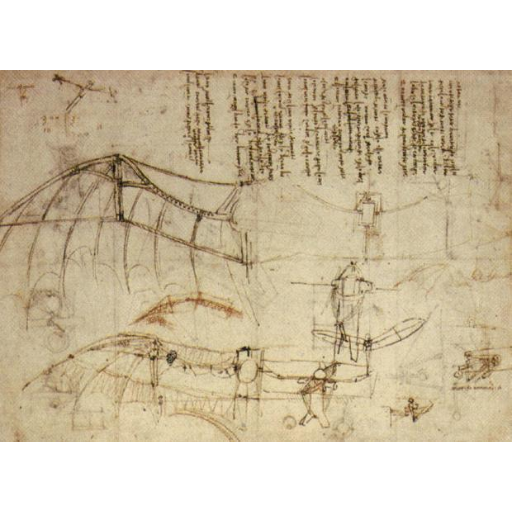
Leonardo da Vinci's
design for a flying machine with wings based closely upon the structure of bat wings.
Ali
Murat
Çivi
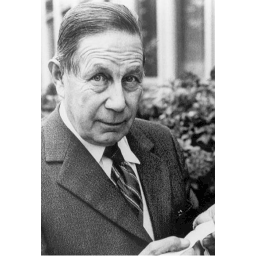
He was born on June 9, 1907, in Colombier, Switzerland.
He received his Geogre education at Ecole Polytechnique Federale. He graduated in 1930 and worked in an engineering company.
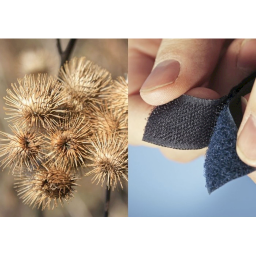
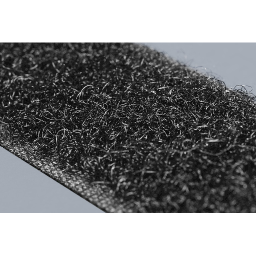
One day, when George took a hike to the Alps with his dog, he saw Burdock clinging to his dog's fur and trousers, and he had a brilliant idea. He raised this idea and found the Velcro Band, which is often used in clothing today.
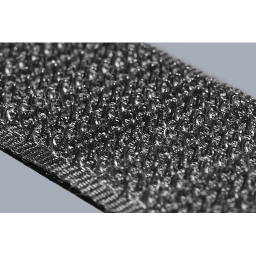
The logic of Velcro Band is that the rings in one band and the hooks in the other band hold the rings and stick to each other. It is known as CIRT CIRT because of the sound it makes.
Esra GÜLMEZ
Wright Brothers
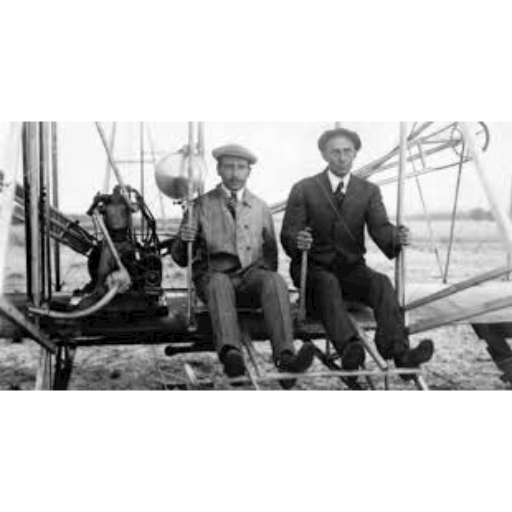
The brothers' breakthrough was their creation of a three-axis control system, which enabled the pilot to steer the aircraft effectively and to maintain its equilibrium.[6][7][8][9] This method remains standard on fixed-wing aircraft of all kinds.[10][11] From the beginning of their aeronautical work, the Wright brothers focused on developing a reliable method of pilot control as the key to solving "the flying problem". This approach differed significantly from other experimenters of the time who put more emphasis on developing powerful engines.[12] Using a small home-built wind tunnel, the Wrights also collected more accurate data than any before, enabling them to design more efficient wings and propellers.[13][14] Their first U.S. patent did not claim invention of a flying machine, but rather a system of aerodynamic control that manipulated a flying machine's surfaces.[15]
The brothers gained the mechanical skills essential to their success by working for years in their Dayton, Ohio-based shop with printing presses, bicycles, motors, and other machinery. Their work with bicycles, in particular, influenced their belief that an unstable vehicle such as a flying machine could be controlled and balanced with practice.[16] From 1900 until their first powered flights in late 1903, they conducted extensive glider tests that also developed their skills as pilots. Their shop employee Charlie Taylor became an important part of the team, building their first airplane engine in close collaboration with the brothers.
The Wright brothers' status as inventors of the airplane has been subject to counter-claims by various parties. Much controversy persists over the many competing claims of early aviators. Edward Roach, historian for the Dayton Aviation Heritage National Historical Park, argues that they were excellent self-taught engineers who could run a small company, but they did not have the business skills or temperament to dominate the growing aviation industry.[17]
YASEMİN AKALIN
EL- CEZERİ
Cezeri is the person who has lived in the 12. century and is the founder of automation and automatic systems. Many great machine-building masters have been the leaders of the inventor. Cizre Cizre for living because it was called Cezeri.
Cizr the great inventor, laying the foundations of computers, scientists and technicians, robots, clocks, water machines, combination locks, cryptic crates, thermos, automatic children's toys, such as the inventor of the first machine and the world's first cyberin scholar. Al-Jazari's most famous invention is the elephant's water clock. This watch contains some mechanical parts used in engineering today.
GÖKHAN ÇİÇEK
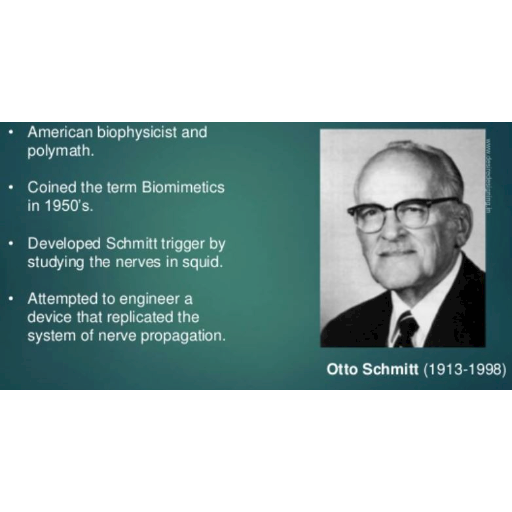
Otto Schmitt
(Kr.Valdemars Ainazi Primary school Latvia)
PRINCIPLES OF BIOMIMICRY
• Nature runs on sunlight.
• Nature uses only the energy it needs.
• Nature fits form to function.
• Nature recycles everything.
• Nature rewards cooperation.
• Nature banks on diversity.
"We’re awake now, and the question is how do we stay awake to the living world? How do we make the act of asking nature’s advice a normal part of everyday inventing?"
Janine Benyus
MELEK YILDIRIM
Janine is a biologist, author, innovation consultant, and self proclaimed “nature nerd.” She may not have coined the term biomimicry, but she certainly popularized it in her 1997 book Biomimicry: Innovation Inspired by Nature.
Biomimicry: Innovation Inspired by Nature
First published in 1997, this profound and accessible book details how science is studying nature’s best ideas to solve our toughest 21st-century problems.
In Biomimicry, she names an emerging discipline that emulates nature’s designs and processes (e.g., solar cells that mimic leaves) to create a healthier, more sustainable planet. Since the book’s 1997 release, Janine has evolved the practice of biomimicry, speaking around the world about what we can learn from the genius that surrounds us.
In 1998, Janine co-founded the world’s first bio-inspired consultancy, Biomimicry 3.8 (formerly the Biomimicry Guild), bringing nature’s sustainable designs to 250+ clients including Boeing, Colgate-Palmolive, Nike, General Electric, Herman Miller, HOK architects, IDEO, Interface, Natura, Procter and Gamble, Levi’s, Kohler, and General Mills.
In 2006, she co-founded the Biomimicry Institute, a non-profit dedicated to making biology a natural part of the design process. The Institute hosts annual global biomimicry design challenges on massive sustainability problems, mobilizing tens of thousands of students and practitioners through the Global Biomimicry Network to solve those challenges, and providing those practitioners with the world’s most comprehensive biomimicry inspiration database, Ask Nature, to use as a starting place.
- Full access to our public library
- Save favorite books
- Interact with authors
- < BEGINNING
- END >
-
DOWNLOAD
-
LIKE(3)
-
COMMENT()
-
SHARE
-
SAVE
-
BUY THIS BOOK
(from $5.59+) -
BUY THIS BOOK
(from $5.59+) - DOWNLOAD
- LIKE (3)
- COMMENT ()
- SHARE
- SAVE
- Report
-
BUY
-
LIKE(3)
-
COMMENT()
-
SHARE
- Excessive Violence
- Harassment
- Offensive Pictures
- Spelling & Grammar Errors
- Unfinished
- Other Problem





COMMENTS
Click 'X' to report any negative comments. Thanks!