
Thanks to all teams for your gerat collaboration and contribution to this ebook.

Thanks to all team members....

Thanks to all team members....

-Mask is made using surgical cloth and wires.
Mehmet Sefa MAÇO
-Medical masks are usually rectangular. Therads that cut and fit to the face.Added paper-like synthetic fabric.It is made of single layers.Disposable masks,large
Provides protection against droplest.
Elif MAÇO

-Surgical face masks are made with non-woven fabric, which has better bacteria filtration and air permeability while remaining less slippery than woven cloth. The material most commonly used to make them is polypropylene. Masks can also be made of polystyrene, polycarbonate, polyethylene, or polyester.
Surgical masks are made up of a multi-layered structure, generally by covering a layer of textile with non-woven bonded fabric on both sides. Non-wovens, which are cheaper to make and cleaner thanks to their disposable nature, are made with three or four layers. These disposable masks are often made with two filter layers effective at filtering out particles .
Masks are made on a machine line that assembles the nonwovens from bobbins, ultrasonically welds the layers together, and stamps the masks with nose strips, ear loops, and other pieces.
Esmanur P

-Disposable face masks are produced from polymers such as polypropylene, polyurethane, polyacrylonitrile, polystyrene, polycarbonate, polyethylene, or polyester. They consist of three layers; an inner layer (soft fibers), middle layer (melt-blown filter), and an outer layer (nonwoven fibers, which are water-resistant and usually colored). The melt-blown filter is the main filtering layer of the mask.
Merve M
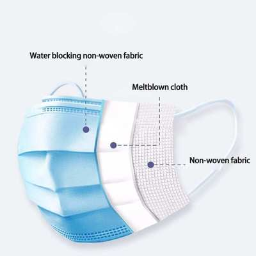
-Surgical mask is a protective mask against unwanted atomized contamination. It can also provide some protection against viruses and bacteria, such as during epidemics and pandemics. It is appropriate to distinguish between medical bandages, which are a stably defined size, and face masks, which - even when used with the same motivation as bandages and are quite similar - can be of very varying design.
Mathias H
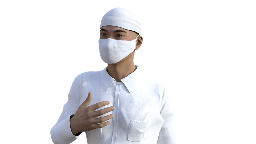
-Masks are an extra precaution to protect against COVID-19. Cloth masks are a washable covering. If your cloth mask becomes damp you must remove it, put on a fresh one and put the used one in a plastic bag for washing at the end of the day.You should continue physical distancing, hand and respiratory hygiene.
Cleaning your mask:Cloth masks can be washed in the washing machine with other clothes, or hand-washed using soap and the warmest appropriate water setting for the cloth.
Dry the cloth mask in the clothes dryer or in fresh air before you re-use it.
Clean your hands with soap and water or alcohol-based hand rub (made up of over 60% alcohol or 70% isopropanol) after handling used face masks.
Melih P Korgeneral
-It is easy to make simple masks
that may block respiratory
droplets from the wearer.
A lot of household materials
can be used to make masks.
These masks generally cotton
fabrics, clothing, silk, tissue paper,
kitchen towels, pillowcase,
and tea cloths.
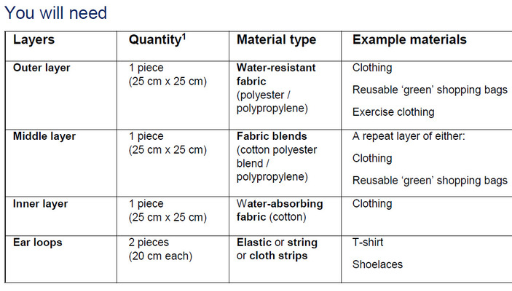
Look for multi-layered tight woven cotton, cotton-polyester blends or linen. Do not wear masks made out of fleece, because fleece may not provide as much filtration as other multi-layered coverings. Fabrics with soft stretchy material, such as spandex or polyester, pull moisture away from your skin, helping to keep you cooler.
-Burak Ü Korgeneral
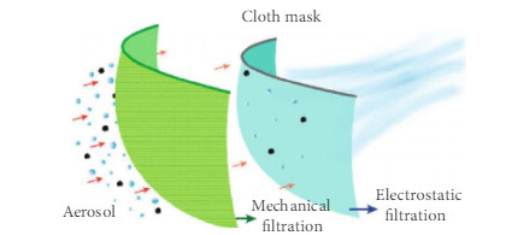
Scientists are testing everyday items to find the best protection from coronavirus. Pillow cases, flannel pajamas and origami vacuum bags are all candidates.
There were a lot of polemic about the mask materials.
In my opinion someone will create new mask that are safe for the environment.
When you go outside you see a lot of mask on the street, this is an aspect that the people must change.-
matteo falcone
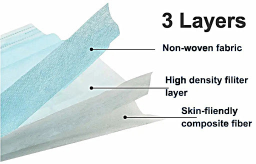
-Fabric masks should be made of three layers of fabric:
gabriella ciulla
-Experts warn everyone that the masks will be left in double plastic bags for 72 hours and then thrown into medical waste bins.They say mask wastes will remain like plastic bottles and plastic for centuries and damage nature and life.
Tuana MAÇO
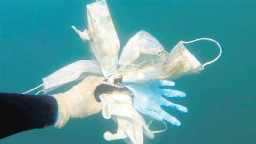
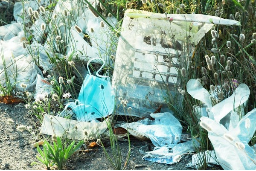
--If you look around next time you step out of a bus you will most likely see masks on the ground behind the bus station or just genrally around it. There are masks everywherer now adays, last friday I had a school tasks to go around and collect masks an some generall trash that I found in the nature. You wont belive how many masks there were around the bus stations or along the road up to the housing estate. There were masks everywhere. People are finding lots of masks an glowes underwater that we

-Many animas are therefore suffering because of the masks and glows. The fish in the sea eats plastic that has crumbled up into lots of small pieces that can even go back on us for when we want to have a fish dinner. So if everyone just makes sure to throw their masks in the trash can and not in the nature everything will get better. If the closest trash can is full please dont just lay it on top
because then it will just blow away and
straight into the natur, thats why you
instead should wait untill you are with
a bin that isnt full.
Andreas G
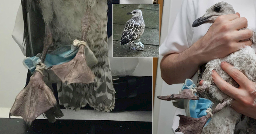
-Masks are great, but what happens when we try to throw out a billion masks at once?According to recent studies, humanity is going through 129 billion face masks a month, which works out to three million a minute. At the moment, no data on how much masks have contributed to the amount of plastic in the environment exists.The authors suggest that there are steps to be taken to prevent this problem from getting out of control. They include helping people switch from disposable plastic
masks to reusable cloth ones, inventing
biodegradable masks, designating special
disposal areas for masks, and standardizing
waste processing procedures concerning these
plastics.
Defne C

Masks thrown into the environment are dangerous
* As these are petroleum derivatives, they have the ability to remain in nature for hundreds of years, such as plastic bottles and plastic-derived microfiber woven materials.
* When disintegrated, they do not decompose chemically, they physically break down and remain densely dispersed in nature in the form of microplastics and nanoparticles, which we call microfiber.
* They will be included in a system that goes from a small organism to a human.
Arda Oz
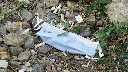
Face masks, gloves, face shields have become a pivotal part of our lives. They become a symbol of resistance against the coronavirus. The material most commonly used to make the disposable mask is polypropylene.The result has been a quickly growing mountain of plastic waste. It is a form of plastic and poses serious threat to environment.This plastic does not disappear but rather slowly breaks down into micro-plastic, which enters food chains, with devastating effect.
Neris Duru Ç Korgeneral
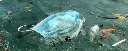
The increase in consumption of face mask has caused to a new environmental challenge. There is also the vast plastic and plastic particle waste in the environment. Some of these materials are getting into waterways from where they reach the freshwater and marine environment. Face masks are as environmental litter both in the
terrestrial and aquatic environment.
It is a piece of evidence that the global
pandemic increased plastic pollution
in the environment.
Tunç B Korgeneral
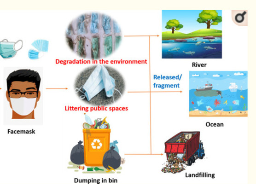
Disposable masks are plastic products, that cannot be readily biodegraded but may fragment into smaller plastic particles, namely micro- and nanoplastics that widespread in ecosystems.
The enormous production of disposable masks is on a similar scale as plastic bottles, which is estimated to be 43 billion per month.
However, different from plastic bottles, (of which app. 25 pct. is recycled), there is no official guidance on mask recycle, making it more likely to be disposed of as solid waste, the researchers write.If not disposed of for recycling, like other plastic wastes, disposable masks can end up in the environment, freshwater systems, and oceans, where weathering can generate a large number of micro-sized particles (smaller than 5 mm)
during a relatively short period (weeks) and further fragment into nanoplastics (smaller than 1 micrometer).
What can we do?
-Set up mask-only trash cans for collection and disposal
-consider standardization, guidelines, and strict implementation of waste management for mask wastes
-replace disposable masks with reusable face masks like cotton masks
-consider development of biodegradable disposal
masks.
matteo bassetta
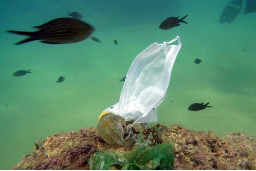
Masks are useful, but when we try to throw out a billion masks we produce sea polution and we kill a lot of animals.
According to studies, humans is going to through 129 billion masks a month.
We can't count how many mask have been used, but they are a lot.
Scientist inventing biodegradable masks for avoid the death of animals.
simone santedicola
Surgical masks are uncomfortable They can be difficult to wear for a long time. They can be costly and can cause the growth of landfill waste.
Also, there are cloth masks and they protect people from respiratory illnesses.
We shouldn't pace face masks on coffee tables or other easily accessible locations, and we should be careful even when discarding them, because dogs are known to get into the trash.
When we throw them away, the masks can harm the environment and the animals who share our planet. Before recycling plastic face masks, remember to cut the ear loops on either side of the mask. This will prevent animals getting entangled in the straps.
Tuna MAÇO
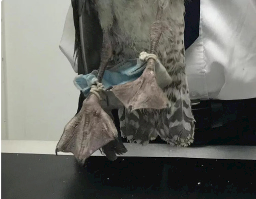
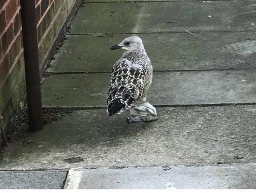
Masks have become a part of daily life. They are made of durable microfiber fabric.
Experts say that mask wastes will remain in nature for centuries and create great pollution.
Experts warn everyone that the masks are kept in double plastic bags for 72 hours and then thrown into medical waste bins. They emphasize that mask wastes will remain for centuries like pet bottles and plastics and harm nature and living life.
When we wear the mask continuously and for a long time, the rate of carbon dioxide in our body increases. Because our rate of emitting carbon dioxide and taking oxygen out is decreasing. Increased carbon dioxide ratio can tire the lungs and heart.
M Tarık MAÇO
When these plastics are thrown into the environment, they're going to go. They're turning into shrinking particles. These particles then all by entering the food chain it's disrpting ecosystems.
Environmental organization OceanAsia as pandemic begins since, more than 1,5 billion Oceans in the last year the mask is found and it weighs abot 6,200 tons he explained that it caused plastic polltion.
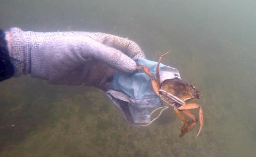
Surgical mask on a penguin's stomach in Brazil a balloon is found off the coast of Miami his fish was seen entangled in the mask. France a crab wrapped in a mask in a saltwater lagoon he was found murdered in the way.
A life without waste, a healthy life.
nisa b
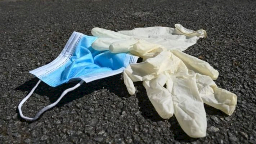
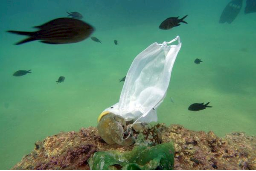
Disposable face masks and gloves can cause harm to wildlife. Masks and gloves can be harmful . The gloves are especially bad, which looks a lot like a jelly fish does which means that they’re food for you know fish, for turtles, or anything else that’s out there.
If an animal mistakes plastic for food, the plastic can fill stomachs, reducing food intake, causing animals to starve and die. Marine animals that ingest plastic can also be poisoned. It may kill them or weaken them. Ingested plastic can impair reproduction, growth, and development of young.
Ali Eren M Korgeneral
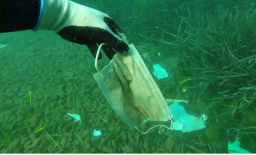
The masks are uncomfortable and sometimes even hard to breathe in,but the breathing issues are mostly mental. You can just get skin irritation.
Masks are dangerous for wildlife, with birds and marine creatures and animal habitats.
We should cut off the masks' straps.
Irmak U Korgeneral
- Full access to our public library
- Save favorite books
- Interact with authors
- < BEGINNING
- END >
-
DOWNLOAD
-
LIKE
-
COMMENT()
-
SHARE
-
SAVE
-
BUY THIS BOOK
(from $8.39+) -
BUY THIS BOOK
(from $8.39+) - DOWNLOAD
- LIKE
- COMMENT ()
- SHARE
- SAVE
- Report
-
BUY
-
LIKE
-
COMMENT()
-
SHARE
- Excessive Violence
- Harassment
- Offensive Pictures
- Spelling & Grammar Errors
- Unfinished
- Other Problem






COMMENTS
Click 'X' to report any negative comments. Thanks!