

The coronavirus epidemic, which is the common agenda of the world , is also on the agenda of literature and art. The books on the epidemic that came out of the pen of literati both prepare its readers for the future and sow seeds of hope in the reader's heart ...

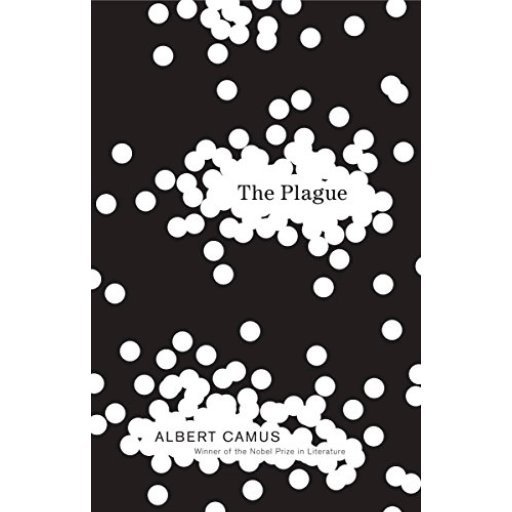
NSI KAMPUS 5 1. GROUP, PLAGUE
Albert Camus, 1947 The plague epidemic hits the Algerian city of Oran. After the mice slowly started to die from the sewers to the streets and started to die, the people living in the region also began to die in great pain. The plague epidemic, which reached an unexpected level, drown all the Oranlı in great despair. But the example of solidarity shown by Doctor Rieux , Tarron and Grand reminds everyone that there is hope again.



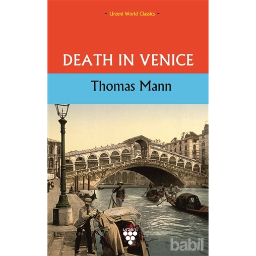
NECLA TEVFİK KARADAVUT MESLEK LİSESİ, DEATH IN VENICE
Thomas Mann, 1912 Gustav von Aschenbach , a famous writer, has not left where he lived before. One day he decides to go to Venice and gets on the ship. Upon reaching Venice, he settled in a hotel where he encountered a young man named Tadzio , the son of a Polish family. Aschenbach admires this young man, who sees the picture of ideal beauty.

He devotes all his time to watching him. But an epidemic occurs in Venice. Although everyone tells Aschenbach that he should leave the city, he does not want to leave Tadzio.


İZMİR ÖZEL TEVFİK FİKRET LİSESİ, BLINDNESS
José Saramago , 1995 A city faces a disease that leaves people blind. 'Blind' patients who are quarantined in an empty mental hospital are subjected to violence, exploitation and fear. People start to struggle for life here. Only one of them can see his eyes. The woman, who does not want to leave her blind wife alone, helps blind people.




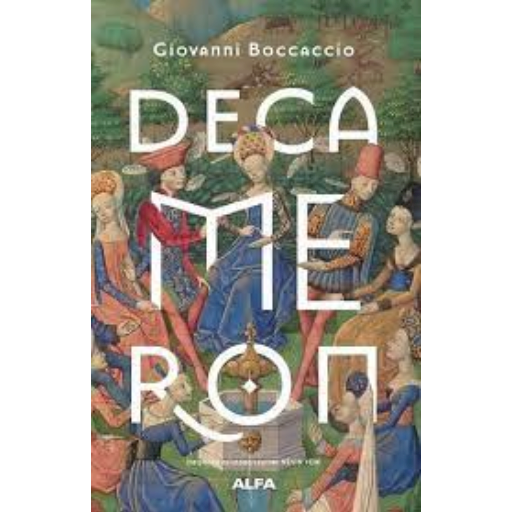
İZMİR BİLFEN ANADOLU LİSESİ, DECAMERON
Giovanni Boccaccio , 1349-1353 Seven women and three men who gather to escape the plague epidemic isolate themselves in a castle. These young people tell each other 10 stories every day except Fridays and Saturdays. The subject of the story is determined by whoever is the king or queen that day.


IISS "Carlo Maria Carafa" di Mazzarino,
A Journal of the Plague Year by Daniel Defoe (1722)
From 1665 to 1666, bubonic plague returned to Britain and devastated the city of London — killing roughly one quarter of its population in the span of 18 months. Over 50 years later, Daniel Defoe drew upon historical documents to write a realistic account of the plague’s effects on the city.

Defoe’s novel still has the power to unsettle — like when he writes about families forced into quarantine due to an infected family member: “[I]t was generally in such houses that we heard the most dismal shrieks and outcries of the poor people, terrified and even frighted to death by the sight of the condition of their dearest relations, and by the terror of being imprisoned as they were.”


REGINA MARIA High-school, Dorohoi, ROMANIA,
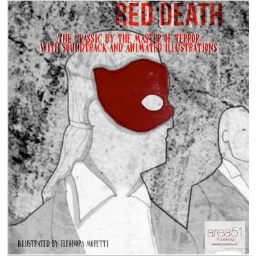
MASK OF THE RED DEATH
E. Allan Poe, 1842 Prince Prospero closes himself in a monastery to avoid an epidemic known as the "Red Death". The prince, together with a nobleman who stayed with him in the monastery, organizes a masquerade ball in the seven rooms of the monastery, each of which is decorated in different colors. However, during the fun, a mysterious person appears and starts wandering around all the rooms.

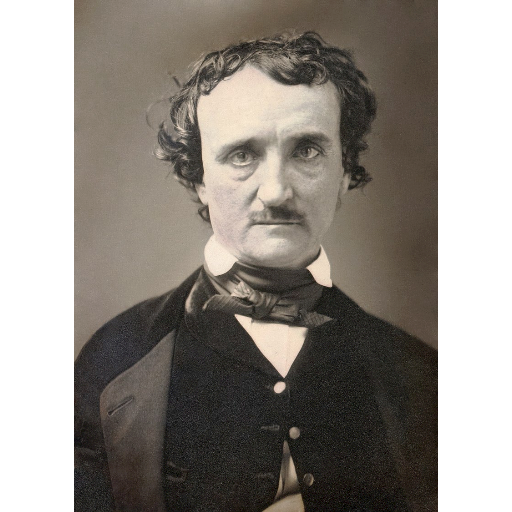

WORDCLOUD on E. A. POE and his MASK OF THE RED DEATH

TEODOR COTUTIU/LICEUL TEHNOLOGIC „ION CAIAN ROMANUL”, Caianu Mic Romanya
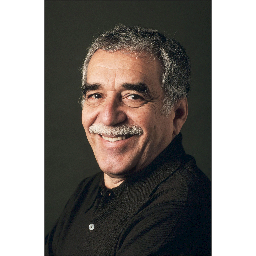
One of the twentieth century’s enduring works, One Hundred Years of Solitude is a widely beloved and acclaimed novel known throughout the world and the ultimate achievement in a Nobel Prize–winning career.
The novel tells the story of the rise and fall of the mythical town of Macondo through the history of the Buendía family. Rich and brilliant, it is a chronicle of life, death, and the tragicomedy of humankind.

In the beautiful, ridiculous, and tawdry story of the Buendía family, one sees all of humanity, just as in the history, myths, growth, and decay of Macondo, one sees all of Latin America.
Love and lust, war and revolution, riches and poverty, youth and senility, the variety of life, the endlessness of death, the search for peace and truth—these universal themes dominate the novel. Alternately reverential and comical, One Hundred Years of Solitude weaves the political, personal, and spiritual to bring a new consciousness to storytelling. Translated into dozens of languages, this stunning work is no less than an account of the history of the human race.
Plague in Fictional Macondo
Disease and medicine are present in several works of Gabriel García Márquez. Some cases documented bear considerable similarities to actual medical practice, whereas in others, they are transformed by the use of magical realism. In García Márquez’s short story No One Writes to the Colonel, a physician uses the Lieben reaction to diagnose diabetes in the protagonist. In the novel Love in the Time of Cholera, another physician detects the smell of bitter almonds and describes the changes in a corpse due to cyanide poisoning.
Moreover, there is an extremely detailed description of an autopsy performed on Santiago Nasar in the novella Chronicle of a Death Foretold, One Hundred Years of Solitude is a novel about the Buendía family and their lives in the fantastical town of Macondo, located in Colombia on the Caribbean coast, where an insomnia plague occurs.
The insomnia plague appears in the plot of One Hundred Years of Solitude with the arrival of the natives Visitación and Cataure from La Guajira, Colombia, who come to Macondo fleeing from an evil that attacked their tribe.
Thereafter, Rebeca, an orphan girl from La Guajira, is delivered by an emissary with a letter that entrusts her to the Buendías. She is mute, apparently lacks understanding of Spanish, and rejects any food. At night, she sneaks eating dirt and lime from the walls. To address the girl’s behavior, Úrsula uses homemade therapies (orange juice with rhubarb) and punishments.
One night, Visitación finds the girl awake, sucking her fingers “with her eyes lighted up in the darkness like those of a cat.” Seeing this, Visitación acknowledges that the insomnia plague has reached Macondo. Although her brother, Cataure, runs away,
Visitación accepts the circumstance and explains to the Buendías that the loss of sleep is not the gravest part of the disease, “but its inexorable evolution toward a more critical manifestation: A loss of memory.” In addition, Visitación describes the manner in which once the person “became used to his state of vigil, the recollection of his childhood began to be erased from his memory, then the name and the notion of things, and finally, the identity of people and even the awareness of his one being, until he sank into a kind of idiocy that had no past.”
The inhabitants of Macondo quickly recognize the contagious characteristics of the plague and establish a quarantine to prevent any visitors coming to town from contracting the disease. Outsiders are forbidden from drinking or eating anything and are required to carry bells to report that they are healthy. When oblivion begins to affect their daily lives, Aureliano invents a way to remember the names of objects—by writing their names on them. Subsequently, the information on the labels requires further description to include the details of the object that is being named:
“This is the cow. She must be milked every morning so that she will produce milk, and the milk must be boiled in order to be mixed with coffee to make coffee and milk.” However, this system “would escape irremediably when they forgot the value of the written letters.” As the oblivion deepens, the inhabitants resort to reading sets of playing cards regarding the past and “began to live in a world built by the uncertain alternatives on the cards.”



Science writer Sonia Shah’s Pandemic is as riveting as a medical thriller and yet all too real. Reading Pandemic will help you better understand the forces at play when a pandemic moves into town. In particular, Pandemic is especially good at translating the erratic nature of a pandemic into something that spreads methodologically. Shah uses cholera as her main case study, but other pandemics like ebola and avian flu.





NSI KAMPUS 5 2. GROUP, PLAGUE NIGHTS
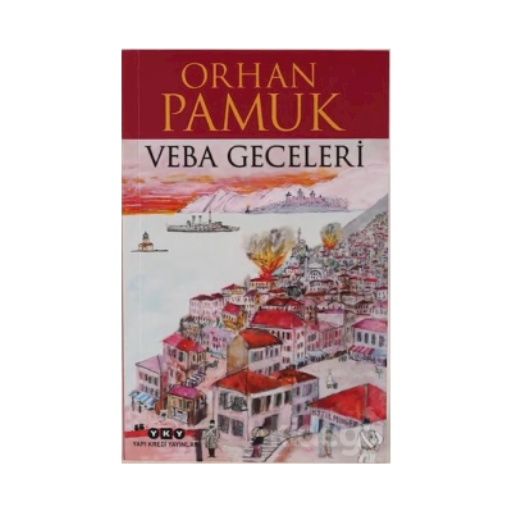
Plague Nights, on which Orhan Pamuk has been working for 5 years, takes place in Minger Island, the 29th province of the Ottoman Empire, during the 3rd Plague Pandemic in 1901. This historical novel, in which Pamuk discusses the issues of epidemic, quarantine, the state and the individual in a fairy-tale atmosphere, is both a gripping politics and romance novel, and it sheds light on the days we live with its subject.

In the spring of 1901, when the plague epidemic broke out in Minger Island, the 29th province of the Ottoman Empire, Sultan Abdülhamit first sent the Chief Health Inspector Bonkowski Pasha, followed by the young and successful Doctor Nuri to the island to stop the epidemic. The sultan recently married the young doctor to Pakize Sultan, the daughter of the previous sultan Murat V, his brother, whom he had imprisoned in the palace, and Pakize Sultan is accompanying his husband on this journey.
On the island, there are the young and nationalist Ottoman officer Kolağası Kamil, the islander Zeynep, whom he fell in love with, and the Governor Sami Pasha who is trying to keep up with everything, and his beautiful lover Marika. Plague Nights is the story of the war and love of these people, who strive to obey the quarantine bans, with the plague, the traditions on the island, and eventually with each other and with death threats.


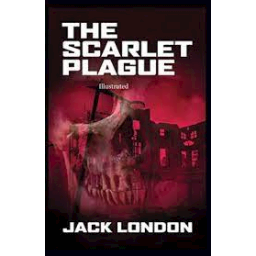
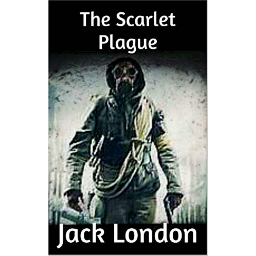
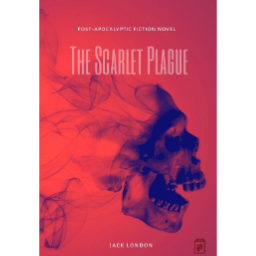
ŞEHİT NURULLAH SARAÇ ANADOLU LİSESİ, The Red Plague, JACK LONDON, which started in New York, is a disease that causes the entire bodies of people who are infected with an epidemic, rapidly infects everyone and kills the infected people within hours. The Red Plague spreads all over the world in a very short time. When the modern world disappears, Grandfather James Howard Smith and his college friends seek refuge in a chemistry school.

Four hundred people took refuge in the chemistry school, but the epidemic infects them, and only Professor Smith remains alive. Professor Smith encounters other people who survived the epidemic after living alone for three years. People have started to live in groups of ten or twenty people. Dede Smith was first in the group led by the Fireman, and later joined the Santa Rosa group.
Human groups that could survive formed tribes, but civilization disappeared in wildlife, science, art, etc. were forgotten and became unusable. Going back to primitive times, finding food, reproduction and survival became the main goal.
It is only Professor James Howard Smith who remembers and knows the old but civilized world. The only aim of Dede Smith is that the generation that will grow up is to abandon the barbarism and ignorance and build a new and civilized world.


- Full access to our public library
- Save favorite books
- Interact with authors
- < BEGINNING
- END >
-
DOWNLOAD
-
LIKE(5)
-
COMMENT()
-
SHARE
-
SAVE
-
BUY THIS BOOK
(from $10.59+) -
BUY THIS BOOK
(from $10.59+) - DOWNLOAD
- LIKE (5)
- COMMENT ()
- SHARE
- SAVE
- Report
-
BUY
-
LIKE(5)
-
COMMENT()
-
SHARE
- Excessive Violence
- Harassment
- Offensive Pictures
- Spelling & Grammar Errors
- Unfinished
- Other Problem





COMMENTS
Click 'X' to report any negative comments. Thanks!