
When were you born?
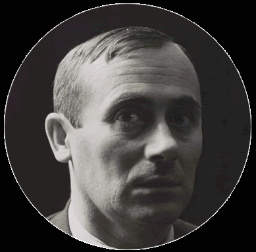
My name is Joan Miró, I was born on April 20, 1893




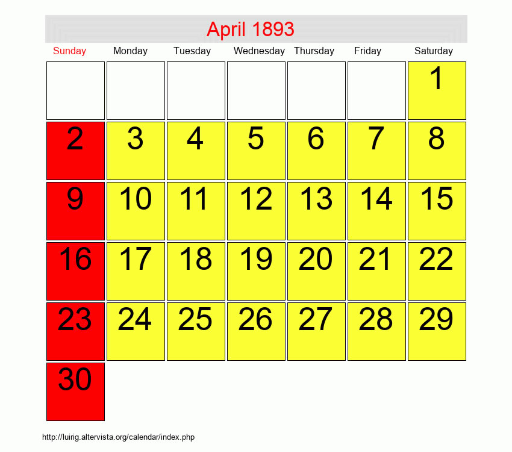
It was a Thursday

Do you have children?
Yes, I had a daughter. Her name was Maria Dolores Miró, born in 1931 from my union with Pilar Juncosa.






My name is MARIA DOLORES

What is the most famous painting?
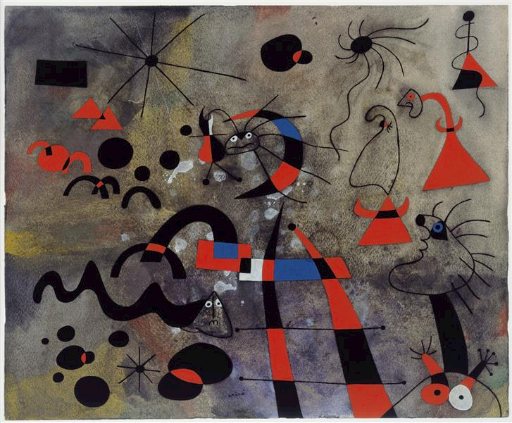
Among the most famous paintings of my production is "The Staircase of Escape". "The Staircase of Escape" (in Spanish "La Escalera de la Evasión"), created by Joan Miró in 1940. The "staircase" itself could symbolizing hope, aspiration, or an escape from the brutality of war and the chaos of the real world.





When did you die?
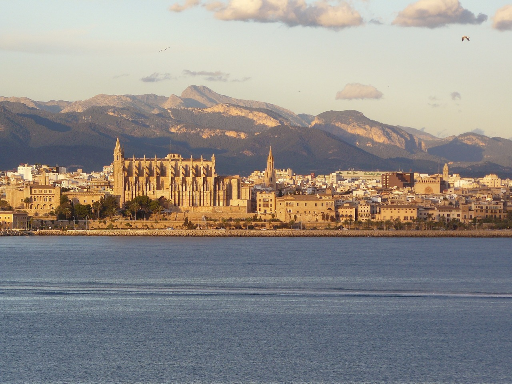
I died on December 25, 1983 in Palma de Mallorca, Spain, at the age of 90.

Have you had significant influences during the training period?
Yes, of course. At the beginning of my career, I was influenced by the surreal artistic movement, as well as by artists such as Paul Cézanne and Vincent Van Gogh. However, as I developed my own style, I started to explore and integrate abstract art elements.

Your works are often characterized by vibrant colors and organic shapes. What inspires you in the creative process?
My inspiration comes from observing the surrounding world, but also from my own experiences and dreams. I like to explore the subjective world, to create a plastic language of symbols and forms. Color plays a central role in my work, bringing life and energy to every creation.


Have you had any key moment in your career that defined or influenced you deeply?
An important moment for me was the meeting with Andre Breton and other surrealist artists. This collaboration encouraged me to explore my subconscious deeper and bring elements of automatism in my creative process. Thus, I began to create works that transcend reality and enter the world of pure imagination.

What is your favourite country?
Oh, it's difficult to choose a favorite country, as my influences come from many. Catalonia, where I was born, is, of course, a significant factor in my work. However, I find inspiration in many countries and cultures.

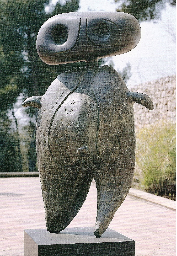
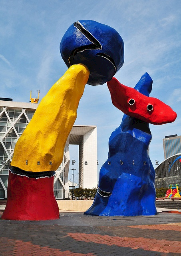
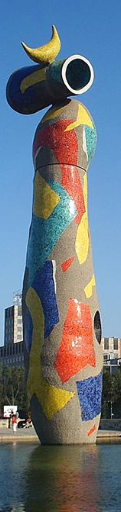
What was your first sculpture?
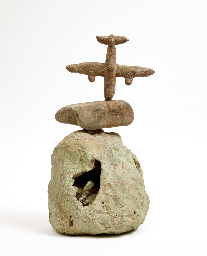
As an artist, my works evolved, and changes in my style occurred over time. My first sculpture was likely something very simple, perhaps inspired by natural elements or daily life. Most artists start with basic pieces before evolving into their characteristic style.
Who was your teacher?
My teachers included my parents, who supported my interest in art from a young age. Later, I studied painting at the Barcelona School of Fine Arts, where I was influenced by various professors and fellow artists. Throughout my career, the creation and evolution of my style were the result of various influences and experiences.


How many paintings have you made?
Throughout my artistic career, I created over 2,000 paintings. My work spanned a wide range of styles, including Surrealism and abstract art. I was known for my use of vibrant colors, dreamlike imagery, and symbolic shapes, which allowed me to express my unique perspective on the world. Each painting was a journey into the realm of my imagination.

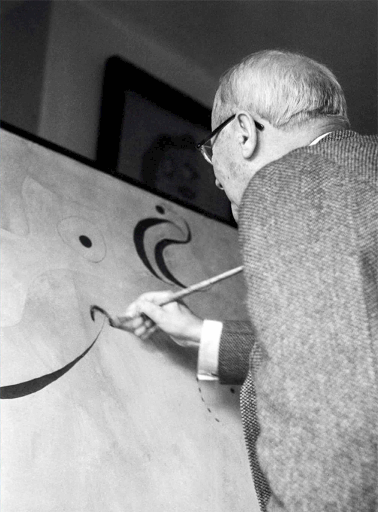
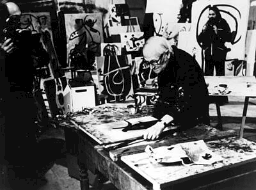
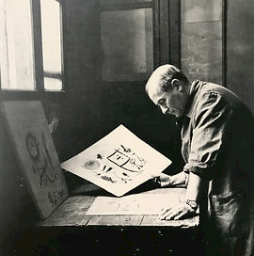
What is your favourite theme?
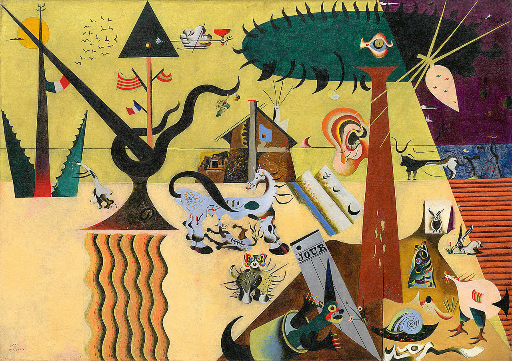
As an artist, my favorite theme revolved around the exploration of the subconscious mind and the realm of dreams. I often used symbolic shapes, biomorphic forms, and vibrant colors to create dreamlike compositions that invited viewers to interpret and engage with the paintings on a personal level.
Joan Miró, The Tilled Field, (1923–1924),
Solomon R. Guggenheim Museum.
What's your favourite painting?
Harlequin's Carnival, 1924-25, by Joan Miro
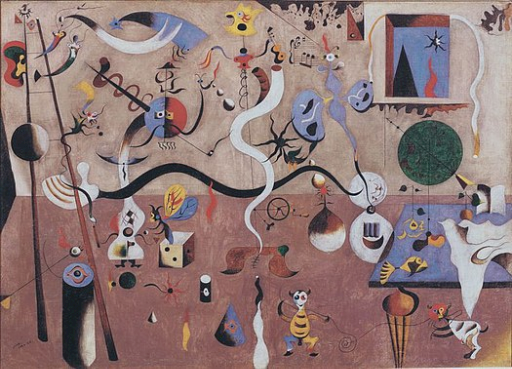

It's challenging for me to pick a single favorite painting, as each piece I created holds a special place in my artistic journey. However, if I were to highlight one of my significant works, it might be "The Harlequin's Carnival" (1924-1925). In this painting, I explored the theme of a carnival with vibrant colors, playful shapes, and a dreamlike atmosphere. The Harlequin figure, a recurring motif in my work, takes center stage, surrounded by other fantastical elements.
This painting is representative of my interest in the imaginative and surreal, and it showcases my ability to blend abstraction with a sense of playfulness.

Where do you find inspiration?
The Escape Ladder, 1940

My inspiration often came from a fascination with the mysteries of the imagination. I sought inspiration in the realms of dreams, the unconscious, and the poetic potential of symbols and shapes..
Nature was also a significant source of inspiration for me. I found inspiration in the organic forms, colors, and energy of the natural world. However, rather than reproducing realistic representations, I transformed these elements into imaginative and symbolic expressions in my paintings. I was also inspired by various artistic movements, including Surrealism and Dadaism.
How did you express your anger in your paintings?
The Angry One, 1967
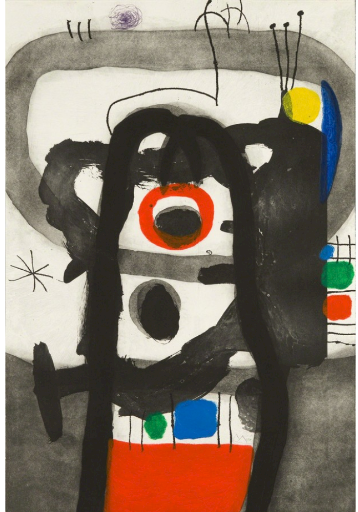

While my work is often characterized by playfulness and a celebration of the imaginative, there are instances where I channeled emotions such as anger or frustration into my paintings. The way I expressed anger, however, was not through aggressive depictions but rather through symbolic means.
One example of this is the use of intense colors and bold, dynamic lines. In some paintings, the juxtaposition of vibrant, conflicting hues and assertive brushstrokes might convey a sense of tension or emotional intensity. The symbolism of certain forms and figures, such as distorted shapes, could also evoke a mood of unease or inner turmoil.

If you weren't a painter what would you like to be?
If I weren't a painter, I might have been drawn to another form of creative expression. The world of visual arts was my true passion, so if circumstances led me in a different direction, perhaps I would have explored other creative fields such as the performing arts.
Alternatively, I might have been intrigued by roles in literature, poetry, or philosophy. Engaging with ideas and pushing the boundaries of artistic expression was a central aspect of my personality, so any path that allowed me to explore and contribute to the cultural and intellectual landscape would likely have appealed to me.
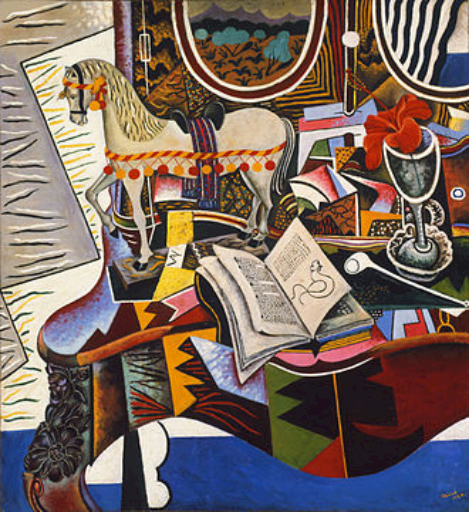
Joan Miró, 1920, Horse, Pipe and Red Flower,
oil on canvas, Philadelphia Museum of Art.
Mr. Miro thank you for such an interesting interview!
It was my pleasure my young eTwinners!!!


- < BEGINNING
- END >
-
DOWNLOAD
-
LIKE
-
COMMENT()
-
SHARE
-
BUY THIS BOOK
(from $6.79+) -
BUY THIS BOOK
(from $6.79+) - DOWNLOAD
- LIKE
- COMMENT ()
- SHARE
- Report
-
BUY
-
LIKE
-
COMMENT()
-
SHARE
- Excessive Violence
- Harassment
- Offensive Pictures
- Spelling & Grammar Errors
- Unfinished
- Other Problem





COMMENTS
Click 'X' to report any negative comments. Thanks!