
Our joint project, The Toys Book, invites all partners to help create a collection that celebrates the cultural heritage of each participant. Thus, each partner school will write a story and illustrate a traditional story from another partner school, using drawing and origami.
This eBook is a testament to our strengths of intercultural collaboration and our shared love of legends and stories, inviting readers to embark on a journey through the diverse and fascinating traditions of our partner schools.

Această carte electronică este o dovadă a puterilor noastre de colaborare interculturală și a dragostei noastre comune pentru legende și povești, invitând cititorii să pornească într-o călătorie prin tradițiile diverse și fascinante ale școlii noastre partenere.

Teachers involved ( Profesori implicați) :
* Ana Suciu- Secondary School „Patrichie Popescu” Bata ROMANIA
* Maria Garapa- EB2/3 Caniço, Madeira island, PORTUGAL
* Rusu Catalina- Școala Gimnazială "Elena Cuza"
* Daniela Covor - Technological High School No 1 Fundulea, Calarasi, Romania
* Simona Cont- Scoala Gimnaziala Nr.18 Sibiu, Romania
* Monica Damiean- Secondary School „Patrichie Popescu” Bata ROMANIA
*Ecaterina Procopii-IPGimnaziul ,, Anatolie Sîrghi”,Talmaza,
*Laura Iordache-Secondary School ,, Mihai David” Negrești, Romania
*Lenuța Bărbosu - Secondary School ,, Gheorghe Cioată” Todirești, Romania
*Vicdan Aydemir-Karşıyaka İmam Hatip Secondary Schoolİzmir-Turkiye
*SEMA NACAK COȘAR, Karşıyaka İmam Hatip Secondary School İzmir//TÜRKİYE
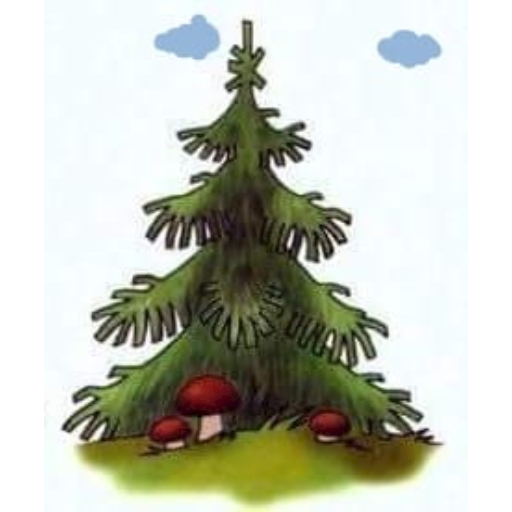
Legenda bradului
Legenda spune că, cu mult timp în urmă, micul brad era timid și trist pentru că simțea că nu este la fel de frumos ca ceilalți copaci din pădure. Frasinul avea frunze mari, stejarul era maiestuos, iar mestecenii scânteiau în lumina soarelui. Micul brad, cu crengile lui subțiri și ace ascuțite, credea că nu are valoare.
Într-o iarnă aspră, o pasăre tânără căzută din cuib, împreună cu alte animale, și-a căutat adăpost printre ramurile bradului. Bradul le-a oferit protecție de frig și zăpadă fără să se plângă. Văzând bunătatea bradului, Dumnezeu la binecuvântat, transformându-l într-un simbol al curajului și al generozității. Din acel moment, bradul a devenit arborele veșnic verde, rămânând verde în toate anotimpurile, semn de speranță și rezistență.
Aceasta este o poveste despre modestie, sacrificiu și frumusețe interioară, care ne amintește că adevărata valoare constă într-o inimă bună și bună.
Scrierea poveștii : Ana Suciu-Școala Gimnazială ,, Patrichie Popescu” Bata, România

The Legend of the Fir Tree
Long ago, the little fir tree was shy and sad because it felt it was not as beautiful as the other trees in the forest. The ash tree had large leaves, the oak was majestic, and the birches sparkled in the sunlight. The little fir tree, with its thin branches and sharp needles, believed it had no value.
One harsh winter, a young bird that had fallen from its nest, along with other animals, sought shelter among the fir tree’s branches. The fir tree offered them protection from the cold and snow without complaining. Seeing the fir tree’s kindness, God blessed it, transforming it into a symbol of courage and generosity. From that moment on, the fir tree became the evergreen tree, staying green in all seasons—a sign of hope and resilience.
This is a story about modesty, sacrifice, and inner beauty, reminding us that true value lies in a kind and generous heart.
Writinng the story : Ana Suciu - Secondary School ,, Patrichie Popescu” Bata, Romania
Simona Cont Scoala Gimnaziala N
SIMONA CONT SCOALA GIMNAZIALA NR 18 SIBIU
Lupul, bătrâna și tărtăcuța, basm popular portughez
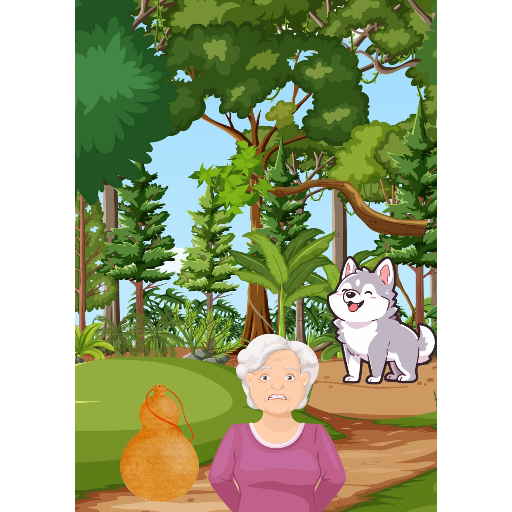
O bătrână a fost invitată la nunta fiicei sale într-un oraș la trei zile distanță. În timp ce călătorea, a traversat o pădure periculoasă și a întâlnit un lup flămând care a vrut să o mănânce. Bătrâna l-a rugat să o lase să meargă la nuntă, promițându-i că se va întoarce grasă ca să o mănânce lupul. Lupul a fost de acord și i-a dat drumul. După ce i-a spus fiicei sale ce s-a întâmplat, ea a găsit o tărtăcuță în care mama ei să se ascundă și să scape de lup la întoarcere. Bătrâna a intrat în tărtăcuță și s-a rostogolit pe drum, păcălindu-l pe lup răspunzându-i din interiorul tărtăcuței cu o rimă. Lupul, frustrat, și-a dat seama că fusese păcălit și a regretat că nu a mâncat-o pe bătrână de la început.
Povestitoare: Maria Garapa (EB23 Caniço)

The wolf, the old woman and the gourd, a Portuguese folk tale
An old woman was invited to her daughter's wedding in a town three days away. While traveling, she crossed a dangerous forest and encountered a hungry wolf who wanted to eat her. The old woman begged him to let her go to the wedding, promising that she would come back fat so the wolf could eat her. The wolf agreed and let her go. After telling her daughter what had happened, she found a gourd for her mother to hide in and escape the wolf on her return. The old woman got into the gourd and rolled down the road, tricking the wolf by answering him from inside the gourd with a rhyme. The wolf, frustrated, realized he had been tricked and regretted not eating the old woman from the beginning.
Story by Maria Garapa (EB23 Caniço)
School (Drawing ) Of Maria Garapa Story...
SEMA NACAK COȘAR, Karşıyaka İmam Hatip Secondary School İzmir//TÜRKİYE
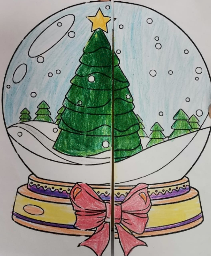
The story of the fir tree begins in a large forest, where a young fir tree lived. He dreamed of reaching the center of the village, so that the people who decorate their Christmas tree bring joy to their homes. But in the deep forest, the tree was small and unassuming, and he imagined how beautiful it would be to be decorated with globes and colored lights. Time passed and the tree grew into a large and beautiful tree. One day, some people came to the forest to cut it. The little tree was sad, but at the same time it felt a thrill of hope, because it knew that as soon as it reached people's house it would bring smiles and happiness. It was cut up and taken to the village where it was decorated with beads, globes, tinsel and twinkling lights.


The children were playing around him, and the whole house was full of warmth and light. The tree felt great joy, because it had fulfilled its dream - it had become a symbol of Christmas, love and hope.
When Christmas ended, the tree began to lose its beauty, but he was not sad. Because he knew that even though time was passing, he would always remain a symbol of life, rebirth and unconditional love.
Writing the story: Daniela Covor, Technological High School No. 1 Fundulea Călărași, Romania
Drawing: Catalina Rusu




LEUL ŞI ŞORICUL
Leul dormea. Un șoarece sa grăbit peste el. Leul sa trezit din somn și a prins șoarecele. Şoarecele l-a rugat pe leu să-i dea drumul, spunând că îl va ajuta şi îi va face bine. Leul a lăsat șoarecele să plece.
După un timp, leul a fost capturat de vânători. A fost legat de un copac cu o frânghie groasă. Auzind strigătele leului, șoarecele a venit imediat. A tăiat frânghia și a eliberat leul. Șoarecele i-a amintit leului cum a râs de el când a cerut să fie eliberat.
Leul a înțeles că până și un șoarece poate fi util.
Scrierea poveștii - Simona Cont, Sibiu, Romania, Scoala Gimnaziala Nr. 18
Daniela Covor








Legenda Sfântului Nicolae (Moș Nicolae)
Se spune că Sfântul Nicolae ar fi ajutat trei fete sărace să se mărite, aducându-le dar de zestre, noaptea, fără a fi văzut. Casa în care locuiau cele trei surori era săracă, astfel încât tatăl lor plănuia să-și vândă copilele, gândind că astfel se va pricopsi. Sfântul Nicolae a aflat despre nenorocirea ce urma să se se întâmple și a hotărât să ajute sărmanele fete.El lăsa câte un săculeţ plin cu aur la poarta casei lor, astfel încât fiecare fată să aibă o zestre şi săse poată mărita. Când a venit rândul ultimei fete, tatăl ei a vrut să vadă cine le aducea săculeţele cu aur şi a stat de pază într-o noapte. Atunci, Sfântul Nicolae a lăsat săculeţul pe hornul casei, într-o şosetă care era pusă la uscat şi astfel a apărut tradiţia cadourilor puse în pantofi. Cei trei săculeţi cu aur au devenit simbolul Sfântului Nicolae, sub forma a trei bile de aur.
The legend was written by students from the "Anatolie Sîrghi" High School, Talmaza village, Moldova
Ana Suciu-Secondary School ,,Patrichie Popescu” Bata, Romania
The Legend of Moldova
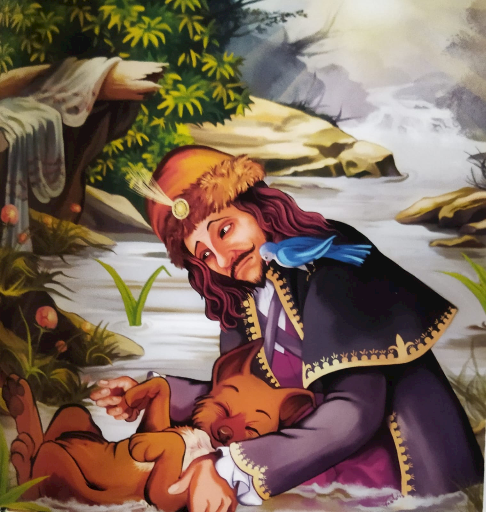
A voievod named Dragoș, while hunting, was chasing an aurochs (a wildbull). During the pursuit, he crossed mountains and forest, arriving in an unknown land. The aurochs was killed near a river and his faithful dog, Molda, died during the hunt, drowning in the water. To honour his dog and the place where he stoped, the voivode named the land Moldova, and the river was given the same name.
Monica Damiean, Secondary School „Patrichie Popescu”, Bata, Arad, Romania

Ecaterina Procopii, IPG„A. Sîrghi”s. Talmaza, Moldova
The legend of Baba Dochia
Once upon a time there was a grandmother forgotten by years and kindness, who lived in a rock house high up on the mountain and Baba Dochia was her name. She was so cold in her soul that she walked all the time with nine skins on her back. She had a son, a well-known boy loved by many girls, named Dragobete. He was the only one who had stayed at the grandmother's house, and with a flock of sheep. One fine day, Dragobete finds his chosen girl, kind and beautiful, and brings her home. But Baba Dochia did not have good eyes for the daughter-in-law, still finding her faults and looking for knots in her haste.
In that year came a hard winter that never ended. On a bitterly cold day, Baba Dochia tells his daughter-in-law that she is tired of the long winter and sends her to bring spring flowers. Nora leaves dejected, not knowing where to go to find spring flowers.
Nora leaves dejected, not knowing where to go to find spring flowers. On the way, she meets Mărțişor, to whom she tells about her trouble, and Mărțişor gives her a bunch of snowdrops to bring spring to the grandmother with them. Delighted, the daughter-in-law quickly returns to Baba Dochia with the snowmen.
It was the 1st of March. When Baba Dochia sees the daughter-in-law with the snowdrops, he thinks that spring has really come, and leaves for the mountain with the flock of sheep. But Martie got very angry at the grandmother's arrogance and gave nine unusually warm days. Every day, the grandmother was forced to remove a husk. And so, on the tenth day, March returned the bad weather and gave three days of terrible frost, and when the baba had no more husks on her, a harsh frost started on the world, so that the waters and the stones froze . That's how baba also froze, with sheep and everything. They turned into rocks, and there they have remained until this day.
Prof. Nicoleta Laura Iordache - Secondary School ” Mihai David” Negrești, Vaslui, România
- Full access to our public library
- Save favorite books
- Interact with authors
- < BEGINNING
- END >
-
DOWNLOAD
-
LIKE(1)
-
COMMENT()
-
SHARE
-
SAVE
-
BUY THIS BOOK
(from $5.99+) -
BUY THIS BOOK
(from $5.99+) - DOWNLOAD
- LIKE (1)
- COMMENT ()
- SHARE
- SAVE
- REMIX
- Report
-
BUY
-
LIKE(1)
-
COMMENT()
-
SHARE
- Excessive Violence
- Harassment
- Offensive Pictures
- Spelling & Grammar Errors
- Unfinished
- Other Problem






COMMENTS
Click 'X' to report any negative comments. Thanks!