 We dedicate this book to our Friends,Teachers and Parents across the Globe.
This book was created and published on StoryJumper™
©2014 StoryJumper, Inc. All rights reserved.
Publish your own children's book:
www.storyjumper.com

 GREECE
 Clothes-Influence of Climate and Culture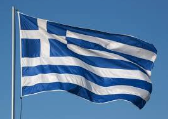
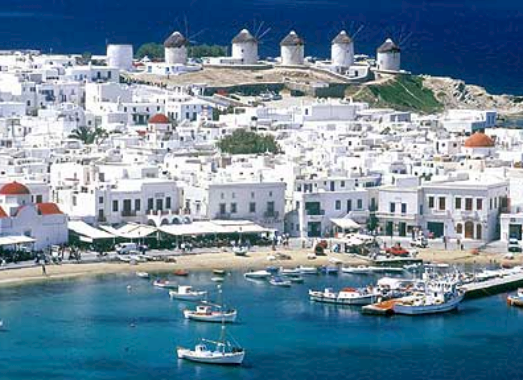
 Geography of greece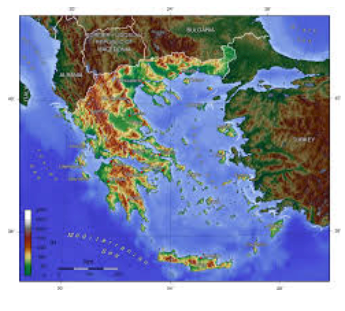
Greece is a country located in Southern Europe, on the
southern end of the Balkan Peninsula. Greece is
surrounded on the north by Bulgaria, the Republic of
Macedonia and Albania; to the west by the Ionian Sea;
to the south by the Mediterranean Sea and to the east
by the Aegean Sea and Turkey.Mainland Greece is a
mountainous land almost completely surrounded by the
Mediterranean Sea. Greece has more than 1400 islands.
 Topography of Greece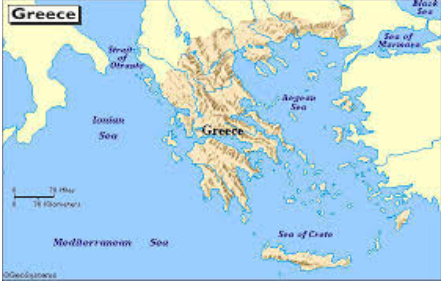
The country ranges approximately in latitude from 35°00′N to 42°00′N
and in longitude from 19°00′E to 28°30′E. 80% of Greece is mountainous,
and the country is one of the most mountainous countries of Europe. The
Pindus, a chain of mountains lies across the center of the country in a
northwest-to-southeast direction, with a maximum elevation of 2637 m.
Greece, the southernmost extremity of the Balkan peninsula, is a
mountainous, stony country with a highly indented and crenellated coast.
According to a Greek myth, when god created the world he distributed all
the available soil through a sieve and when he had provided every country
with enough of it he tossed the remaining stones from the sieve over his
shoulder - and there was Greece. More than two thirds of the country is
classified as hilly and mountainous.
The Pindos range traverses the Greek mainland from N.W. to S.E. dividing it
in two. The mainland coastline is 4,000 km long while 9,841 islands, 114 of
which are inhabited, add another 11,000 km of coastline
Greek rivers are not navigable. Many dry up in the summer and become
rushing mountain torrents in the spring.
 People in Greece
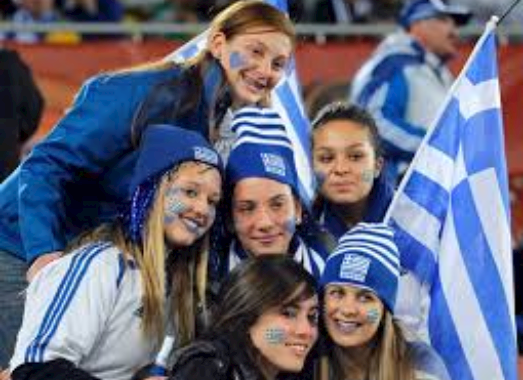
The Greek people are only partly descended from the ancient Greeks,
having mingled through the ages with the numerous invaders of the
Balkans. Modern vernacular Greek is the official language. There is a small
Turkish-speaking minority, and many Greeks also speak English and French.
The Greek Orthodox Church is the established church of the country, and it
includes the great majority of the population. The Greek primate is the
archbishop of Athens, who recognizes the Ecumenical Patriarch of İstanbul.
There is a small Muslim minority.
 Clothing
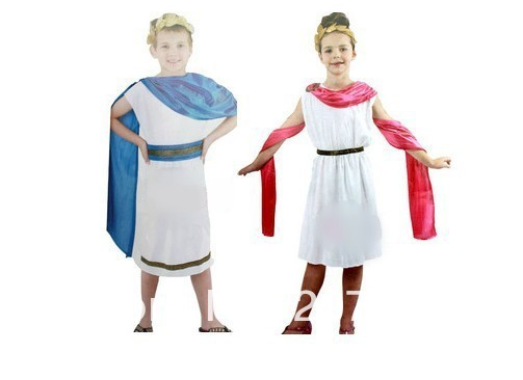
The Greeks wore light, loose clothes as the weather was hot for most of the year.
Long pieces of colourful fabric were used to make the Greek clothes.
The main item of clothing for men was a tunic, called a chiton, These were big
squares of cloth, held in place by pins at the shoulders and a belt round the waist.
They were made from wool in the winter or linen in the summer.
Women also wore clothing which was made from big square piece of linen or wool.
They used pins in various places to hold it together. Unlike the men's, the dresses
always went down to the ankles.
The ancient Greeks could buy cloth and clothes in the agora, the marketplace, but
that was expensive. Many of the clothes were made by the women and female
slaves.
Wealthy people had tunics made of coloured cloth. The tunics of the poor were
plain. In cold weather, cloaks were worn. Most Greeks went barefoot. If they needed
shoes, they put on leather sandals or boots.
Hair was curled, arranged in interesting and carefully designed styles, and held in
place with scented waxes and lotions. Women kept their hair long, in braids,
arranged on top of their head, or wore their hair in ponytails. Headbands, made of
ribbon or metal, were very popular.
 Culture in Greece
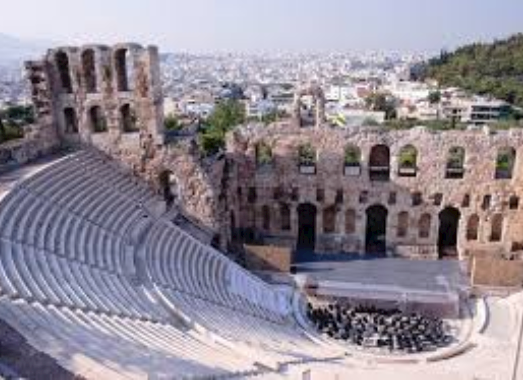
Greece is a crossroads of ideas, customs, languages and knowledge for people
in southern Europe and the eastern Mediterranean since antiquity.
Greece's cultural heritage can be described as largely based on a skillful
reshaping of elements from Ancient Greek imagination, Byzantine glories and
European Modernity that form a cosmopolitan spirit of modern Hellenism.
The words "Greek," "Hellenic," and "Romeic" refer not only to the country but
also to the majority ethnic group. Greek culture and identity reflect the shared
history and common expectations of all members of the nation-state, but they
also reflect an ethnic history and culture that predate the nation-state and
extend to Greek people outside the country's borders. Since 98 percent of the
country's citizens are ethnically Greek, ethnic Greek culture has become
almost synonymous with that of the nation-state. However, recent migration
patterns may lead to a resurgence of other ethnic groups in the population.
You've previewed 13 of 20 pages.
To read more:
Click Sign Up (Free)- Full access to our public library
- Save favorite books
- Interact with authors


- < BEGINNING
- END >
-
DOWNLOAD
-
LIKE(1)
-
COMMENT()
-
SHARE
-
SAVE
-
BUY THIS BOOK
(from $3.99+) -
BUY THIS BOOK
(from $3.99+) - DOWNLOAD
- LIKE (1)
- COMMENT ()
- SHARE
- SAVE
- Report
-
BUY
-
LIKE(1)
-
COMMENT()
-
SHARE
- Excessive Violence
- Harassment
- Offensive Pictures
- Spelling & Grammar Errors
- Unfinished
- Other Problem





COMMENTS
Click 'X' to report any negative comments. Thanks!