
This book was prepared by students from the partner schools of the eTwinning project called 'Transforming World'.
Eylem GÜNEŞ ERKOL ATATÜRK Vocational and Technical Anatolian High School.
Saliha Elif AKCA - Dr. Sadık Ahmet Anatolian High School
Sedat BAKIM- Yunusemre /MANİSA - Private Mostem High School
Melike İrem ARSLAN- Dr. Sadık Ahmet Anatolian High School
Raluca Zamfirescu Liceul "Voievodul Mircea"
Azize YİĞİT ŞEHİT EMRAH ARAL Vocational and Technical Anatolian High School.
Osman ÇAKIR - Kütahya Necip Fazıl Kısakürek Anatolian High School
Emre ÖZARSLAN-Sultanbeyli Multi Programming High School
Katarzyna Merska-Gromek CLVI Liceum Ogólnokształcące Integracyjne w Warszawie
Natalia Otulak CLVI Liceum Ogólnokształcące Integracyjne w Warszawie
Hasip ALTIN - Sultanbeyli Multi Programming High School
Nina Tirsina-IP Centrul de Excelenta in Constructii
Nina Gurițanu IP Centrul de Excelenta in Constructii
Nicoleta Stoian Liceul "Voievodul Mircea"
Fatma GEZER - Kartal Fatma Aliye Vocational and Technical Anatolian High School.


CONTENTS
1. What is Sustainability? ......................................................................................... 4-5
2. Classification of Sustainability ............................................................................ 6-7
3. What is Recycling? Why is it Important? ............................................................ 8-9
4. Paper Recycling and Examples ...........................................................................10-11
5. Glass Recycling and Examples ..................................................................... ......12-13
6. Metal Recycling and Examples ............................................................................14-15
7. Textile Recycling and Examples ...........................................................................16-17
8. What are Organic Wastes? ....................................................................................18-19
9. How to Make Compost? .........................................................................................20-21
10. What is Upcycling? Why is it Important? ....................................................... ....22-23
11. Upcycling Project Made from Fabric ...................................................................24-25
12. Upcycling Project Made from Paper ............................................................. ......26-27
13. Upcycling Project Made from Plastic ................................................................. 30-31
15. What Should Be Done to Increase Students' Sustainability Awareness? .... 32-33
What is Sustainability?
In its simplest definition, sustainability refers to the balance between the environment, society, and economy. Sustainability encompasses protecting the planet, halting global warming, and promoting societal development without endangering life on Earth or leaving anyone behind.In its broadest sense, sustainability refers to the ability to continuously maintain and support a process over time. In the context of business and policy, sustainability involves preventing the depletion of natural or physical resources and creating conditions for their long-term availability.
When we use the term "sustainability" today, we express our aim to meet the needs of the present without compromising the resources that future generations will depend on.
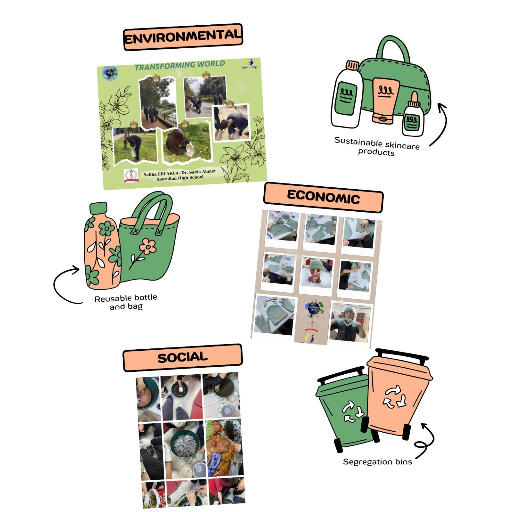
Sustainability refers to the balanced use of resources while considering the needs of future generations. It is typically classified into three main categories:
1. Environmental Sustainability: Involves the protection of natural resources, maintaining ecosystem balance, and reducing carbon footprints.
2. Economic Sustainability: Aims for long-term economic growth, employment, and efficient use of resources without harming the environment.
3. Social Sustainability: Covers issues like social equity, justice, quality of life, and access to basic rights. It focuses on strengthening communities and improving well-being.
These three dimensions are interconnected and should be addressed in a balanced way.
Classification of Sustainability
WHAT IS RECYCLING?
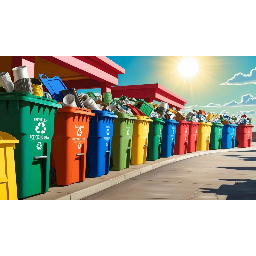
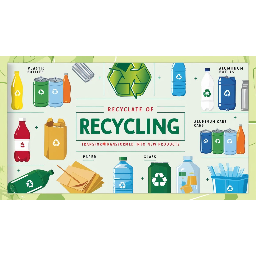
Recycling is the name given to the reprocessing of used and unused materials and their reunification with the consumer. We can list recyclable materials as plastic bottles, car tires, broken glass pieces, metal pieces and in short, all materials that have completed their useful life. The purpose of recycling is actually to prevent excessive use of resources. In this way, the amount of garbage decreases; we take a serious step towards benefiting the environment.
WHY IS IT IMPORTANT?
The natural resources on Earth (forests, minerals, water resources) are limited. Recycling reuses existing materials without consuming new resources. For example, fewer trees are cut down when recycled paper is used. Producing a new product from scratch requires much more energy than recycling. For example, recycling aluminum cans uses approximately 95% less energy than producing new cans. Many examples can be given about its importance.
PAPER RECYCLING AND EXAMPLES
Paper recycling is the process of converting used paper into new paper products.It involves collecting paper waste, removing contaminants such as ink and staples, breaking it down into small pieces, mixing it with water to create pulp, and then pressing and drying it to form new sheets.Paper recycling helps save trees, reduce waste sent to landfills, conserve water, and lower greenhouse gas emissions.
Here are a few brief examples of paper recycling:
- Old newspapers are recycled into new newspapers or packaging paper.
- Used office paper is turned into toilet paper or notebook paper.
- Cardboard boxes are recycled into new cardboard or corrugated board.
- School worksheets are transformed into recycled photocopy paper.
- Magazines are reused to make paper insulation or decorative paper.
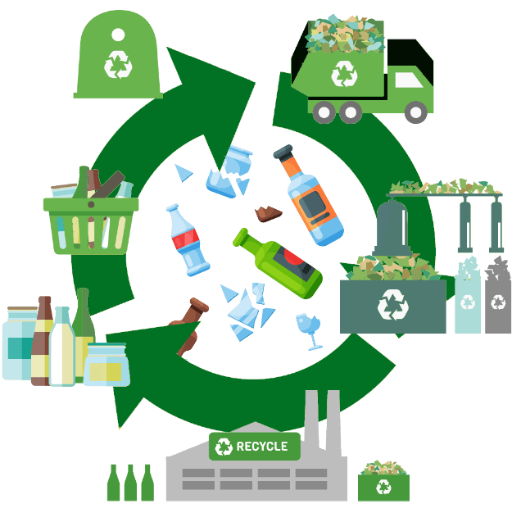
What is glass recycling?
Glass recycling is the processing of waste glass into usable products. Glass that is crushed or imploded and ready to be remelted is called cullet. There are two types of cullet: internal and external.
Internal cullet is composed of defective products detected and rejected by a quality control process during the industrial process of glass manufacturing, transition phases of product changes (such as thickness and colour changes) and production offcuts.
External cullet is waste glass that has been collected or reprocessed with the purpose of recycling. External cullet (which can be pre- or post-consumer) is classified as waste. The word "cullet", when used in the context of end-of-waste, will always refer to external cullet.
To be recycled, glass waste needs to be purified and cleaned of contamination. Then, depending on the end use and local processing capabilities, it might also have to be separated into different sizes and colours. Many recyclers collect different colours of glass separately since glass tends to retain its colour after recycling.
The most common colours used for consumer containers are clear (flint) glass, green glass, and brown (amber) glass. Glass is ideal for recycling since none of the material is degraded by normal use.
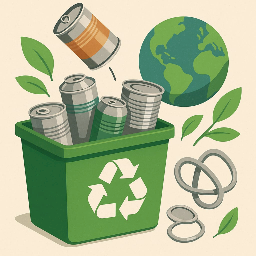
Metal recycling is the process of collecting, sorting, and reprocessing used metals, waste, or scrap to make them reusable. This process helps protect natural resources and contributes to reducing the amount of waste. Metal recycling also provides significant economic benefits.
A few examples of metal recycling:
- Used aluminum cans are recycled and used to make new cans.
- Car parts are recycled and used as raw materials in industry.
- Metals such as steel, aluminum, and copper are extracted from old appliances like refrigerators and washing machines, separated, and recycled.
Metal Recycling
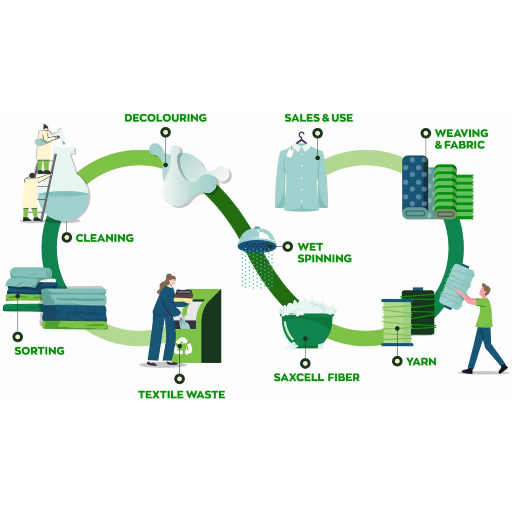
What Is Textile Recycling?
Textile recycling is the process of recovering fiber, yarn, or fabric and reprocessing the material into new, useful products.Textiles can be either reused or recycled.
Textile recycling can help you save money, space, and resources, as well as reduce your environmental and social footprint.
Textile recycling has many benefits for the environment and the society. By reusing or transforming textile waste into new products or materials, textile recycling can help for a lot.
Here's how textile recycling typically works:
1. Collection
Textiles are collected by donation bins, recycling programs, thrift stores, or specific drop-off points. These might include clothing, household linens, and even industrial fabric scraps.
2. Sorting
The collected items are sorted into parts.
3. Processing
Natural fibers are usually shredded and respun into yarn or turned into stuffing or insulation.
Synthetic fibers can be melted down and reformed into new fibers or plastic products.
4. Reuse or Repurpose
Materials are reused to make new clothes, accessories or even car interiors.
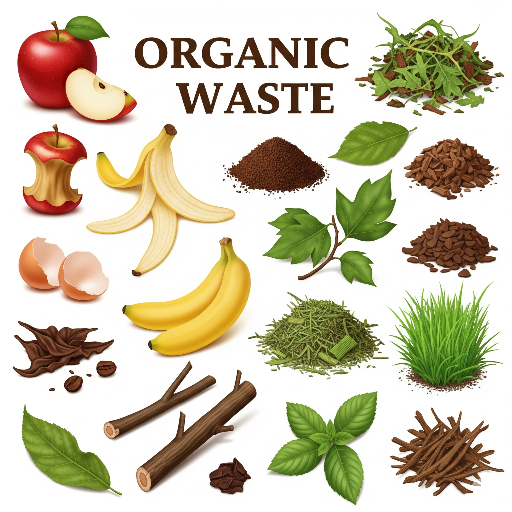
what are Organic Wastes?
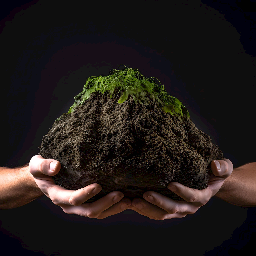
Organic wastes are materials that come from plants or animals and are biodegradable, meaning they can naturally decompose through the action of microorganisms. These wastes break down over time and return to the environment as part of the natural cycle.
Food scraps (vegetable peels, leftovers)
Yard waste (grass clippings, leaves, branches)
Manure (animal waste)
Paper products (paper towels, napkins, if uncoated or unbleached)
Wood (untreated wood, sawdust)
Reduces landfill use and greenhouse gas emissions.
Can be composted to create nutrient-rich soil.
How to make compost?
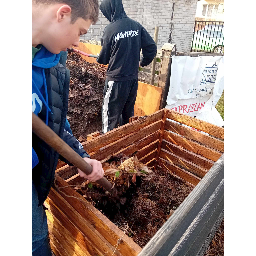
What You’ll Build:
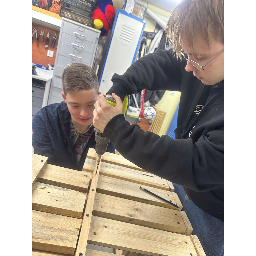
A simple, sturdy compost bin with slatted wood for airflow and a front panel that opens for easy access. Materials: 4 wooden pallets or 12–16 planks (3–4 ft each) 50–60 wood screws (2.5–3”)
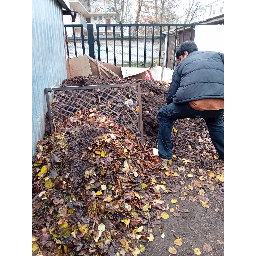
2 hinges + 1 latch. Optional: outdoor wood sealant. Tools: Drill, saw, tape measure, level, hammer (optional), paintbrush. Instructions: Pick a Spot: Dry, partially shaded area with good drainage, near water if possible. Build Frame: Pallets: Stand 3 in a U-shape, screw together. Planks: Build 3 walls with spaced boards on corner posts. Add Front Panel: Attach 4th pallet/plank panel with hinges and secure with latch. *(Optional) Lid: Use planks or plywood, leave gaps for airflow. *(Optional) Seal. Wood: Use non-toxic, weather-safe sealer. Let dry. Start Composting: Layer greens (food scraps, grass) and browns (leaves, paper). Turn every 1–2 weeks. Tips: Keep compost moist (like a wrung-out sponge). Chop materials to speed up composting.
Ready in 2–4 months.


What is Upcycling? Why is it important?
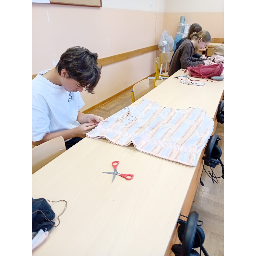
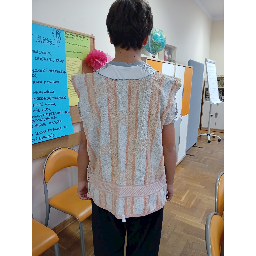
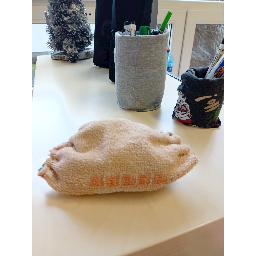
Upcycling Project Made from Fabric
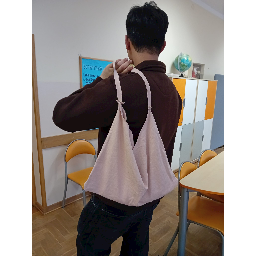
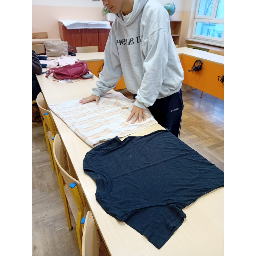
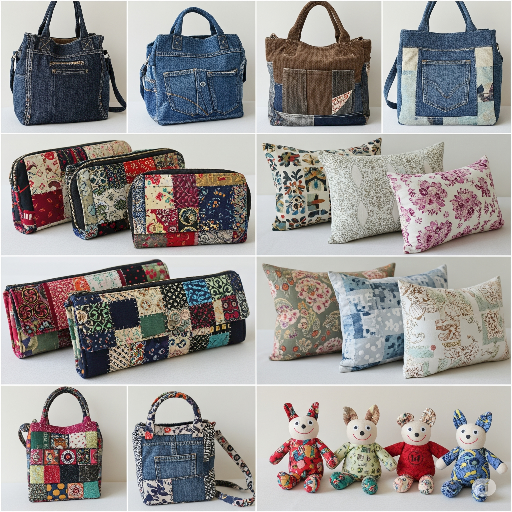
In this project, leftover fabrics were repurposed into new and functional items. Old clothes, curtain scraps, and textile waste were redesigned into various products such as bags, wallets, pillowcases, and toys. The goal was to raise environmental awareness and foster creativity.
PAPER UPCYCLING PROJECT
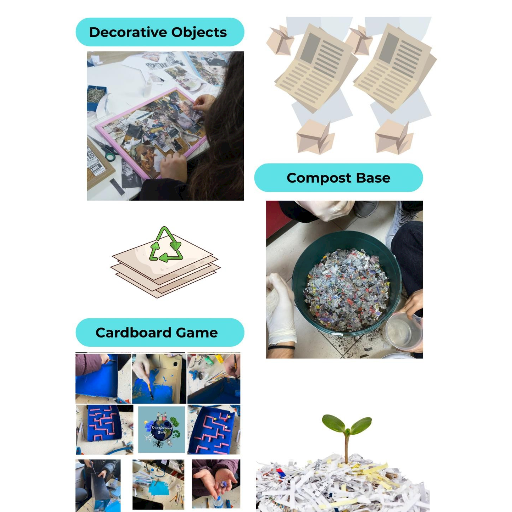
Paper upcycling is the process of creatively repurposing used paper, instead of discarding it, to transform it into new and valuable products.
Importance of Paper Upcycling
Examples of Paper Upcycling
PLASTIC UPCYCLING
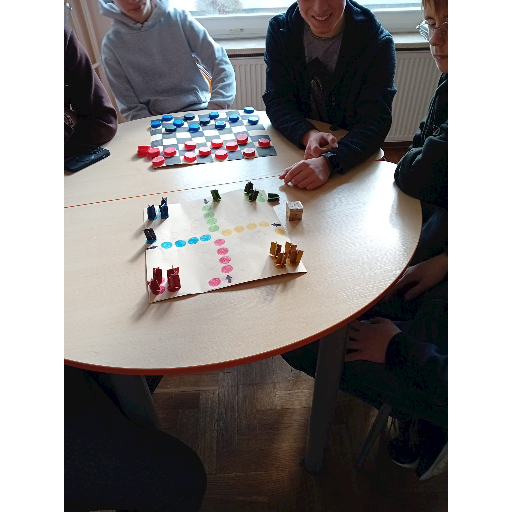
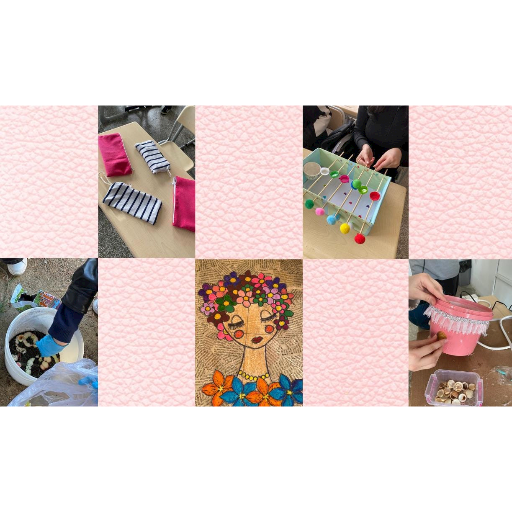
Plastic upcycling is the process of creatively repurposing used plastic materials, instead of discarding them, to transform them into new, functional, or decorative products. This process supports environmental sustainability, reduces waste, and carries a powerful message, especially during awareness events. Below are the details, examples, and applications of plastic upcycling projects, including their use in events like Disability Awareness Week.
Importance of Plastic Upcycling Projects
-Environmental Contribution**: Plastic waste can persist in nature for centuries without decomposing. Upcycling reduces plastic pollution and protects ecosystems such as oceans and forests.
- Resource Efficiency: It decreases the need for petroleum and energy used in new plastic production.
- Social Awareness: During events like Disability Awareness Week, projects made from plastic waste combine environmental consciousness with disability awareness, delivering a strong message.
-Creative Development: Working with waste materials, especially for students, enhances problem-solving and artistic skills.
A carbon footprint is the total amount of greenhouse gases, especially carbon dioxide, that are released into the atmosphere as a result of human activities.
These emissions come from everyday actions like:
- Driving a car;
- Using electricity;
- Heating homes;
- Producing and consuming food or goods.
Carbon footprints are measured in carbon dioxide equivalents (CO₂e), which reflect the global warming potential of different gases.

What Are the Methods
to Reduce Carbon Footprint?
- Choose Greener Transport - Walk, bike, carpool, or use public transport, opt for electric or fuel-efficient vehicles.
- Save Energy at Home - Use LED lights, unplug devices, and choose energy-efficient appliances.
- Eat Sustainably - Go plant-based more often, reduce food waste, and buy local.
- Buy Less, Reuse More - Shop mindfully, recycle and support eco-friendly brands.
- Use Water Wisely - Fix leaks, install low-flow fixtures, and avoid waste.
- Support reforestation or carbon offset programs.
What Should Be Done to Increase Sustainability Awareness Among Students?
- < BEGINNING
- END >
-
DOWNLOAD
-
LIKE(2)
-
COMMENT()
-
SHARE
-
BUY THIS BOOK
(from $6.59+) -
BUY THIS BOOK
(from $6.59+) - DOWNLOAD
- LIKE (2)
- COMMENT ()
- SHARE
- Report
-
BUY
-
LIKE(2)
-
COMMENT()
-
SHARE
- Excessive Violence
- Harassment
- Offensive Pictures
- Spelling & Grammar Errors
- Unfinished
- Other Problem





COMMENTS
Click 'X' to report any negative comments. Thanks!