
Meet Brave Bessie
This book was created to help readers learn about Bessie Coleman, a
Texas woman who became a history-making pilot. Bessie lived at a time
when unfair rules kept many Black people and women from receiving the same opportunities as others. When American flight schools refused to teach her, she searched for another path.
As you read, notice the challenges Bessie faced, the choices she made,
and the way her courage helped open the sky for those who came after
her



A small school, a big dream

A Girl with Big Dreams
Bessie Coleman was born in Texas on January 26, 1892. She was one of thirteen children and grew up near Waxahachie.
Her family did not have much money. Bessie helped care for younger children and worked in cotton fields during harvest season. Even when life was difficult, she loved learning. Each school day, Bessie walked several miles to a one-room school. The classroom had few books, pencils, or supplies, but Bessie became an excellent student. She especially enjoyed mathematics. Her classroom was small, but her dreams were already growing.
Reaching for More
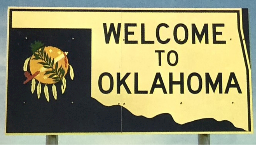
When Bessie finished school, she wanted to continue her education. She saved her money and attended college in Oklahoma for a short time. When her savings ran out, she returned to work.
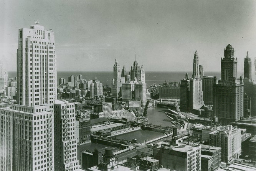
Bessie did not stop hoping for a different future. As a young woman, she moved to Chicago, where some of her brothers lived. The city was filled with tall buildings, busy streets, newspapers, and new ideas.
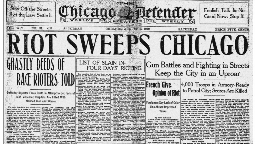
Bessie trained as a manicurist and found work in a barbershop. While she worked, she listened carefully to people around her and read the Chicago Defender, a newspaper that shared important stories from Black communities.
Stories from the Sky
After World War I, Bessie heard stories about airplanes and women who flew in France. The thought of soaring above the clouds filled her with excitement.
Bessie decided she would become a pilot. She applied to flight schools across the U.S., but each school turned her away because she was Black and a woman.
The rejections hurt, but they did not end her dream. Bessie began to understand that a closed door did not always mean the journey was over. Sometimes it meant she needed to find a different door.
No Does Not Mean Never
Robert S. Abbott, the publisher of the Chicago Defender, encouraged Bessie to train in France and save enough money for the trip.
Bessie studied the language, worked hard, and found supporters who believed in her goal. In November 1920, she boarded a ship across the Atlantic Ocean. She was leaving her family, her job, and everything familiar behind. Bessie could not be certain what would happen in France, but she knew she had to try.
The girl from Texas was crossing an ocean to chase the sky.

Up, Up, and Away!
In France, Bessie attended the Caudrion Brothers' School of Aviation. She trained in a small airplane made of wood, wire, and fabric.
She learned how to take off, land, turn, climb, and control the airplane in the air. Flying was dangerous, so Bessie had to study carefully and stay calm.
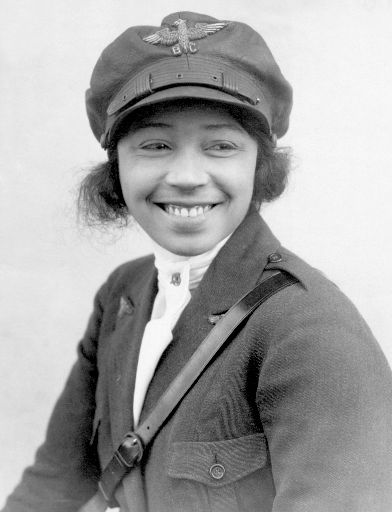
On June 15, 1921, she earned an international pilot's license from the Federation Aéronautique Internationale. Bessie became the first African American woman and the first woman of Native American ancestry to earn that license.
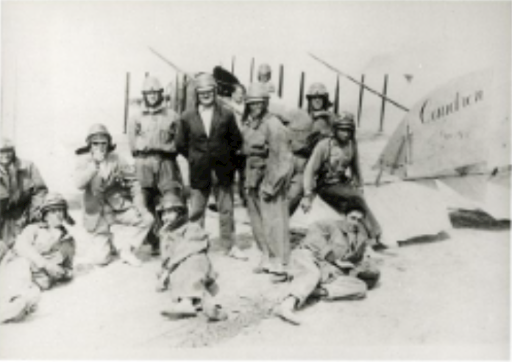
Flight students at the Caudron school in France.
Bessie is seated on the airplane
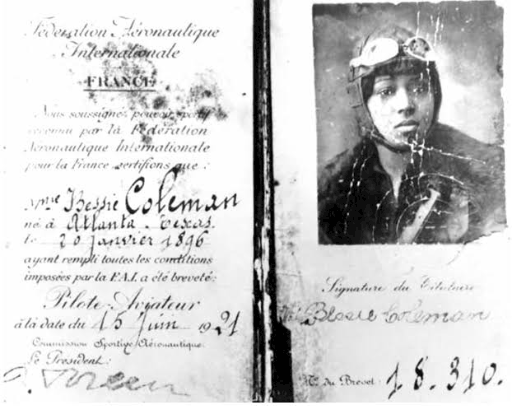
This is an image of Bessie Coleman's international pilot license, awarded in France on June 15, 1921. A document created during this time is a primary source. The license provides direct evidence that Bessie completed her training and earned the right to fly.
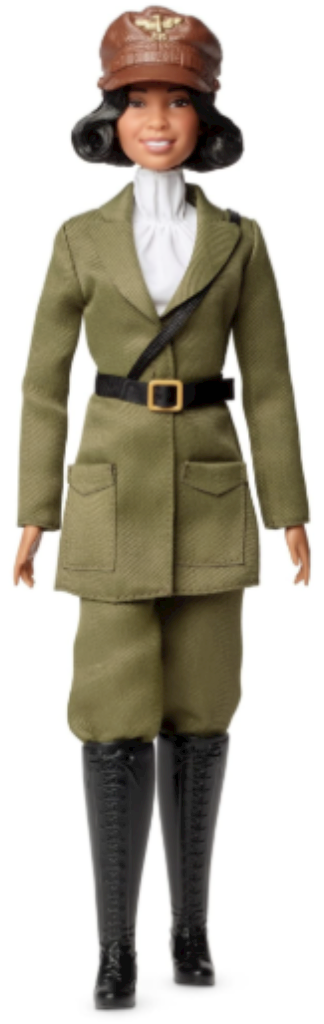
"This collectible Bessie Coleman Barbie doll honors the first Black and Native American female pilot"
- Mattel.com
Queen Bess Returns
When Bessie returned to the U.S., reporters wanted to hear her story. People were amazed that she had crossed an ocean and earned a license that no African American woman had earned before.
Bessie wanted to perform in air shows, so she completed more training in Europe. Soon, crowds gathered to watch her loops, dives, and figure eights.
The roar of the engine filled the air as her airplane climbed above the crowd. Then Bessie twisted and turned across the sky. Her exciting performances gave her the nicknames Queen Bess and Brave Bessie. She had become the pilot she had always dreamed of being.
Courage on the Ground
Bessie did more than perform daring tricks. She used her growing fame to speak against discrimination.
At that time, Black and white Americans were often
separated in schools, theaters, restaurants, and public events. Bessie refused to perform at air shows that would not fairly admit Black audience members. She also rejected a movie role when she believed the character would disrespectfully show Black people.
Bessie had fought for the chance to fly. Now she used her voice to fight for others. Real bravery does not happen only in an airplane.
Sometimes bravery means standing up and saying, 'This is not right.'
- Full access to our public library
- Save favorite books
- Interact with authors
- < BEGINNING
- END >
-
DOWNLOAD
-
LIKE
-
COMMENT()
-
SHARE
-
SAVE
-
BUY THIS BOOK
(from $4.39+) -
BUY THIS BOOK
(from $4.39+) - DOWNLOAD
- LIKE
- COMMENT ()
- SHARE
- SAVE
- Report
-
BUY
-
LIKE
-
COMMENT()
-
SHARE
- Excessive Violence
- Harassment
- Offensive Pictures
- Spelling & Grammar Errors
- Unfinished
- Other Problem






COMMENTS
Click 'X' to report any negative comments. Thanks!