 I dedicate this book to
my parents who got me
interested in space at a
young age, and to the future
astronomers reading this book
who hope to find new planets
and ways of getting there.
This book was created and published on StoryJumper™
©2014 StoryJumper, Inc. All rights reserved.
Publish your own children's book:
www.storyjumper.com

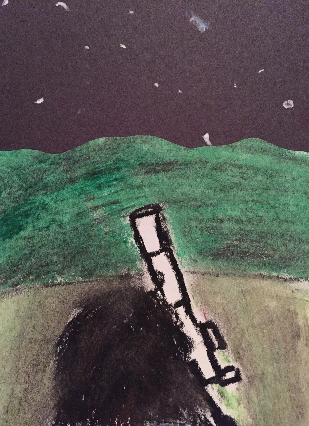
On clear nights with a telescope, you can
observe distant objects in the night sky.
You can see the moon, stars, and even
planets!
To get the best view of these celestial objects,
it is better to go out in rural areas where light
pollution is at it's lowest. If you are in the city,
you can still view them, but not as clearly.
Now lets look up to night sky!
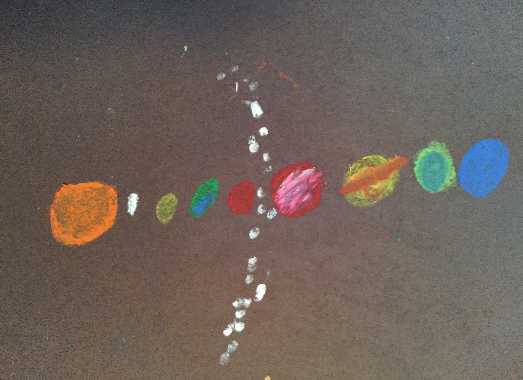
Before we visit each planet, we must look at
the map of the Solar System.
The Solar System is a collection of the eight
major planets, the planets moons, comets, and
asteroids. These objects then orbit, or circle,
around a central star - our Sun.
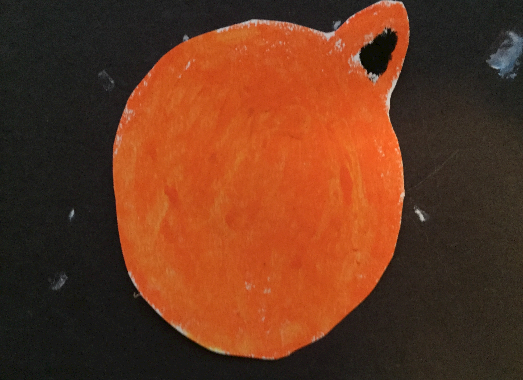
Many people aren't aware that the sun is
actually a star!
It is so massive that it takes up most of the
mass in our solar system. If you wanted to see
how big it is compared to Earth, all you have
to do is get a nickle and place it against the
front door. Now that is huge!
It is so hot, it is about 10,000 °F. All this
energy is needed in order for life to exist here
on Earth.
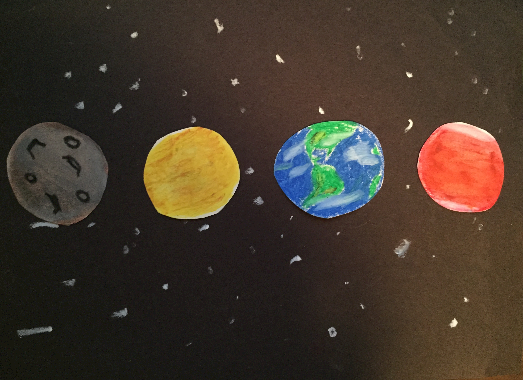
As we look at the planets, which are celestial
bodies that orbit around the sun, we will break
them down into two categories: terrestrial
planets, and gas giants.
The first four planets in the solar system are
terrestrial planets. This means that they
have solid rocky surfaces.
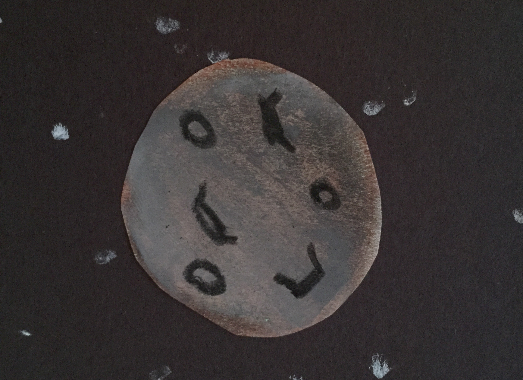
Our first, and smallest planet, is Mercury.
A year on Mercury would take about 59 days
on Earth. Meaning if you were 8 years old on
Earth, you would be about 34 years old.
Mercury experiences extreme temperature
changes as it faces near the sun. The side
facing the sun is about 800°F, while the darker
side is about -290°F.
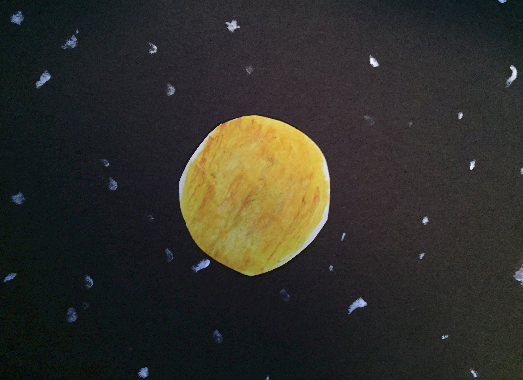
Venus, Earth's wacky twin, is the second
planet in the Solar System. It is wacky in that
it is the only planet that spins backwards,
meaning the sun rises from the west, and sets
in the east.
It is similar to Earth in size, but it takes 243
Earth days to orbit around the sun. Meaning
that you were 8, you would be about 13 years
old.
The surface of Venus is covered with craters
and volcanoes, and it's temperature is about
900°F.
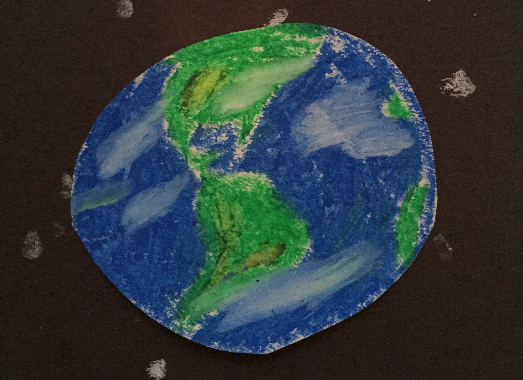
The third planet, Earth, is our home planet. It
is covered with oceans, valleys, canyons, and
other land forms. So far it is the only planet
that contains life as we know.
It contains one natural satellite, or, moon
that orbits around the Earth.
It takes the Earth 365 days to orbit around the
sun.
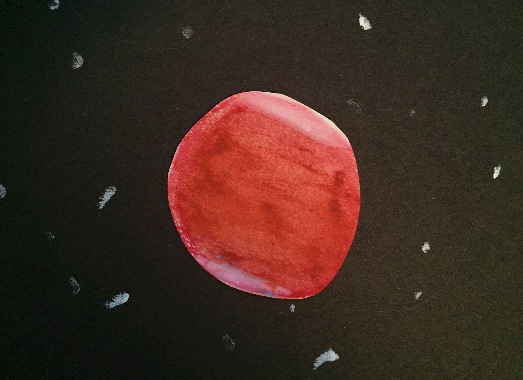
Mars, also known as the rusty planet, is our
fourth planet. It is called the rusty planet due
to the red hue the planet has from the iron
oxide that covers the planet. It also has two
polar icecaps. This leads to scientist believing
that the planet once contained life.
It contains two moons, they are called Phobos
and Deimos.
It takes 687 Earth days to orbit around the
Sun.
Between Mars and Jupiter, there lays the
asteroid belt. Asteroids are small rocky bodies
that orbit around. Sometimes they pass by the
Earth, even closer than the moon is.
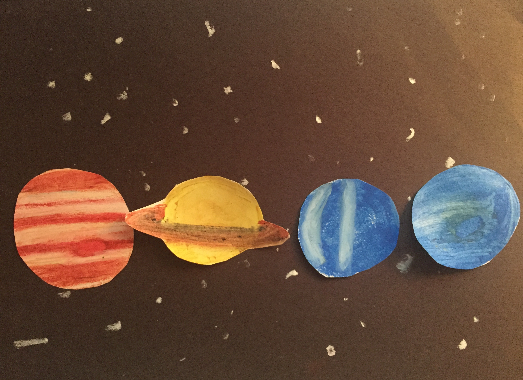
The next four, and final planets, are known as
Gas Giants. They are called this because they
are mostly made up of different gases, and are
larger that terrestrial planets.
You've previewed 19 of 30 pages.
To read more:
Click Sign Up (Free)- Full access to our public library
- Save favorite books
- Interact with authors


- < BEGINNING
- END >
-
DOWNLOAD
-
LIKE(1)
-
COMMENT()
-
SHARE
-
SAVE
-
BUY THIS BOOK
(from $5.99+) -
BUY THIS BOOK
(from $5.99+) - DOWNLOAD
- LIKE (1)
- COMMENT ()
- SHARE
- SAVE
- Report
-
BUY
-
LIKE(1)
-
COMMENT()
-
SHARE
- Excessive Violence
- Harassment
- Offensive Pictures
- Spelling & Grammar Errors
- Unfinished
- Other Problem





COMMENTS
Click 'X' to report any negative comments. Thanks!