
COMPUTER NETWORK
A computer network is a set of computers connected together for the purpose of sharing resources. The most common resource shared today is connection to the Internet. Other shared resources can include a printer or a file server

PACKET
A piece of a message transmitted over a packet-switching network.
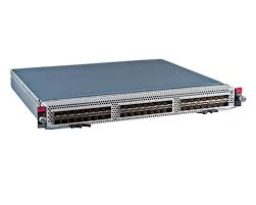
LOCAL AREA NETWORK (LAN)
is a computer network that interconnects computers within a limited area such as a residence, school, laboratory, university campus or office building and has its network equipment and interconnects locally managed.
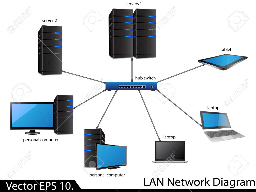
WIDE AREA NETWORK (WAN)
a computer network in which the computers connected may be far apart, generally having a radius of half a mile or more.
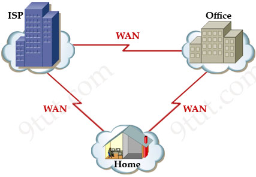
NODE
A node is anything that is connected to the network. While a node is typically a computer, it can also be something like a printer or CD-ROM tower.
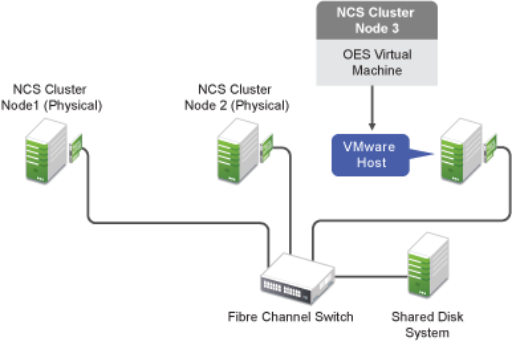
IP ADDRESS
IP address is short for Internet Protocol (IP) address. An IP address is an identifier for a computer or device on a TCP/IP network.
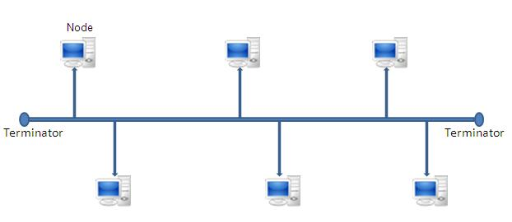
BUS TOPOLOGY
Each node is daisy-chained (connected one right after the other) along the same backbone, similar to Christmas lights. Information sent from a node travels along the backbone until it reaches its destination node.
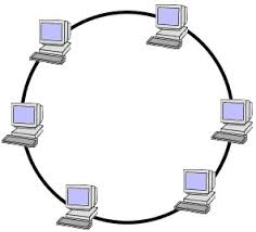
RING TOPOLOGY
Like a bus network, rings have the nodes daisy-chained. The difference is that the end of the network comes back around to the first node, creating a complete circuit. In a ring network, each node takes a turn sending and receiving information through the use of a token
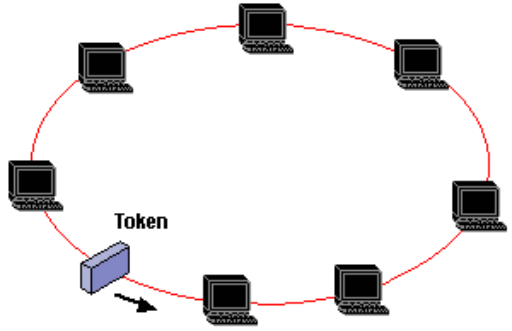
NETWORK TOKEN
is a special series of bits that travels around a token-ring network. As the token circulates, computers attached to the network can capture it. The token acts like a ticket, enabling its owner to send a message across the network.
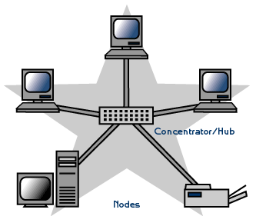
STAR TOPOLOGY
In a star network, each node is connected to a central device called a hub. The hub takes a signal that comes from any node and passes it along to all the other nodes in the network.
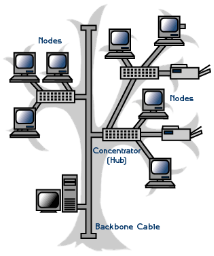
TREE TOPOLOGY
A tree topology combines characteristics of linear bus and star topology. It consists of groups of star-configured workstations connected to a linear bus backbone cable.
PROTOCOL
An agreed-upon format for transmitting data between two devices.
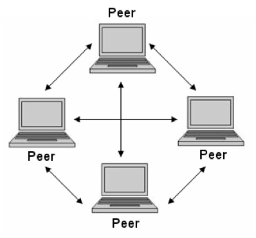
Peer-Peer Architecture
Often referred to simply as peer-to-peer, or abbreviated P2P, a type of network in which each workstation has equivalent capabilities and responsibilities. This differs from client/server architectures, in which some computers are dedicated to serving the others
Client/Server Architecture
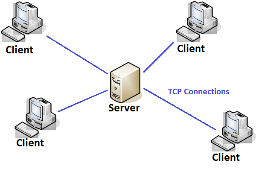
Client-server architecture (client/server) is a network architecture in which each computer or process on the network is either a client or a server. Servers are powerful computers or processes dedicated to managing disk drives
- Full access to our public library
- Save favorite books
- Interact with authors
- < BEGINNING
- END >
-
DOWNLOAD
-
LIKE
-
COMMENT()
-
SHARE
-
SAVE
-
BUY THIS BOOK
(from $4.79+) -
BUY THIS BOOK
(from $4.79+) - DOWNLOAD
- LIKE
- COMMENT ()
- SHARE
- SAVE
- Report
-
BUY
-
LIKE
-
COMMENT()
-
SHARE
- Excessive Violence
- Harassment
- Offensive Pictures
- Spelling & Grammar Errors
- Unfinished
- Other Problem





COMMENTS
Click 'X' to report any negative comments. Thanks!