
This book was created and published on StoryJumper™
©2010 StoryJumper, Inc. All rights reserved.
Publish your own children's book:
www.storyjumper.com

 Behavior and Psychology for DummiesBy Emilie Koestel
Table of Contents
1.Nervous System Introduction: Page 1
Neurons Page 2
Neurotransmitters Page 3
Peripheral Nervous System Page 4
Central Nervous System Page 5
2.The Brain: Page 6
Parts of the Brain Page 7
Lobes of the Brain Page 8
3.The Endocrine System: Page 9
Major Glands Page 10-11
4.Disorders Introduction: Page 12
Nervous System disorder Page 13
Brain Disorder Page 14
Endocrine System Disorder Page 15

The brain and the endocrine
system control all actions of the body.
It is the brains job to send
information to all parts of the body.
The nervous system processes
information from the brain, other
organs and the environment.
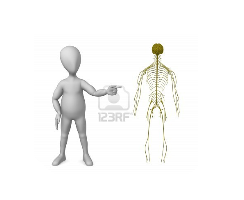 Neurons2
Neurons have a nucleus that
contains genes like other parts
of the body. There are many
types of neuron that each have
a different function such as
senses or motion. A neuron
called a dendrite carries
information to the cell body and
axons take away information.
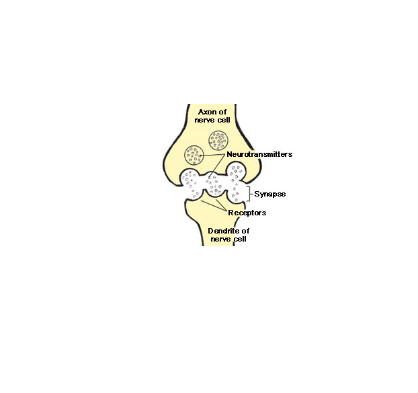
 3Neurotransmitters
Neurotransmitters are a
type of chemical that carries
information from one neuron
to another. There are more
than 50 kinds of
neurotransmitters. Each plays
a role in how you behave.
Signs of diseases can occur if
there are too many or not
enough neurotransmitters in
your body.
 Peripheral Nervous System4
The peripheral nervous system carries
information between organs and your
nervous system. The peripheral nervous
system is divided in to two smaller
systems called the autonomic and
somatic. The autonomic nervous system
controls breathing, heart rate, tears,
saliva and levels of oxygen and carbon
dioxide in the blood. The somatic
nervous system controls the sensory
neurons, motor neurons and reflexes.
 5Central Nervous System
The central nervous system
includes the spinal cord and the
brain. The spinal cord is the main
way for the brain and the
peripheral nervous system to send
and receive information to each
other. The spinal cord is made up
of neurons and is protected in a
spine of bones called the
vertebrae. There are thirty pairs
of nerves that go out to all
different parts of the body.
6The BrainThe brain weighs no more than
three pounds and has a texture like
gelatin. The brain is made up with
different structures for different
functions. Functions such as
language, memory and information
processing.
 7Parts of the Brain
enter text here
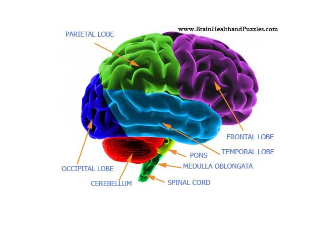
There are three main parts of the
brain. Hindbrain includes the brain stem,
medulla, reticular activating system, pons
and the cerebellum. Midbrain includes the
top inch of the brain stem. Forebrain has
the limbic system, hypothalamus,
thalamus and cerebrum.
8Lobes of the BrainThe brain has four lobes. The
first lobe is the Frontal, which
controls emotional reactions. The
Parietal lobe controls body senses,
heat,cold and pain. The Temporal
lobe helps with memory,
understanding and hearing. The
last lobe is the Occipital, which
controls your vision.
You've previewed 11 of 18 pages.
To read more:
Click Sign Up (Free)- Full access to our public library
- Save favorite books
- Interact with authors


- < BEGINNING
- END >
-
DOWNLOAD
-
LIKE(1)
-
COMMENT()
-
SHARE
-
SAVE
-
BUY THIS BOOK
(from $3.59+) -
BUY THIS BOOK
(from $3.59+) - DOWNLOAD
- LIKE (1)
- COMMENT ()
- SHARE
- SAVE
- Report
-
BUY
-
LIKE(1)
-
COMMENT()
-
SHARE
- Excessive Violence
- Harassment
- Offensive Pictures
- Spelling & Grammar Errors
- Unfinished
- Other Problem





COMMENTS
Click 'X' to report any negative comments. Thanks!