“We choose to go to the moon in this decade and do the other things, not because they are easy, but because they are hard, because that goal will serve to organize and measure the best of our energies and skills, because that challenge is one that we are willing to accept, one we are unwilling to postpone, and one which we intend to win.”
– John F. Kennedy


In this book I will let you know more about space.
On 24 of December 1968. American astronauts Frank Borman, James Lovell and William Anders were behind the Moon in a spacecraft called Apollo 8. . They saw the Moon which was grey, full of dust, without rivers, seas, colours, lights and no life at all. They saw just hills and rocks, dust and stones. Suddenly they saw something that nobody ever saw. The Earth came out from behind of the Moon like the Sun rising in the morning.

Two of them took photos, one black and white and other was colour photograph. Actually this photo called Earthrise is one of the most famous photo ever made. It shows how beautiful the Earth is against the blackness of space and how small is.
BIG BANG was an expansion of space. There were clouds of hot gas-hellium and hydrogen. In the space are many stars and galaxies, it depends on what type of telescope we are looking at. Detailed measurements of the expansion rate of the universe place the Big Bang at around 13.8 billion years ago, which is considered the age of the universe. After its initial expansion, the universe cooled sufficiently to allow the formation of subatomic particles, and later atoms.

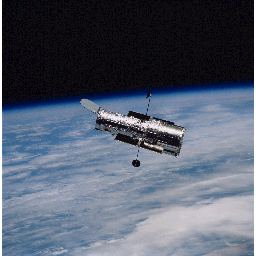
The Hubble telescope is known for its views of faraway galaxies, distant planets, dying stars, and black holes. It has taken picture of galaxies that are nearly 13 billion light years away.
What are stars made of?
Stars are made of very hot gas. This gas is mostly hydrogen and helium, which are the two lightest elements. Stars shine by burning hydrogen into helium in their cores, and later in their lives create heavier elements. Blue stars are the hottest, red stars are a little bit cooler.
A star is born when atoms of light elements are squeezed under enough pressure for their nuclei to fusion. All stars are the result of a balance of forces.
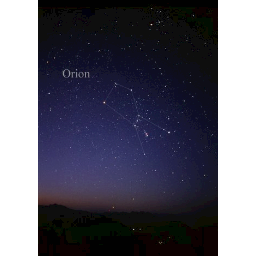
Orion is a constellation located on the celestial equator and visible throughout the world. Its brightest stars are blue-white Rigel and red Betelgeuse.Orion is most visible in the evening sky from January to March, in winter on Northern Hempisphere and summer on the Southern Hemisphere.
The Sun is our nearest star. It is the center of our solar system. The Sun is a hot ball of glowing gases. Many scientists think the Sun and the rest of the solar system formed from a giant, rotating cloud of gas and dust known as the solar nebula. As the nebula collapsed because of its gravity, it spun faster and flattened into a disk. Most of the material was pulled toward the center to form the Sun.
The Sun has enough nuclear fuel to stay much as it is now for another 5 billion years. Many believed the Sun revolved around the Earth, with ancient Greek scholar Ptolemy formalizing this "geocentric" model in 150 B.C. Then, in 1543, Nicolaus Copernicus described a heliocentric, sun-centered model of the solar system.
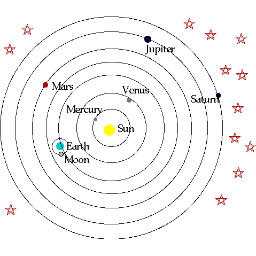
There are eight planets in the Solar System. Their names are: Mercury, Venus, Earth, Mars, Jupiter, Saturn, Uranus and Neptune. They are all made of same spiral gas and stardust.
Jupiter and Saturn are mostly made of gas, while Uranus and Neptune are made of ice.
Mercury is the planet nearest of the Sun. Mercury is the smallest planet in our solar system and is known for its short years, long days, extreme temperatures and weird sunsets. It is covered by craters, just like surface of the Moon. One crater is called the Caloris Basin is bigger than the five Great Lakes between Canada and United States!
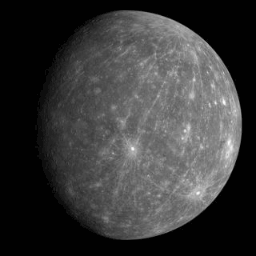
It has no atmosphere, so it's not place where humans could live. The first telescopic observations of Mercury were made by Galileo in the early 17th century.
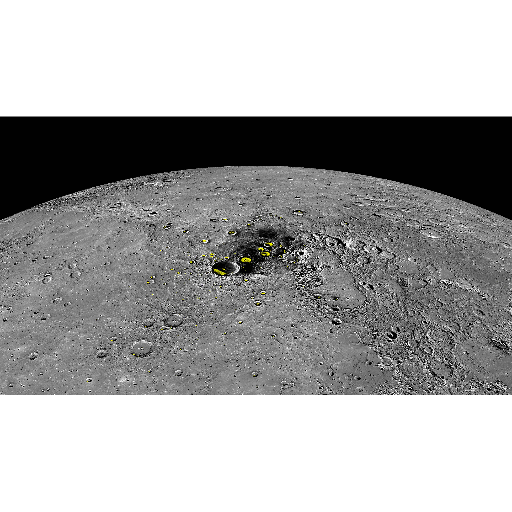
Venus is the second planet from the sun and our closest planetary neighbour. is named after the Roman goddess of love and beauty and is the only planet named after a female. Venus is made up of a central iron core and a rocky mantle, similar to the composition of Earth. Its atmosphere is mainly made up of carbon dioxide (96%) and nitrogen (3%), with small amounts of other gases.
- Full access to our public library
- Save favorite books
- Interact with authors
- < BEGINNING
- END >
-
DOWNLOAD
-
LIKE(1)
-
COMMENT()
-
SHARE
-
SAVE
-
BUY THIS BOOK
(from $4.99+) -
BUY THIS BOOK
(from $4.99+) - DOWNLOAD
- LIKE (1)
- COMMENT ()
- SHARE
- SAVE
- Report
-
BUY
-
LIKE(1)
-
COMMENT()
-
SHARE
- Excessive Violence
- Harassment
- Offensive Pictures
- Spelling & Grammar Errors
- Unfinished
- Other Problem






COMMENTS
Click 'X' to report any negative comments. Thanks!