

This book was created by Turkish students who are in the project of "Eco Games in my Curriculum" eTwinning project to draw attention the significance of wetlands in Turkey.
Zehra Canbolat Sabriye Betül Geldi
Nalan Akkoç Demet Tural
Mustafa Düzgün
Ali Canbolat


AKYATAN LAGOON
Akyatan, located within the borders of Adana Province, is a Wildlife Development Area protected by the Ministry of Forestry and Water Affairs since 1987.
The area of 15,304 hectares with the lagoon, forest and surrounding sand dunes has a rich flora and fauna diversity.
The area is also designated as an official on the Mediterranean coast of Turkey and is one of 21 sea turtle nesting areas.


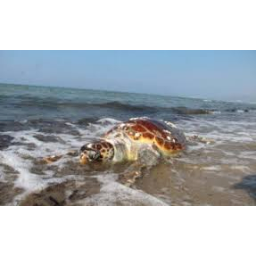
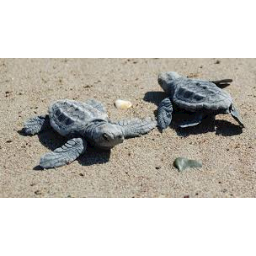
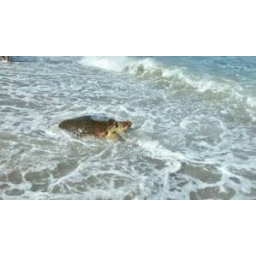
With Akyatan Lagoon between the Mediterranean 3-4 kilometers wide in places, Seyhan 22 kilometers in length and is located in the largest sand dunes shaped by Turkey's Ceyhan river. These dunes are one of the most important nesting beaches of the endangered green sea turtle (Chelonia mydas) in the Mediterranean.
Akyatan Forest, which forms a border with sand dunes, was afforested between 1972-1987 by Adana Regional Directorate of Forestry in order to take precautions against wind erosion and the movement of the dunes by covering the agricultural areas around the area every year and towards the lagoon.
Cyprus acacia (Acacia cyanophylla), eucalyptus (Eucalyptus camaldulensis), pistachio pine (Pinus pinea), beach pine (Pinus pinaster), cypress (Cupressus sempervirens) were used in dune afforestation studies. The dunes to the east of the beach are not afforested.
Akyatan Lagoon, the widest lagoon of the Çukurova Delta, is one of the internationally important wetlands of our country (Ramsar Area). One of the most important economic activities in Akyatan Lagoon is traditional fish fishing.
The Wildlife Development Site has a wide variety of mammals, amphibians, reptiles and birds.
The green sea turtle (Chelonia mydas) is a global priority species for nesting and habitat conservation. It is in the status of endangered in the Red List prepared by IUCN.
Green sea turtle (Chelonia mydas) nesting area in the Mediterranean to Turkey, Cyprus, Lebanon, Israel and Egypt. In our country, it mostly nests in our Eastern Mediterranean coasts. Alata, Davultepe, Boiler, Akyatan, ovarian / Sugözü Samandağ beaches and green sea turtle nesting in Turkey principles which are covers about 91.5 percent. Akyatan is one of the most important nesting areas of green sea turtle in the Mediterranean Basin.
Field studies have been continuing uninterruptedly since 2006 between 1 June and 15 September. Within the scope of the studies, data were collected on the seasonal distribution of sea turtle nests, hatchling success, hatching periods and ecology between 2006-2015 in Akyatan Beach. The green sea turtle nest range in Akyatan Beach varies between 170-562.
Akyatan Lagoon, which is a Ramsar Area, is also an Important Bird Area due to the populations of summer duck, turtle, reed rooster, bigeye, maple plover, spurred lapwing and small terns. Area; It is of great importance for many waterfowl, especially flamingo, suna, fiyu, elmabaş patka, bluetail and coot, and many coastal birds including avocets, maple plover and small sandbirds. The dunes between Akyatan Lagoon and the sea create a living environment for small songbirds of various species during their breeding and accommodation periods. Izmir kingfisher is among the birds that breed in the region. The pied kingfisher is mostly seen in the winter months.
WILD LIFE
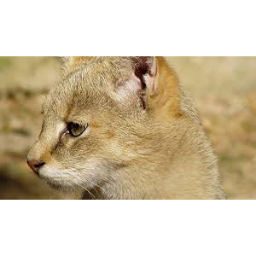
The reed cat usually lives in wetlands such as reeds, swamps, lake shores and riverside, which generally have water and dense vegetation cover. Akyatan Wildlife Development Area has suitable conditions for the continuation of the reed cat breed. Dunes, dense reeds, dense bushes and forest offer very favorable habitats. As a result of the population monitoring studies carried out between 2010 and 2012, 71 reed cat individuals were identified in the area.


LAKE TUZ
LAKE TUZ
Lake Tuz is the second largest lake in Turkey with its 1,665 km2 surface area and one of the largest hypersaline lakes in the world. It is located in the Central Anatolia Region, 105 km northeast of Konya, 150 km south-southeast of Ankara and 57 km northwest of Aksaray.
The lake, occupying a tectonic depression in the central plateau of Turkey, is fed by two major streams, groundwater, and surface water, but has no outlet. Brackish marshes have formed where channels and streams enter the lake. Arable fields surround the lake, except in the south and southwest where extensive seasonally flooded salt-steppe occurs.For most of the year, it is very shallow. During winter part of the salt is dissolved in the fresh water that is introduced to the lake by precipitation and surface runoff .
During the summer the lake dries up exposing an average of 30 cm thick salt layer in August. This mechanism is used as a basis for the process of the salt mines in the lake. The three mines operating in the lake produce 63% of the salt consumed in Turkey. The salt mining generates industrial activity in the region, mainly related to salt processing and refining.
In 2001, Lake Tuz was declared a specially protected area, including all of the lake surface and surrounding waterbeds and some of the important neighboring steppe areas. The main Turkish breeding colony of greater flamingo is present on a group of islands in the southern part of the lake. Greater white-fronted goose is the second largest breeder here. Lesser kestrel is a common breeder in surrounding villages.
Lake Avlan

It is expected that Lake Avlan, which was dried in cooperation with the state in order to obtain agricultural land, about 40 years ago, will return to its former state in the last 20 years. The drying up of the lake in the Elmalı district of Antalya has disrupted the balance of the ecosystem. The lake, which is located at the lowest point of the Elmalı Plain, at an altitude of about a thousand, looks like its old form.
After deliberate drying, anomalies began to be observed in the surrounding forests and existing agricultural areas. With the tunnel opened from one corner of the lake, the water was indirectly discharged into the Mediterranean. Afterwards, the increasing frost and drought in the region rightly worried the local people. With the public's application to the state, the discharge of the remaining water was terminated.

The Lake Avlan event is a lesson on its own. Nature has visibly explained how much man can harm the environment in a short time. The assassination on the lake also affected the Çığlıkara Forest located next to the lake. While the drying of the lake was unforgivable, murdering our national park would double the crime committed by humanity against nature.
The local people state that after drying, the natural parameters are not the same as before. After this draining action, which caused a decrease in rainfall, the region was on the verge of drought. Today, there are empty fields around the remaining water and it is not a situation that environmentalists will appreciate at all. There are many rubbish around, from barbecue waste to beverage bottles. Also, with overfishing in the lake, the development of some species affected during drying is still endangered. In the last few years, the damage caused by the vehicles has been reduced by the removal of the road that passed through the lake. However, people who drive the road around the lake with their vehicles manage to pollute the environment in every way by throwing their garbage out of the vehicle.
Lakes are an ecosystem in their own right. The importance of lakes in the ecosystem is indisputable, providing both living and feeding grounds for fish, amphibians, various birds and many other creatures. In addition to providing living spaces for living creatures, lakes serve to meet the water needs of other creatures in their region and to regulate the humidity and climate characteristics of the environment. Nothing in ecosystems is trivial or unnecessary. For centuries, nature has struggled to create these elements.
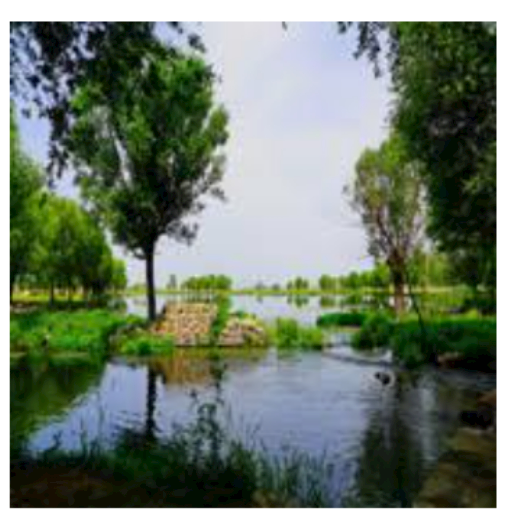
Sultan Sazlığı

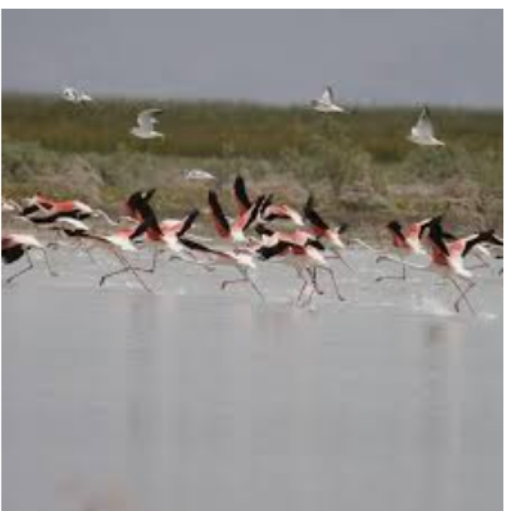
It is a rare ecosystem where fresh and salt water ecosystems coexist, being a feeding, shelter and hatchery area for 301 bird species; The fact that it is the only area in Europe where cranes, flamingos, egrets and spoonbill birds incubate together gives Sultan Sazlığı a special importance.

- Full access to our public library
- Save favorite books
- Interact with authors
- < BEGINNING
- END >
-
DOWNLOAD
-
LIKE
-
COMMENT()
-
SHARE
-
SAVE
-
BUY THIS BOOK
(from $8.79+) -
BUY THIS BOOK
(from $8.79+) - DOWNLOAD
- LIKE
- COMMENT ()
- SHARE
- SAVE
- Report
-
BUY
-
LIKE
-
COMMENT()
-
SHARE
- Excessive Violence
- Harassment
- Offensive Pictures
- Spelling & Grammar Errors
- Unfinished
- Other Problem





COMMENTS
Click 'X' to report any negative comments. Thanks!