
This book was created and published on StoryJumper™
©2010 StoryJumper, Inc. All rights reserved.
Publish your own children's book:
www.storyjumper.com


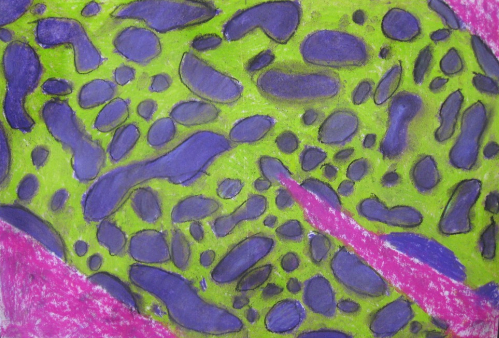
The illustrations in this book are examples of the fourth
grade lesson on the art and life of Georgia O’Keeffe. She is
revered as one of America’s greatest painters, and a very
important female artist. Her work became famous for its bright
and beautiful colors. Her subjects came from the natural
environment around her. This included animal bones, flowers,
shells, and desert landscapes. She presented her subjects with
a cropped and enlarged view, which resulted in her unique
abstract style of painting.
The fourth grade students have been researching Indiana
animals in the computer lab, library, and classroom. Each
student created an original artwork inspired by their animal.
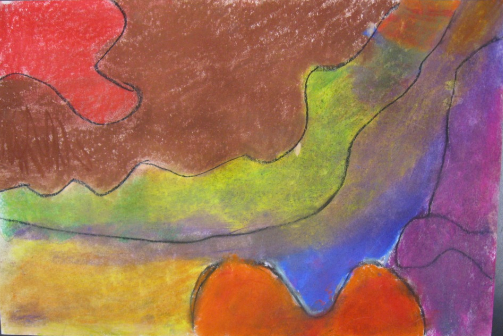
Then using chalk pastels and analogous colors, (colors that are
next to each other on the color wheel), they created a work of
art inspired by O’Keeffe’s style.
Each example shows a view of what the student chose as
the most unique part of their animal. Can you guess what their
animal is?
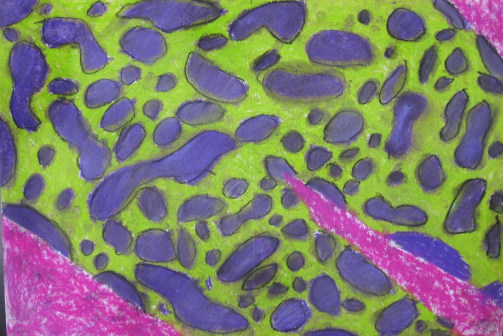
Southern Leopard Frog
By Meghan
Hippoty hop… What is that? Wow, it is a southern leopard frog! They are all
brown with a green stripe down the middle, and spots on their legs, dark brown
strips along the back also. The frog can get up to 5.1-9cm long. It can jump
forward with its big legs. It can hop fast and quick to outsmart the prey. They are
also very fat and long so you can spot it easy. The southern leopard frog has a
backbone and that is called a vertebrate.
Southern Leopard frog’s habitat is all over the place in Indiana like streams,
floodplain swamps, woodland pounds, sloughs, marshes, and wet meadows. Do
you know what all of these places have in common? They are wet. Frog habitats
are very awesome!
The Southern Leopard frog has a diet do you know what it is? The frog eats…
insects, centipedes, earthworms, snails, spiders, beetles, and their best friend the
small frog! To eat, the frog closes its eyes and pushes the food down into the
stomach with its eyes.
A Southern Leopard frog is very interesting to look at, because it is very small.
Did you know that their eyes are hard? They also have a long tongue to catch
bugs. Females may deposit 3,000-5,000 eggs in big sets of piles. Tadpoles have
olive green/dark brown spots. Their breeding season is early March to May.
Southern leopard frogs are the best!!! There are a lot of southern leopard frogs all
over wet places!


Gray Fox
By Douglas
Crunch crunch, what is that? It’s a gray fox that stepped on a twig. The gray
fox is in the dog family. They have a narrow snout (just like a dog). The gray
fox has a big bushy tail. They can be 32 to 57 inches long (that’s almost two
yards long).
Munch munch, there he is again, eating a rat. Here are some things they
eat. They also eat mice and poultry. The bird eats the worm and the fox eats
the bird. They also eat vegetables that farmers grow.
The gray fox also lives in many places. But here are a few. They live in
mountains and deserts. They also live in forests. That’s the main place they
live. The gray fox also lives near cities. They live in south Indiana
Here are super fun facts about the gray fox. Fact #1, the gray fox rarely
falls for the dirt hole set. That’s a trap. Fact #2, a new born fox looks like a rat.
Fact #3, they lick each other when dirty. Fact #4, most of the foxes mate once
every year. The female gives birth to 14 babies. Then they open their eyes 5
weeks after birth. Fact #5, the gray fox usually live in dens. The dens are
usually made by other animals that dug and left. Fact #6, the fox has a few
enemies. One is humans. People hunt the fox for their fur. Some people raise
the fox for their fur. The gray fox is a cool animal. Hope you will see a gray fox
sometime.
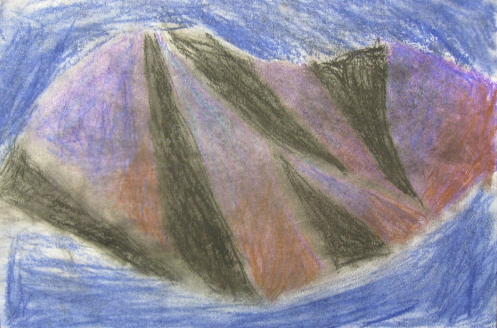
Indiana Bat
by Max
Aggghhhh! That’s the sound of people screaming at the innocent Indiana bat. The
Indiana bat is a small sized bat. Its head and body is usually about 1.5-2 inches long.
This bat only weighs about ¼ of an ounce. That’s light for a bat. The Indiana bat has a
pinkish nose. These bats are black so they can go out at night and it won’t be seen easily
The Indiana Bat has an interesting food chain and habitat. They prefer colder places
from 39-46 degrees. These bats also like to hunt at night and in the summer. These bats
will only hibernate in certain caves. The Indiana bat is a very picky bat. They hibernate
with a lot of individuals. Sometimes up to thousands of other bats! The Indiana bat will
eat any night flying insect including crop pests. Because they eat so many different
insects they are very useful to farmers and their crops so they don’t eat their plants.
They don’t just eat a lot of different insects, but, they also eat a lot of them each night.
Sometimes up to thousands each night. The Indiana bat locates its prey with a high
pitched sound and when it goes over an animal it comes back to the bat as an echo. It’s
kind of like a supersonic wave that we humans can’t hear.
There are some very interesting facts about the Indiana Bat. First of all, all bats are
being mistreated. Bats do good things to our planet but not very many people like bats.
Not even dogs and cats because sometimes they encounter them. The Indiana bat is a
rare bat. It is known to be an endangered species. There are only about 244,000 of them
still living. The population has declined by about 50%. That’s why when female bats
migrate they go in groups of about 100. That’s not a lot of bats per group. Those are
some facts about the very interesting Indiana Bat.
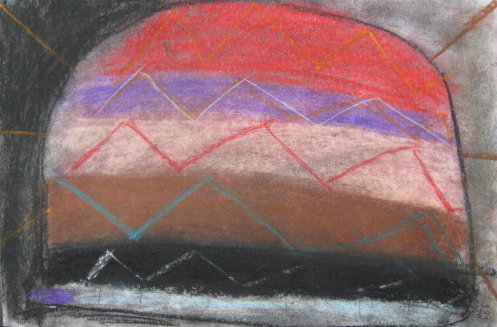
Blanding’s Turtle
by Holly
This animal is very amazing. Blanding’s Turtles are six to eight inches.
They have a dark blackish smooth shells with tan and yellow. Blanding’s
Turtles have domed shells and dark blotches on their shells. Sometimes
they have long necks.
The Blanding’s turtles live in shallow water. They live in the northern
third of Indiana. Most of the time they live in swamps, weedy marshes, and
sloughs.
The Blanding Turtle eats… They eat crustaceans. Blanding’s Turtles love
to eat snails. They eat a lot of insects. This creature sometimes eats
tadpoles. Most of the things Blanding’s Turtles eat are underwater.
Blanding’s turtles have fun facts to learn about. The female Blanding
Turtle lays about six to twenty one eggs. A female seeks nesting sites.
They are endangered. This creature is very uncommon. Raccoons take
their eggs. Females lay their eggs around June. They can live up to 70
years or more. These turtles are very amazing to know about.

Muskrat
By Sasha
Muskrats have long dark reddish brown fur. A muskrat can stay
under water for 20 min. If it stays under water for too long it will
drown. People use musk glands to make perfume. As many as 32
muskrats can share a pond the size of a football field.
Nearly all plants growing in and near the water areas are eaten,
but cattails are the backbone of their diet. Muskrats eat food that’s
good and useful. Food is not stored for the winter so they must dig
roots for food. Muskrats have durable outer fur while the under fur is
fine, soft, and water proof. The muskrats are well equipped for their
aquatic habitat. Muskrats live in long streams. Muskrats have been
taken by people for their fur.

Red Foxes
By Lukas
Red foxes are amazing animals. Their guard hairs make them appear larger
than they actually are, so predators will think they’re bigger and stronger. They
look yellowish-red from a distance. But if you get closer you will see its white
throat. If it is an adult it should be three feet. They are also eight to fourteen
pounds. One phase that is uncommon is it looks silver, because white hairs cover
black hairs. Red foxes are fascinating.
Red foxes eat lots of different things and live in many places. They eat almost
anything smaller than them. For example rabbits, ground squirrels, and birds. The
biggest thing that harms them is hunters. We are trying to make fox hunting
illegal. Hunters track red foxes in the winter by following footprints. Red foxes are
usually found in open, non-forest areas, like old fields animals dug up and left.
They can take a den by scenting it. This means other foxes will know it is their
territory. Red foxes are awesome creatures.
Red foxes are interesting animals. Night is dangerous for red foxes. This is
because hounds will attack them. If the father dies the family may starve. On the
bright side there are more red foxes than any other fox. Newborn red foxes are
blind until they are nine days old. Finally they can see. As you can see red foxes
are exciting animals.
Coyotes
by Kyle
Many animals are interesting but not as much as a coyote. Coyotes
look identical to a German Shepherd in shape, but it hangs its long tail
down to its rear. The color of a coyote is usually a grizzled gray, like a
wolf. It can weigh 20 - 50 pounds, and in length, about 50 inches from
snout to tail.
Coyotes can live in a lot of places. They can live in prairies; they
like it there because many animals they snack on live there, like
rabbits, and they want their babies to be safe. The most common
place is the desert, but they also live in the woods and caves. The
coyote eats meat, like rabbits, mice, deer, and even insects. The
coyote doesn’t have any predators.
These are some interesting facts. Did you know that coyotes are
known for their smartness and howling at night? And, they are the
same species as dog. And the hunters are starting to shoot them.
Coyotes are so cool animals!

Bald Eagles
by Noah
Do you know what a bald eagle looks like? Bald eagles have a white head,
brownish bill, white tail, and dandelion colored feet! Its wingspan is 7 and half
feet! Bald eagles also stand 3 and half feet tall. Bald eagles are very special birds.
It is against the law to shoot bald eagles because they are on the United States
quarter. If I saw a bald eagle I would be surprised how big it would be.
Bald eagles are found everywhere. Did you know that the bald eagles nest is
one of the biggest nests in history? Its nest is made up of thousands of little twigs,
moss, grass, pine needles and feathers. The nest is usually 150 feet up in the air.
It is six feet wide and six feet deep. Bald eagles diet is made up of mice, fish,
rabbit, waterfowl and squirrel. It’s amazing how much they can fit in their
stomachs.
Here are some interesting facts about a bald eagles can live 48 years old some
only live 25 years. When a bald eagle catches fish it brings it up into trees and
consumes them for about 3 days. It only eats the tender parts and leaves all the
cartilage. Bald eagles weigh 5-14 pounds. When bald eagles are diving for prey
they can reach 100 miles per hour. At normal flight they fly about 57 miles per
hour. 73 eaglets were obtained from Alaska and Wisconsin during 1985 through
1989 and brought to Indiana. That is the extraordinary life of a bald eagle.

Box Turtles
By Lauren
Have you ever read about box turtles? Box turtles are small to medium sized,
they have an average size of 4-5 inches. Box turtles also have a very colorful shell
with orange to yellow spots, or stripes on their shells. Sometimes they have the
spots and stripes on their skin. Box turtles have great eye sight and excellent
sense of smell. Box turtles can live up to 60 years, but some have been known to
live up to 100 years of age. Box turtles are not an endangered species. They are
one of the most common turtles in Michigan, Illinois, Indiana, and Ohio.
What is a box turtles habitat like? What does a box turtle eat? What eats it?
Box turtles like grassy shady areas like grasslands and ponds, and the trees
towering above them. Things that eat box turtles are raccoons, wolfs, skunks,
coyotes, dogs, crows, hogs, and snakes. Box turtles eat fruits, worms, slugs,
insects, and mushrooms.
Do you know some interesting facts about box turtles? Some box turtles will
eat dog food. A box turtle in its shell looks like a box, and when in their shell a flap
closes to protect it. That is how it got its name “box turtle”. Box turtles have been
around for over 200 million years before birds, lizards, and alligators. They can
live in any climate. Box turtles can live in any continent except Antarctica. Box
turtles are some cool animals!
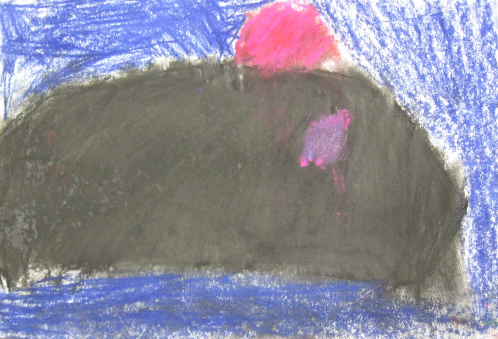
Allegheny Wood Rat
By Griffin
Do you know anything about the Allegheny wood rat? If you ever see one
during the day in the city, you should be surprised because it is a nocturnal animal
that doesn’t like any light at all. That means it sleeps during the day and finds
food during night.
This is what an Allegheny wood rat looks like. It has cinnamon color fur or a
brownish color fur. It is 18 inches long including its tail. The wood rat's tail helps it
swim. The Wood rat's tail is also brown with black spots on it.
The Allegheny wood rat has an interesting habitat. Also the reason you should
be surprised if you see one in the city is because it lives in forests or woods.
Sometimes you might find one in a cave. If you are by a steep cliff face were it is
rocky you might find an Allegheny Wood rat. The Allegheny wood rat eats plant
material. Some plant material could be fruit. The Allegheny wood rat would eat
that. It would also eat the stem of that plant. The things that eat it are snakes,
owls, weasels, foxes and raccoons.
Here are some interesting facts about the Allegheny wood rat. The Allegheny
wood rat usually lives 3 years in the wild. If you keep an Allegheny Wood rat it
might live longer. An Allegheny wood rat is a clean rat. Now you should know
What a Allegheny wood rat is.
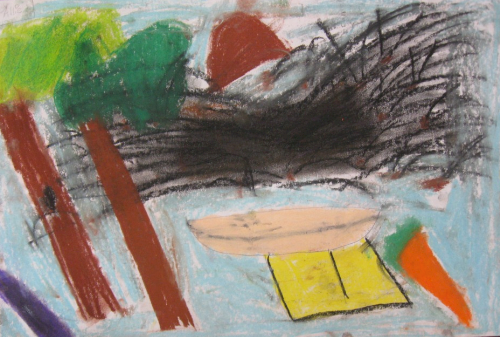
Beavers
By Allison
Chuck, chuck, chuck. That is the sound of a beaver. They are the
biggest rodent found in North America. They use their flat tails to
swim. Adults can weigh up to 30 to 70 pounds. That is more than
me because I am small. They are four feet long, have buck teeth
and are brown with two layers of fur. In my opinion I think they are
very cool looking.
Beavers live all over the place. They live in Europe, Asia,
Canada, and the U.S.A. They live in a modified burrow. One of the
two tunnels leads to the water at the river bank. They need to be by
the water. They are capable of building lodges. Beavers eat lots of
things. They eat plants, branches, leaves, and bark from trees. Lots
of animals eat beavers like wolves, bears and coyotes.
They are interesting because they have webbed feet that help
them swim. They have such big teeth, they can cut down trees.
They use the tree to eat and to make their home. Beavers can build
dams. Aren’t beavers cool?

Massassauga Rattlesnake
by Jenna
The Massassauga rattlesnake is really extraordinary. They're one of the
smallest snakes. They can grow up to 3.3 feet long. The spots on them look like
bows, but some spots look like other spots more than just bows. They can
disguise themselves in vegetation, rocks, and leaves. They are poisonous
snakes. They can be fat and they can be skinny. Massassauga rattlesnakes can
be brown or black.
Massassauga rattlesnakes have a very interesting habitat. They live in places
where it is wet, like lake edges, swampland, fens, and marshy grasslands all
around Indiana and some other places in the USA. Massassauga rattlesnakes eat
and are eaten a lot. Sometimes they eat birds. They also eat mice, lizards, frogs
and other snakes. Their predators are bullfrogs, racers, loggerhead shrikes,
weasels, coyotes, and other mammalian predators.
Here are some interesting facts about Massassauga rattlesnakes. They live
for 15 to 20 years. They are endangered in Indiana. They hibernate in crawfish
burrows. The rattles on the snake tell you how old it is. You count top to bottom.
The rattle on them is a sign of danger to warn of other animals when they shake
it. That is the extraordinary life of Massassauga rattlesnake.
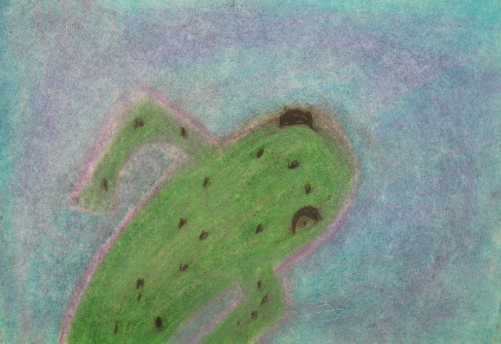
Green Salamander
By Olivia
The green salamander was the first found in 1993.
Logging may have really affected green salamander populations.
Another thing is they have very good body designs for
hiding. Some of the designing makes them look like a leaf
or bark! Most of the green salamanders grow up to 4
to 5 inches long.
Most salamanders live under leaves with just a little bit
of soil. Green salamanders have great protection. Some
salamanders don’t live under leaves, but instead in
moist cracks. Beetles , spiders , mites and ants may be
eaten by green salamanders.
Green salamanders are amphibians. Most of them are small but
they can’t get any bigger than 4 or 5 inches long.

Cotton tailed Rabbits
by Abby
THUMP THUMP THUMP!!!!!!!! That sounds like a cotton tailed rabbit coming our
way. Cotton tailed rabbits are found all over Indiana. The underside of a cotton
tailed rabbit is gray and white. The underside of its tail is snow white. Cotton
tailed rabbits are really soft. New born cotton tailed rabbits have no fur. Usually
cotton tailed rabbits are reddish-brownish or gray.
Cotton tailed rabbits can be found all over Indiana. Cotton tailed rabbits eat
plants and vegetables such as: carrots, lettuce, leaf, and grass. Cotton tails have
sharp teeth to help them eat. These are some things that eat cotton tails: foxes
and coyotes. If you want to know where cotton tailed bunnies live this is the place
for you to look! Grown bunnies live in holes in the ground. When cotton tailed
bunnies know predators are coming they go find some grass, and/or sticks to
blend in with. But some bunnies live in the woods so they have to watch out for
foxes!
There are many interesting facts about cotton tailed rabbits. When the female
is making the nest they pull some of their fur off of their belly and put it in to their
nest so the nest is nice and soft for her babies. Also cotton tailed rabbits wash
their fur many times a day, unless they were just born that’s when their mom
comes in. The earliest the cotton tailed rabbits come is January. Grown cotton tails
live in holes in the ground. Those were some interesting facts about cotton tailed
rabbits.

Raccoons
By Harry
Raccoons are likeable animals. It has a mask and lives in burrows
and trees. It eats birds, insects, and domestic foul. The mother is 25
to 34 centimeters and has a mask with white stripes around it. And
has a bushy tail and looks like solid black at night.
This is what it eats it eats: birds, insects, chickens. And panthers
eat it. And these are facts. Mating occurs in January. The original
habitats are forests but due to their adaptability they have moved into
the city areas. They also live in Japan and Europe.
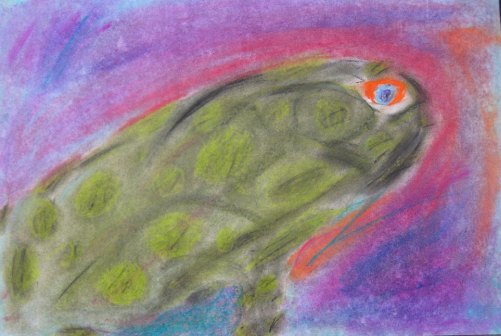
Bullfrogs
By Jenna
Bull frogs are interesting animals. They are dark brown, greenish
grey, light olive or yellow green. Their belly is cream colored. Their
feet are fully webbed, except the longest toe. They make a strange
sound.
Bull Frogs live in a lot of places. They can be found in ponds,
lakes, stock ponds, strip mining ponds, backwaters, and large
streams. They eat weird stuff. They eat small frogs, snakes, mice,
birds, crayfish, worms, snails, and anything it can swallow.
There are many interesting facts about bullfrogs. When the frog
has its babies, the frog doesn’t wait for the babies. Most tadpoles
over winter transform into adults by the next summer. Some take two
years to transform. Bull frogs are about 2 inches tall and 3 inches
long. The frog’s feet are about 1 and a half inches long. The webbed
feet toes have claws on the tips of their feet. There is so much to learn
about bull frogs.

Osprey
By Xavier
Ospreys are fascinating animals. They are black and white and brown. The
under body is white, and the upper body is black. The breast is white and can
have a brown stripe on it. They can grow up to 21- 25 in long. An adult can weigh
2.25-3.75 pounds and its wing span is 59-67 inches long. That is as wide as my
computer teacher is tall! Females are 10% bigger than males. They weigh 2.5-
4.25 pounds. Osprey legs are very skinny. Osprey talons are black. They are very
sharp. Is that cool or what?!
Ospreys live in a lot of places. They are mostly found near rivers, because
they eat fish. They do not live in Antarctica. Isn’t that cool?! Ospreys have
many ways to get food. They mostly eat fish, but they do eat other food. They
have sharp and rough claws to catch food. Ospreys can carry 2.25 lbs of food.
Ospreys soar 30 to 100 feet above the water when looking for food.
Ospreys have some interesting facts to them. Did you know that Ospreys
come back to the same nest every year, after migration? They make their nest
out of moss, grass, mud, and bark. In Indiana Ospreys are in danger. They make
their nest 10 to 60 feet above the ground. Aren’t those interesting facts?
You've previewed 38 of 58 pages.
To read more:
Click Sign Up (Free)- Full access to our public library
- Save favorite books
- Interact with authors


- < BEGINNING
- END >
-
DOWNLOAD
-
LIKE
-
COMMENT()
-
SHARE
-
SAVE
-
BUY THIS BOOK
(from $11.59+) -
BUY THIS BOOK
(from $11.59+) - DOWNLOAD
- LIKE
- COMMENT ()
- SHARE
- SAVE
- Report
-
BUY
-
LIKE
-
COMMENT()
-
SHARE
- Excessive Violence
- Harassment
- Offensive Pictures
- Spelling & Grammar Errors
- Unfinished
- Other Problem





COMMENTS
Click 'X' to report any negative comments. Thanks!