To Mrs. Karia, I hope yall enjoy this Book it great way of knowledge and great importation if needed!



Periods in the Periodic Table
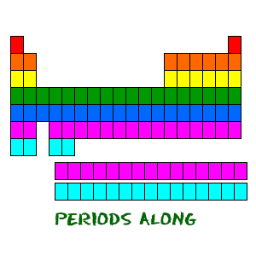
A period is a horizontal row of the periodic table. There are seven periods in the periodic table, with each one beginning at the far left. A new period begins when a new principal energy level begins filling with electrons. A period in the periodic table is any horizontal row of elements. The elements in a certain period all increase one by one in atomic numbers. The elements in the same period are very metallic on the left, and nonmetallic on the right.
Groups /Families In Periodic Table
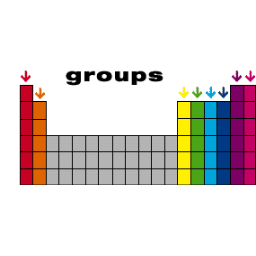
Groups/families In periodic table there vertical columns on the periodic table are called groups or families because of their similar chemical behavior. All the members of a family of elements have the same number of valence electrons and similar chemical properties. The horizontal rows on the periodic table are called groups.
Role Of Protons
Metals/Non Metals/ Metalliods
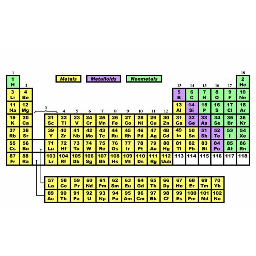
Metals are located on the left of the periodic table. They are shiny, good conductors of electricity and heat nonmetals are located on the upper right they are either gas hydrogen, oxygen, nitrogen, or solid carbon, sulfur under standard conditions. They are very brittle in their solid form. For Metalloids they have The name comes from the fact that the oxides of these metals produced basic solutions when dissolved in water, and they remained solids at the temperatures to the ancient.

Valence Electrons and their Role Within Atoms
A valence electron is on the outer shell electron that is associated with an atom, and that can participate in the formation of a chemical bond if the outer shell is not closed; in a single covalent bond, both atoms in the bond contribute one valence electron in order to form a shared pair.
Within the Atom, it Delocalized valence electrons produce metallic bonds (bonds between atoms of metals) which give metals unique properties such as conductivity and ductility (metal into wires). Valence electrons are the electrons that are transferred when ionic bonds are formed.
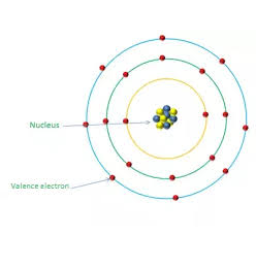
The Families /Groups In the Periodic Table ★
Periodic Table Families And Groups Glossary
Alkali Metals: Pag 9
Alkaline Earth Metals: Pag 11
Transition Metals: Pag
Boron Family: Pag 10
Carbon Family Nitrogen Family: Pag 11
Oxygen Family: Pag 12
Halogens: Pag 13
Noble / Inert Gase: Pag 14

Alkali Metals
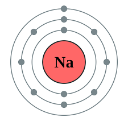
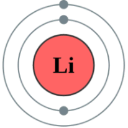
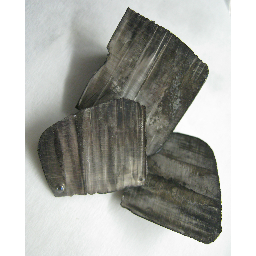
Alkali Metals family is found on the periodic table in Group 1, which is on the far left side of the table. Periods such as lithium Li, sodium Na. The alkali metals protons are six chemical elements in Group 1, the leftmost column in the periodic table. They are lithium (Li), sodium (Na), potassium (K), rubidium (Rb), cesium (Cs), and francium (Fr). Have one electron in their outermost layer of electrons. Silvery, soft, and not dense. the least electron negative of elements, they react with a great variety of nonmetals. They tend to be softer and conduct more poorly than the transition the metalloids are B, Si, Ge, As, Sb, Te, shiny.soft.silvery. They are highly reactive at standard temperature and pressure. readily lose their outermost electron to form cations with a charge of +1. and Alkali metals can explode if they are exposed to water.
Alkaline Earth Metals
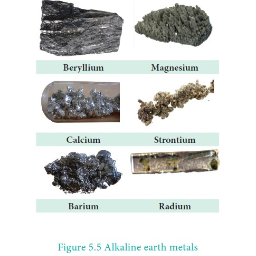
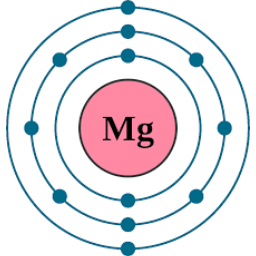
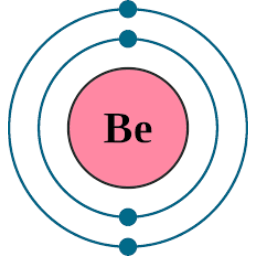
Alkaline Earth Metals, are found in group 2 they have six chemical . The family includes beryllium (Be), magnesium (Mg), calcium (Ca), strontium (Sr), barium (Ba), and radium (Ra) which are actually all metals. Because all the alkaline earth metals have two electrons in their valence shell, so they lose two electrons to form cations with a 2+ charge. It does not react with water or steam, and its halides are covalent. The reactivity of alkaline Earth metals increases from the top to the bottom of the group. That's because the atoms get bigger from the top to the bottom, so the valence electrons are farther from the nucleus. The Physical Properties of an Alkaline Metal is shiny, silvery-white, somewhat reactive metals at standard temperature and pressure.
Transition Metals
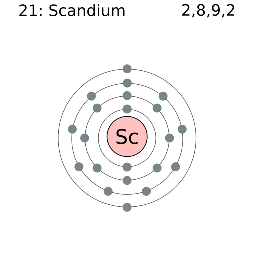
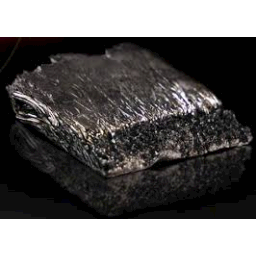
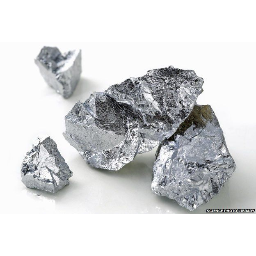
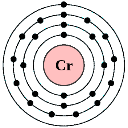
The period 4 transition metals are scandium (Sc), titanium (Ti), vanadium (V), chromium (Cr), manganese (Mn), iron (Fe), cobalt (Co), nickel (Ni), copper (Cu), and zinc (Zn) that are known as magnetic. Because most transition metals have two valence electrons, the charge of 2+ is a very common one for their ions. Transition metals can use the two outermost shells/orbitals to bond with other elements. It's a chemical trait that allows them to bond with many elements in a variety of shapes. The transition metals have physical properties in common such as they are good conductors of heat and electricity. they can be hammered or bent into shape easily. they have high melting points but mercury is a liquid at room temperature.
Boron Family
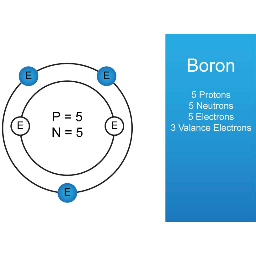
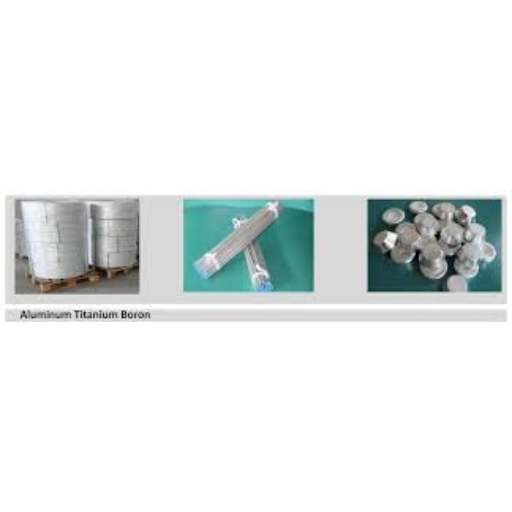
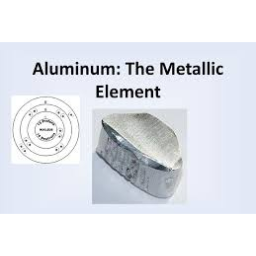
Boron Family is a group of 13 The commonest property of the group is that each one of the elements has three electrons in the outer shell of their nuclear structure. Boron is the lightest of the elements in this group. It is a non-metal. Surprisingly, the others in the group are brilliant white metals. They also have family groups which include the semi-metal such as boron (B) and the metals aluminum (Al), gallium (Ga), indium (In), and thallium (Tl) Boron is also the only metalloid in this group. The Elements have three valence electrons and are fairly reactive. All of them are solids at room temperature. Boron is a very hard, black metalloid with a high melting point.
- Full access to our public library
- Save favorite books
- Interact with authors
- < BEGINNING
- END >
-
DOWNLOAD
-
LIKE
-
COMMENT()
-
SHARE
-
SAVE
-
BUY THIS BOOK
(from $4.99+) -
BUY THIS BOOK
(from $4.99+) - DOWNLOAD
- LIKE
- COMMENT ()
- SHARE
- SAVE
- Report
-
BUY
-
LIKE
-
COMMENT()
-
SHARE
- Excessive Violence
- Harassment
- Offensive Pictures
- Spelling & Grammar Errors
- Unfinished
- Other Problem






COMMENTS
Click 'X' to report any negative comments. Thanks!