
Periods are the horizontal rows that determine the amount of electron shells that an element has. Electron shells are the orbital paths or electron cloud layers that electrons travel in/on. There are 7 periods as of right now in the table.
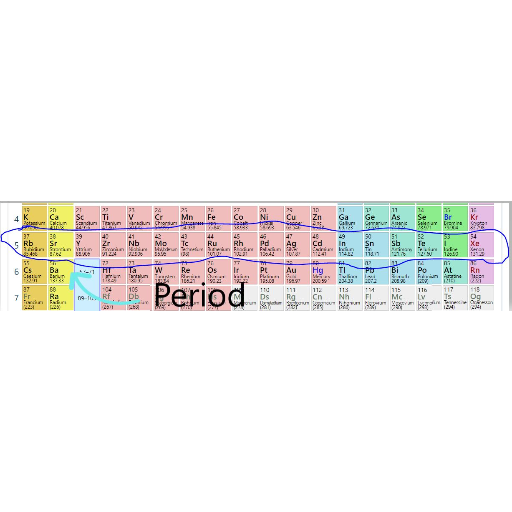
Periods in the table
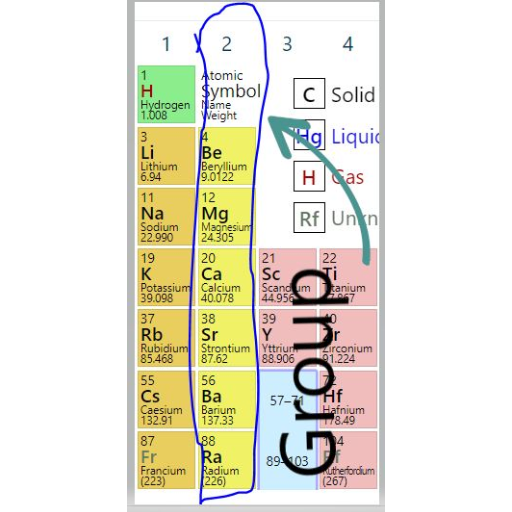
Groups/Families in the table
Groups are the verticals rows that determine the amount of valence electrons an element has. Valence electrons are the outermost electrons that determine a elements reactivity levels. There are 18 groups that are in the periodic table so far.
Elemental properties
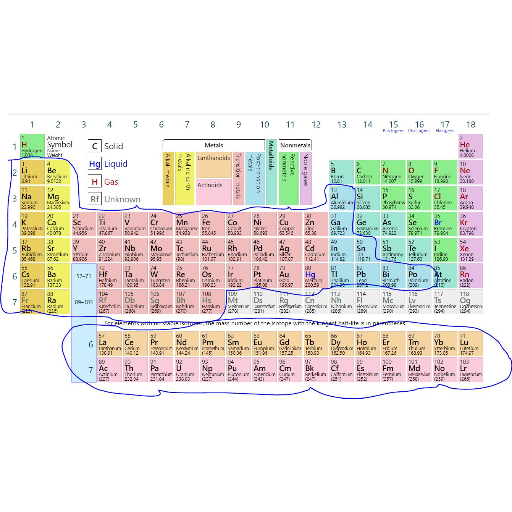
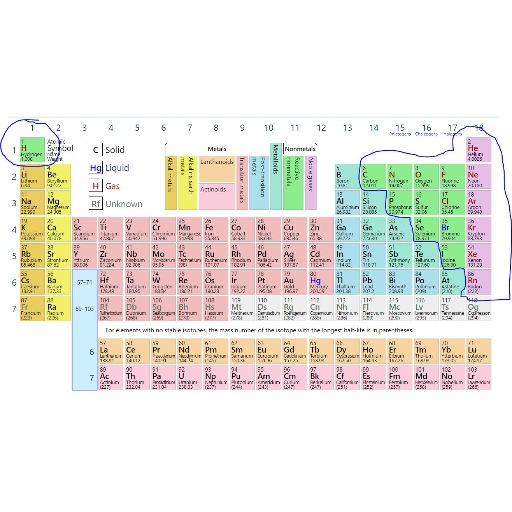
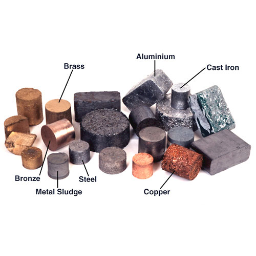
Metals: metals are strong conductors, malleable, ductile, and can be very shiny/lustrous. They are located in the left side of the periodic table mainly and the metals are also lanthanides and actinoids.
Metalloids: They are semiconductors, they can be dull or shiny. They are in between metals and nonmetals. This is true for there physical properties and also their placement on the periodic table. The metalloids are what make up the "staircase" on the periodic table.
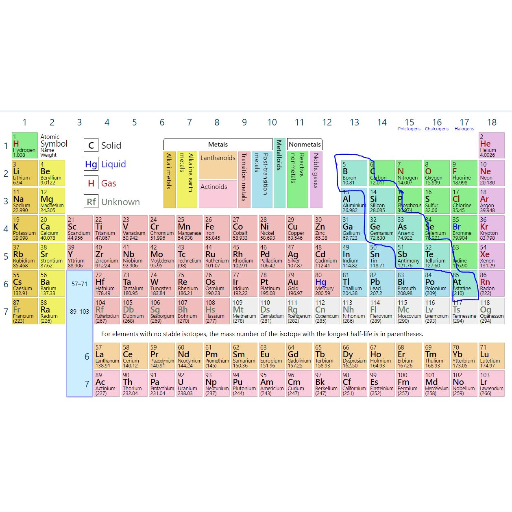
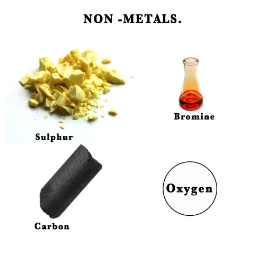
Non-metals: They are weak conductors, usually very brittle, they are dull in color, and they are not ductile. Tend to have low density as well. They are located on the right side of the staircase on the periodic table.
T
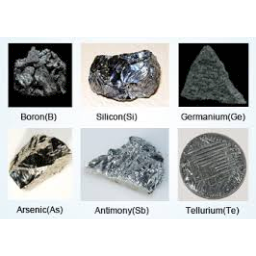
Metalloids
Metals
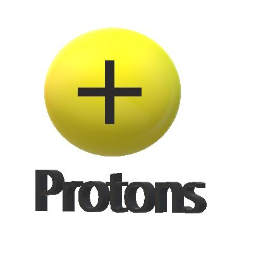
Protons
Protons are one of the particles that makes up atoms nucleus along with the neutrons. They are what determines what the element is going to be. Protons determine the placement of an element due to the atomic number. The atomic number is what determines the placements of elements, and this number is just the amount of protons in the element. It goes from left to right going in number order. They also help determine the atomic mass along with neutrons. To do this, you have to add the number of neutrons to the number of protons. Then you get the atomic mass.
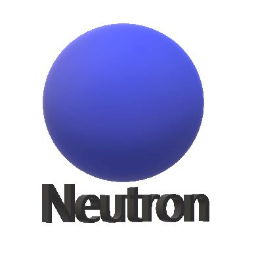
Neutrons
Neutrons are another one of the particles that make up the atom. Neutrons help make up the nucleus of an atom. They also help determine the atomic mass along with protons. As said on the last page to do this, you have to add the number of neutrons ot the number of protons. Then you get the atomic mass.
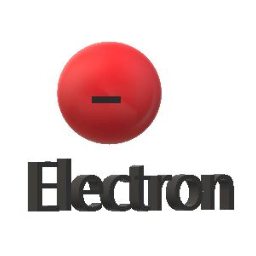
Electrons
The electrons are what determine a elements reactivity due to its valence electrons. They are another particle that makes up the atom and the lightest particle in the atom with a weight that rounds to zero amu. They are the negative charge of an atom. The electrons are what orbit around the nucleus of an atom, creating the orbital path or electron cloud.
Valence Electrons
The valence electrons are the outermost electrons in the electron cloud/orbit. They determine the reactivity of a certain electron dn how much it will react. For example if there is 8 valence electrons then it is not reactive at all. If there is only one valence electron, then it is highly reactive. In the periodic table the groups are organized due to the number of valence electrons.
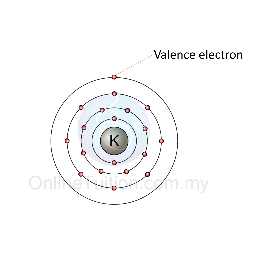
ATOM MODEL
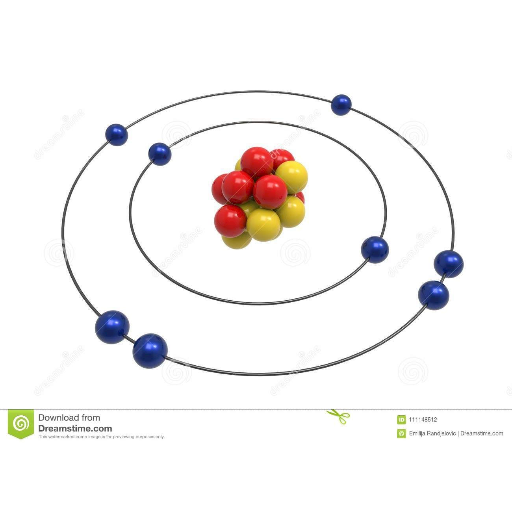
Now let's look even deeper into the periodic table!
Alkali Metals
These metals fall into group one, which is the first vertical row of elements on the periodic table. They are highly reactive and explosive on their own, which is why they need to bond with other elements. They always are ready to give away their one valence electron to create an attachment with other elements. They are a soft, shiny metal that could be cut easily and they have a decreasing melting and boiling point, but hydrogen is not a metal at all. It is a nonmetal in this group due to its valence electron.
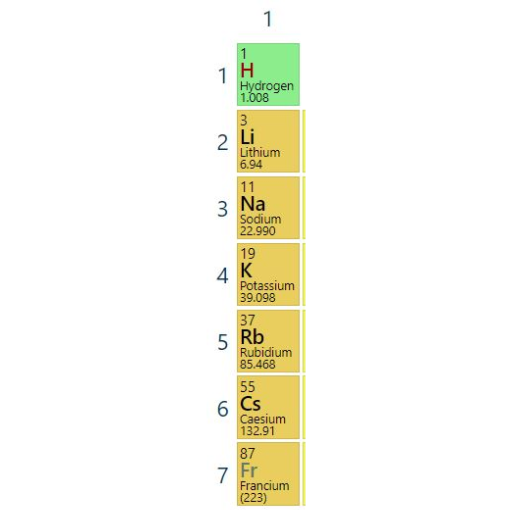
Element ex.:Hydrogen, Potassium, and Sodium.
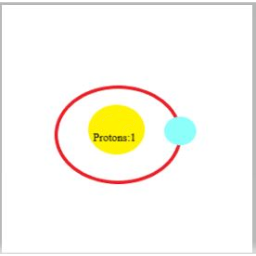
Hydrogen:
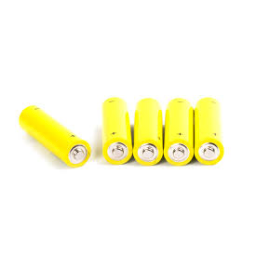
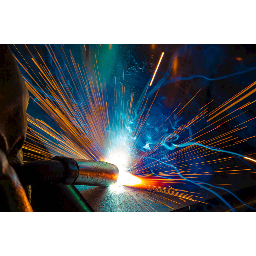
Practical uses: Hydrogen is used for welding and potassium is used to make batteries. Lithium is used for air conditioning and we use this everyday.

H
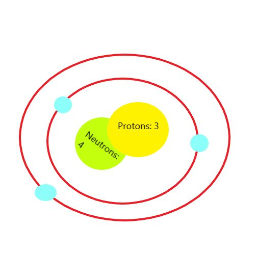
Lithium:
Li
Alkaline earth metals
This family/group is the second vertical line in the periodic table. This group most likely to form solutions with a pH greater than 7. All alkaline earth metals have 2 valence electrons which determine its reactivity levels. They are a shiny, silvery-white, and somewhat reactive metals at a standard temperature and pressure. They have low boiling and melting point and low density.
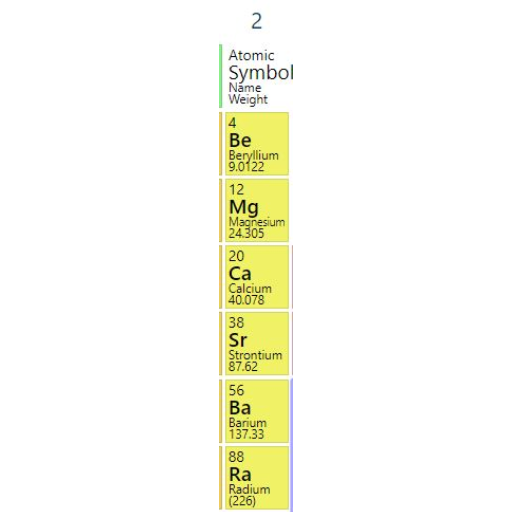
Element ex.: Calcium, Magnesium, and Beryllium.
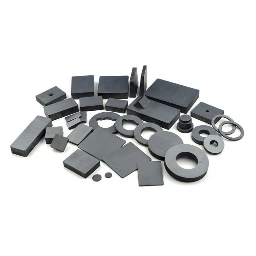
Practical uses: Magnesium is used to make things lightweight. Such as laptops, car seats, luggage and more which we use everyday. It is also used in flares and fireworks. Strontium is used to give fireworks that red coloring and it is also used to make magnets.



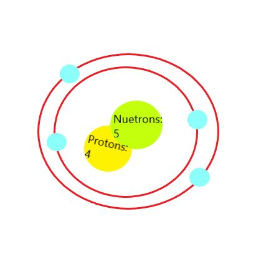
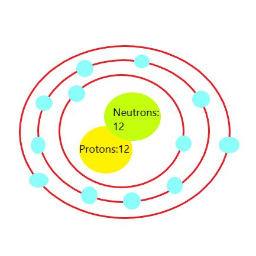
Beryllium
Magnesium
Be
Mg
Transition metals
These metals are the 3-12 vertical groups/families in the periodic table. They make up most of the middle part of the table and they are the largest family out of all of the groups. They are a somewhat reactive group, but not as reactive as the first few. They form colored ions with different charges. They have high melting points(with the exception of mercury)and densities. They are usually very hard and tough.
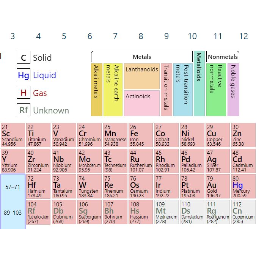
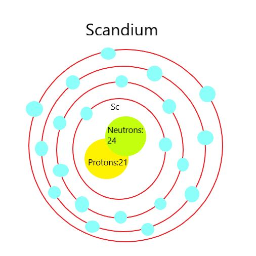
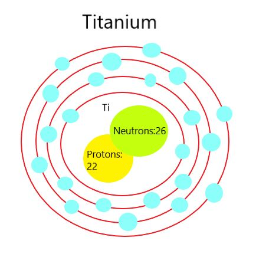
Element ex.: Silver, Titanium, and Nickel.
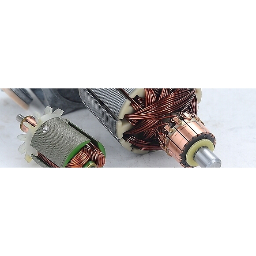
Practical uses: Copper is used in wiring and motors a lot as it conducts heat and electricity very well. Platinum is used in computer hard disks which many people use a lot in daily life.


- Full access to our public library
- Save favorite books
- Interact with authors
- < BEGINNING
- END >
-
DOWNLOAD
-
LIKE
-
COMMENT()
-
SHARE
-
SAVE
-
BUY THIS BOOK
(from $5.99+) -
BUY THIS BOOK
(from $5.99+) - DOWNLOAD
- LIKE
- COMMENT ()
- SHARE
- SAVE
- Report
-
BUY
-
LIKE
-
COMMENT()
-
SHARE
- Excessive Violence
- Harassment
- Offensive Pictures
- Spelling & Grammar Errors
- Unfinished
- Other Problem






COMMENTS
Click 'X' to report any negative comments. Thanks!